
Philippe Rogger – författare
Visar alla böcker från författaren Philippe Rogger. Handla med fri frakt och snabb leverans.
2 produkter
2 produkter

E-bok
PDF, Tyska, 2018394 kr
Läs direkt efter köp
Für die Gesandten frühneuzeitlicher Fürsten war die Eidgenossenschaft ein äusserst schwieriges Terrain. Das komplexe Geflecht von Territorien unterschiedlicher Grösse, Verfassung und Konfession fügte sich nicht ein in politisch-soziale Ordnungsvorstellungen, die vom Ideal monarchischer Souveränität geprägt waren. Fünf Fallstudien fragen nach dem Zusammenhang von politischem Wissen, personaler Verflechtung und dem Erfolg von Verhandlungen mit den eidgenössischen Republiken. Darüber hinaus bietet der Band einen Überblick zur Funktionsweise der Aussenbeziehungen des Corpus Helveticum im 17. und 18. Jahrhundert und skizziert Perspektiven für die künftige Forschung.Pour les représentants des princes de l''époque moderne, le Corps helvétique était un terrain d''action très difficile. Le réseau complexe de territoires à l''étendue, aux constitutions et confessions différentes ne convenait guère avec des conceptions socio-politiques marquées par l''idéal de la souveraineté monarchique. Cinq études de cas analysent les rapports entre savoir politique, réseaux personnels et succès des négociations avec les républiques suisses. Le volume présente en outre une vue globale du fonctionnement des relations extérieures du Corps helvétique aux XVIIe et XVIIIe siècles et esquisse des perspectives pour de futures recherches.
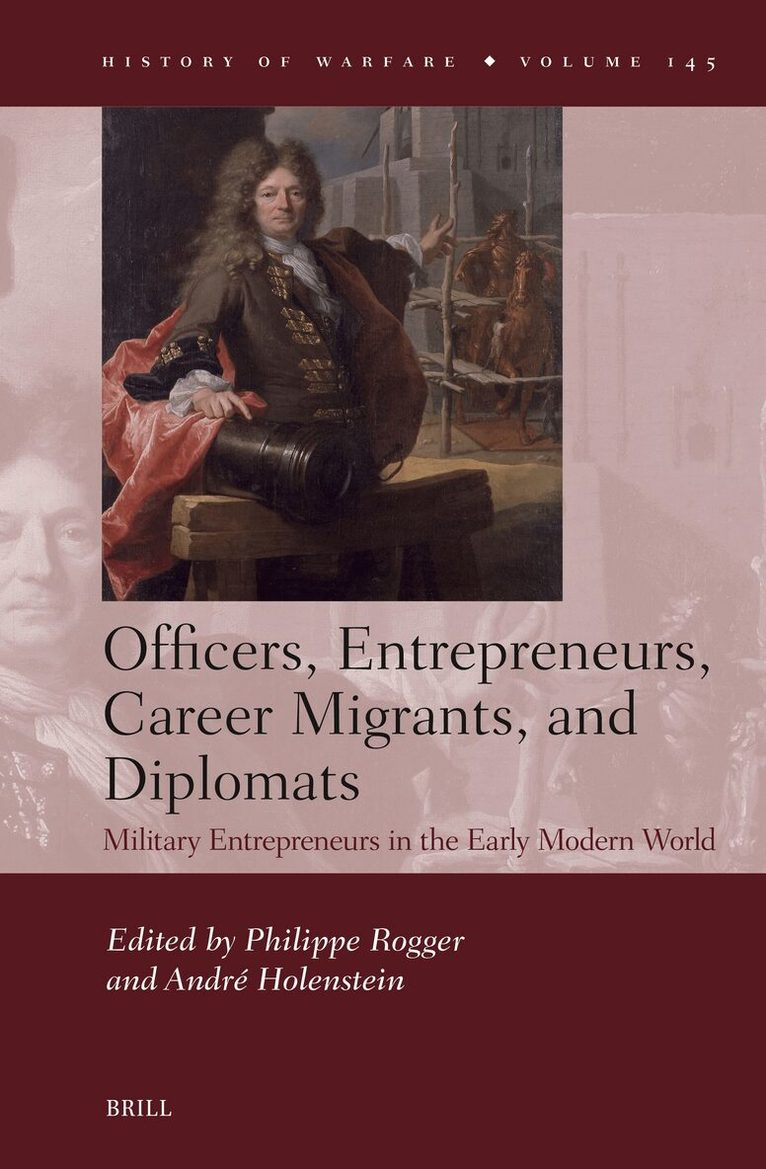
Del 145 - History of Warfare
Officers, Entrepreneurs, Career Migrants, and Diplomats
Military Entrepreneurs in the Early Modern World
Inbunden, Engelska, 2024
2 557 kr
Skickas inom 5-8 vardagar
“Money, money, and more money.” In the eyes of early modern warlords, these were the three essential prerequisites for waging war. The transnational studies presented here describe and explain how belligerent powers did indeed rely on thriving markets where military entrepreneurs provided mercenaries, weapons, money, credit, food, expertise, and other services. In a fresh and comprehensive examination of pre-national military entrepreneurship – its actors, structures and economic logic – this volume shows how readily business relationships for supplying armies in the 17th and 18th centuries crossed territorial and confessional boundaries.By outlining and explicating early modern military entrepreneurial fields of action, this new transnational perspective transcends the limits of national historical approaches to the business of war.Contributors are Astrid Ackermann, John Condren, Jasmina Cornut, Michael Depreter, Sébastien Dupuis, Marian Füssel, Julien Grand, André Holenstein, Katrin Keller, Michael Paul Martoccio, Tim Neu, David Parrott, Alexander Querengässer, Philippe Rogger, Guy Rowlands, Benjamin Ryser, Regula Schmid, and Peter H. Wilson.