Philo A. Hutcheson - Böcker
Visar alla böcker från författaren Philo A. Hutcheson. Handla med fri frakt och snabb leverans.
4 produkter
4 produkter
2 029 kr
Skickas inom 10-15 vardagar
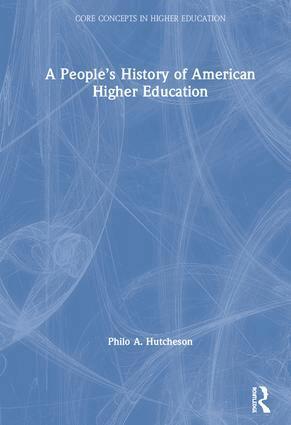
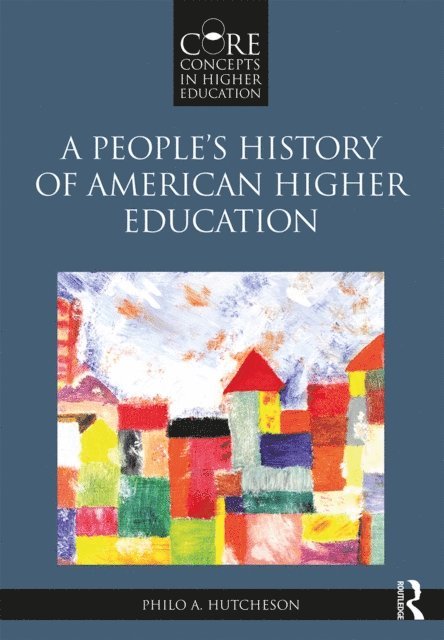
This pathbreaking textbook addresses key issues which have often been condemned to exceptions and footnotes—if not ignored completely—in historical considerations of U.S. higher education; particularly race, ethnicity, gender, and class. Organized thematically, this book builds from the ground up, shedding light on the full, diverse range of institutions—including small liberal arts schools, junior and community colleges, black and white women’s colleges, black colleges, and state colleges—that have been instrumental in creating the higher education system we know today. A People’s History of American Higher Education surveys the varied characteristics of the diverse populations constituting or striving for the middle class through educational attainment, providing a narrative that unites often divergent historical fields. The author engages readers in a powerful, revised understanding of what institutions and participants beyond the oft-cited elite groups have done for American higher education.A People’s History of American Higher Education focuses on those participants who may not have been members of elite groups, yet who helped push elite institutions and the country as a whole. Hutcheson introduces readers to both social and intellectual history, providing invaluable perspectives and methodologies for graduate students and faculty members alike. This essential history of American higher education brings a fresh perspective to the field, challenging the accepted ways of thinking historically about colleges and universities.
560 kr
Skickas inom 10-15 vardagar
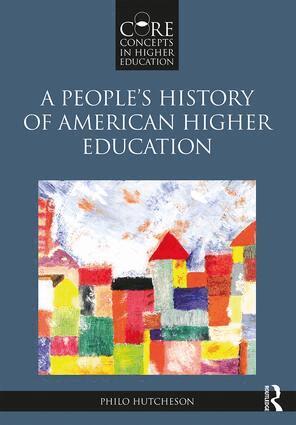
This pathbreaking textbook addresses key issues which have often been condemned to exceptions and footnotes—if not ignored completely—in historical considerations of U.S. higher education; particularly race, ethnicity, gender, and class. Organized thematically, this book builds from the ground up, shedding light on the full, diverse range of institutions—including small liberal arts schools, junior and community colleges, black and white women’s colleges, black colleges, and state colleges—that have been instrumental in creating the higher education system we know today. A People’s History of American Higher Education surveys the varied characteristics of the diverse populations constituting or striving for the middle class through educational attainment, providing a narrative that unites often divergent historical fields. The author engages readers in a powerful, revised understanding of what institutions and participants beyond the oft-cited elite groups have done for American higher education.A People’s History of American Higher Education focuses on those participants who may not have been members of elite groups, yet who helped push elite institutions and the country as a whole. Hutcheson introduces readers to both social and intellectual history, providing invaluable perspectives and methodologies for graduate students and faculty members alike. This essential history of American higher education brings a fresh perspective to the field, challenging the accepted ways of thinking historically about colleges and universities.
1 098 kr
Skickas inom 5-8 vardagar
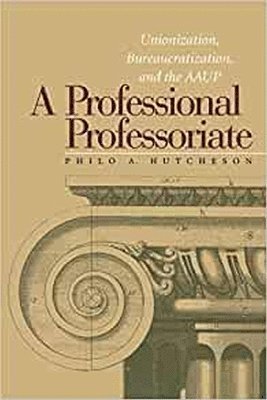
Starting with the question "How have professors and educational institutions responded to pressures to be professional yet act bureaucratically," Philo Hutcheson uses federal and AAUP records and surveys and blends historical research and sociological analysis to develop a full understanding of the problem. With the dramatic expansion of the professoriate following World War II came increasing tensions between the professor's perceived traditional status as an autonomous professional on the one hand and new role as a bureaucrat subject to institutional authority and responsible for departmental and committee assignments on the other. In this increasingly conflicted realm, the AAUP functioned as a key intermediary, dealing with such issues as tenure, salary, contracts, and even faculty strikes. Hutcheson examines how tensions between the requirements of institutional bureaucracies and the norms of the academic profession resulted in contentiousness and conflict within the national AAUP, between administrators and faculty members on individual campuses, within the ranks of faculties themselves, and even deep in the consciences of many concerned individuals. The book analyzes the association's ability to respond effectively and to balance the values of collegial representation with the powers of collective bargaining. It thus offers a detailed and authoritative examination of the AAUP's search for ways to sustain professionalism while dealing with the fundamental changes in the nature of the professoriate in the post-World War II era.
556 kr
Skickas inom 5-8 vardagar
Starting with the question "How have professors and educational institutions responded to pressures to be professional yet act bureaucratically," Philo Hutcheson uses federal and AAUP records and surveys and blends historical research and sociological analysis to develop a full understanding of the problem. With the dramatic expansion of the professoriate following World War II came increasing tensions between the professor's perceived traditional status as an autonomous professional on the one hand and new role as a bureaucrat subject to institutional authority and responsible for departmental and committee assignments on the other. In this increasingly conflicted realm, the AAUP functioned as a key intermediary, dealing with such issues as tenure, salary, contracts, and even faculty strikes. Hutcheson examines how tensions between the requirements of institutional bureaucracies and the norms of the academic profession resulted in contentiousness and conflict within the national AAUP, between administrators and faculty members on individual campuses, within the ranks of faculties themselves, and even deep in the consciences of many concerned individuals. The book analyzes the association's ability to respond effectively and to balance the values of collegial representation with the powers of collective bargaining. It thus offers a detailed and authoritative examination of the AAUP's search for ways to sustain professionalism while dealing with the fundamental changes in the nature of the professoriate in the post-World War II era.