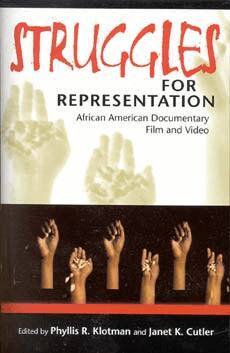
Struggles for Representation examines over 300 non-fiction films by more than 150 African American film/videomakers and includes an extensive filmography, bibliography, and excerpts from interviews with film/videomakers. In eleven original essays, contributors explore the extraordinary scope of these aesthetic and social documents and chart a previously undiscovered territory: documentaries that examine the aesthetic, economic, historical, political, and social forces that shape the lives of black Americans, as seen from their perspectives.Until now, scholars and critics have concentrated on black fiction film and on mainstream non-fiction films, neglecting the groundbreaking body of black non-fiction productions that offer privileged views of American life. Yet, these rich and varied works in film, video, and new electronic media, convey vast stores of knowledge and experience. Although most documentary cannot hope to match fiction film's mass appeal, it is unrivaled in its ability to portray searing, indelible impressions of black life, including concrete views of significant events and moving portraits of charismatic individuals. Documentary footage brings audiences the moments when civil rights protestors were attacked by state troopers; it provides the sights and sounds of Malcom X delivering an electrifying speech, Betty Carter performing a heart-wrenching song, and Langston Hughes strolling on a beach. Uniting all of this work is the "struggle for representation" that characterizes each film–an urgent desire to convey black life in ways that counter the uninformed and often distorted representations of mass media film and television productions. African American documentaries have long been associated with struggles for social and political empowerment; for many film/videomakers, documentary is a compelling mode with which to present an alternative, more authentic narrative of black experiences and an effective critique of mainstream discourse. Thus, many socially and politically committed film/videomakers view documentary as a tool with which to interrogate and reinvent history; their works fill gaps, correct errors, and expose distortions in order to provide counter-narratives of African American experience.Contributors include Paul Arthur, Houston A. Baker, Jr., Mark F. Baker, Pearl Bowser, Janet K. Cutler Manthia Diawara, Elizabeth Amelia Hadley, Phyllis R. Klotman, Tommy Lee Lott, Erika Muhammad, Valerie Smith, and Clyde Taylor.