Pierre Riché - Böcker
Visar alla böcker från författaren Pierre Riché. Handla med fri frakt och snabb leverans.
4 produkter
4 produkter
378 kr
Skickas inom 10-15 vardagar
In the growth of towns and the revival of commerce, historians have seen the development of a bourgeois and capitalist Europe, but Pierre RichÉ reminds us that Carolingians saw a world of forest and wasteland, in which scattered castles and villages were outposts against the savagery of nature, bands of outlaws, and a myriad of pagan superstitions. Daily Life in the World of Charlemagne gives us a vivid and deeply textured picture of the fear and insecurity that drove people, great and humble alike, to draw together with one another, with their stronger neighbors, and with God and His saints, in search of protection and sustenance.RichÉ makes extensive use of modern social history techniques and the tools of new studies on nutrition, disease, demography, and climatology, as well as art history and archaeology, to comprehend the Carolingian mentality and reconstruct the material culture of the early European world.
403 kr
Skickas inom 10-15 vardagar
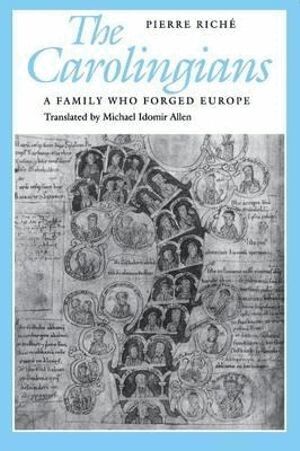
Pierre RichÉ traces the emergence of Europe from the seventh to the early eleventh century, the period that witnessed the rise, fall, and revival of the Carolinian Empire. It was during this time the first contours of a broad new civilization and the first visible signs of European unity are discernable.Until the seventh century Europe was simply a geographic term; as Isidore of Seville defined it, Europe was "the space that extended from the river Don to Spain and the Atlantic." By the ninth century, however, Europe had gradually acquired a collective being with a shared identity. The political, cultural, and spiritual activity of laymen and churchmen had fostered the creation of a common European fold, which stretched from the Atlantic to the Vistula, and the plains of the middle Danube.The transformation was due in large part to the Carolinians, their relations, and their allies, who together became the masters of Gaul and then much of the West. RichÉ traces the destiny of the Carolingians and the parallel history of Europe, stressing the roles of the leaders who imposed themselves by force, diplomacy, and culture.
1 744 kr
Skickas inom 10-15 vardagar
This second collection of articles by Pierre Riché is concerned with the cultural history of Western Europe in the early Middle Ages, from the end of Antiquity up to the 11th century. Their particular concern is the history of education, notably intellectual education in the monastic and episcopal schools that existed before the rise of the university. The first papers deal with the transition from the Roman to the medieval period and with the Carolingian renaissance of intellectual activity, and are followed by a section focusing on the works of Gerbert of Aurillac. The following articles study the techniques and theory of teaching, as well as attitudes towards childhood. Cette seconde collection d’articles de Pierre Riché traite de l’histoire culturelle de l’Europe occidentale au début du moyan âge, de la fin de l’antiquité au 11e siècle. Ils concernent particulièrement l’histoire de l’éducation, notamment celle pratiqée dans les écoles monastiques et épiscopales, dont l’existence précédait l’avènement de l’université. Les premiers essais traitent de la transition entre la période romaine et le moyen âge, et de la renaissance intellectuelle à l’époque carolingienne; ils sont suivis d’une section se concentrant sur les travaux de Gerbert d’Aurillac. Les articles suivants étudient les techniques et la théorie de l’enseignement, ainsi que les attitudes vis à vis de l’enfance.
206 kr
Skickas
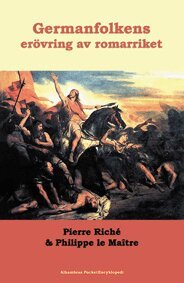
För en invånare i Romarriket var en barbar en människa som talade ett obegripligt språk och tillhörde ett fortfarande primitivt folkslag. Så t.ex. bergsbor och nomader i Nordafrika, alanerna vid Svarta havet och kelterna i Britannien förblev barbarfolk för romarna, som uppfattade dem som hot mot den civiliserade världen. På 300- och 400-talen invaderade goter, franker, vandaler och andra germanfolk västra delen av romarriket och bidrog på ett avgörande sätt till att göra slut på den antika civilisationen. Hur uppstod dessa germanfolk och hurdana var deras samhällen? Vilka svagheter hade romarriket, som gjorde att det inte kunde hålla stånd mot anstormningen? Vad skedde på ett djupare plan i denna övergång från antiken till medeltiden? Det klarläggs i denna bok av två franska historiker.