Piet van Kempen – Författare
Visar alla böcker från författaren Piet van Kempen. Handla med fri frakt och snabb leverans.
6 produkter
6 produkter
Del 46 - International Penal and Penitentiary Foundation
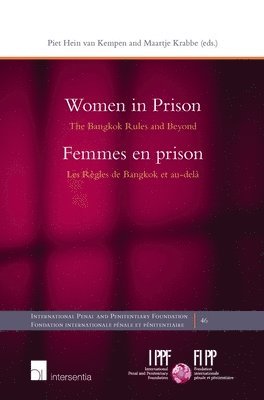
Women in Prison
The Bangkok Rules and Beyond
Inbunden, Engelska, 2017
1 426 kr
Tillfälligt slut
Women are a rapidly growing minority in prisons. Prison systems, however, have always been determined by the behaviour of men. The 2010 UN Bangkok Rules form a body of rules that is specifically aimed at the needs of women in prison. Being the first international instrument on this subject, the Bangkok Rules can be considered a milestone. Thus this volume focuses on the topic of women in prison in general, and on the Bangkok Rules in particular. The volume comprises an introductory chapter, seven thematic chapters, and 23 chapters dedicated to individual countries around the world. Themes discussed in these chapters include, among others, the (international) human rights framework applicable to women in prison, statistics and criminological factors relevant to women in prison, and the actual conditions of women in prison worldwide. An extensive collection of expert knowledge, this volume intends to highlight both good practice in the context of women in prison and the many challenges that lie ahead.
Del 47 - International Penal and Penitentiary Foundation
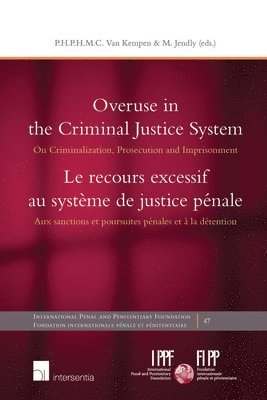
Overuse in the Criminal Justice System
On Criminalization, Prosecution and Imprisonment
Inbunden, Engelska, 2019
1 424 kr
Skickas inom 5-8 vardagar
The criminal justice system encompasses the most severe instrument at the state's disposal in times of peace. For this and many other reasons, overuse of that system is a serious matter.It may present itself in different forms. Overuse of criminalization may mean that too much conduct is criminalized without necessity. Overuse of prosecution may present itself if too many violations of criminal offences are prosecuted, while in certain individual cases or specific categories of cases it would be more effective, fairer, more efficient or otherwise desirable to refrain from prosecution and/or to apply alternative means, such as negotiating justice or administrative fines. Finally, the criminal justice system can be overused through the application and execution of too many or too severe prison sentences.All these forms of overuse are discussed in this volume. It contains one introductory chapter, seven thematic chapters and sixteen chapters on individual countries around the world. Themes discussed in these chapters are, among others, the principle that criminal law is and must be regarded as a so-called ultima ratio or ultimum remedium, the relevant human rights framework, worldwide statistics, and legal and practical restraints as well as possibilities to solve overuse.Containing an extensive collection of expert knowledge, this volume intends to expose legal possibilities, good practices and the many challenges that lie ahead when attempting to prevent overuse in the criminal justice system.
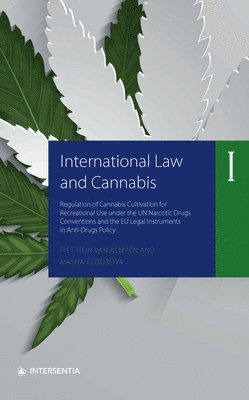
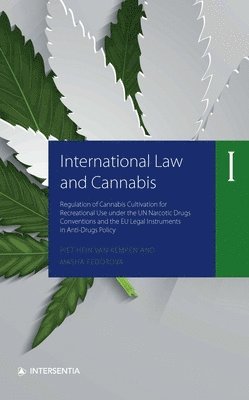
International Law and Cannabis I
Regulation of Cannabis Cultivation for Recreational Use under the UN Narcotic Drugs Conventions and the EU Legal Instruments in Anti-Drugs Policy
Häftad, Engelska, 2019
940 kr
Skickas inom 5-8 vardagar
What legal avenues do states have to regulate cannabis cultivations and trade for recreational use? This question has generated heated discussions in various societies, in political and academic discourses. Several states are considering adjusting or have adjusted their legal and policy approaches towards a more lenient regulation of cannabis cultivation and trade for the recreational user market.This book addresses the legal question to what extent domestic initiatives involving the regulation of cannabis cultivation for recreational use are compatible with the relevant UN narcotic drugs conventions and European Union law. To this end, the book provides a comprehensive and detailed analysis of the UN Single Convention on Narcotic Drugs (1961), as amended by the Protocol in 1972, and the UN Convention against Illicit Traffic in Narcotic Drugs (1988). The relevant European law is also considered, particularly the so-called Schengen acquis (1985 Agreement and 1990 Implementation Agreement), the Joint Action on illegal drug trafficking (1996) and the Framework Decision on Illegal Drug Trafficking (2004). This analysis forms the basis for an evaluative framework for various initiatives that have advanced the regulation of cannabis cultivation for reactional use in several states, such as the 'coffeeshop system' in the Netherlands, the steps towards legalization of cannabis in several states in the Americas and Canada and the phenomenon of Cannabis Social Clubs.
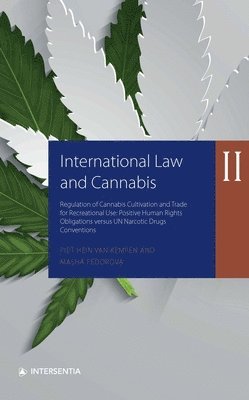
International Law and Cannabis II
Regulation of Cannabis Cultivation and Trade for Recreational Use: Positive Human Rights Obligations versus UN Narcotic Drugs Conventions
Häftad, Engelska, 2019
1 296 kr
Skickas inom 5-8 vardagar
What legal avenues do states have to regulate cannabis cultivations and trade for recreational use? This question has generated heated discussions in various societies, in political and academic discourses. Several states are considering adjusting or have adjusted their legal and policy approaches towards a more lenient regulation of cannabis cultivation and trade for the recreational user market.Seen from the perspective of relevant United Nations narcotic drugs conventions, the legal avenues for regulation are virtually non-existent. This book takes an innovative approach to this issue and approaches the possibility for regulation of cannabis for recreational use from the perspective of positive human rights obligations. To what extend can regulation of cannabis for recreational use, for the sake of health, safety and crime control, be considered a positive human rights obligation resulting from the right to health, the right to life, the right to physical and psychological integrity and the right to privacy? From the subsequent conclusions, a second pertinent question arises: what hierarchical relationship, if any, exists between these positive human rights obligations and the obligations arising from the UN drugs conventions? Through an in-depth and systematic analysis of relevant international human rights law and public international law, this book presents the steps, assumptions and conditions that are relevant if a state were to decide, on the basis of the incumbent positive human rights obligations, to permit cannabis cultivation and trade for the recreational user market under regulation.
1 538 kr
Tillfälligt slut
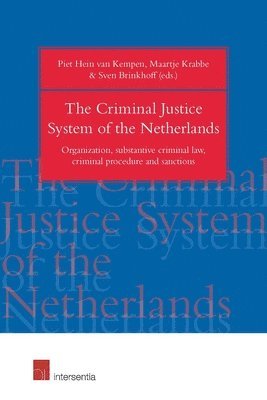
Criminal Justice System of the Netherlands
Organization, substantive criminal law, criminal procedure and sanctions
Häftad, Engelska, 2019
712 kr
Skickas inom 5-8 vardagar
The Criminal Justice System of the Netherlands offers an introduction to our fascinating legal system from a criminal law angle. The book consists of four parts. Part I covers general matters, such as the organization of the Dutch criminal justice system and the latest statistics on crime and punishment. Part II presents the basics of Dutch substantive criminal law and Part III discusses our criminal procedure. Lastly, Part IV focusses on the final stage of the criminal process: sanctions and their enforcement. Throughout the book, authors highlight aspects of the criminal justice system of the Netherlands that would be of specific interest to foreigners. These peculiarities include, for example, the many powers of the Dutch public prosecutor, the Dutch position on euthanasia and our (in)famous drug policy. The book contains several references to case law, websites and more detailed texts (in English where possible) in order to support readers who desire a more thorough understanding of a specific topic. The Criminal Justice System of the Netherlands is recommended to students taking an introductory course on Dutch criminal law or on comparative criminal law. It is, however, also an excellent starting point for foreign researchers who wish to explore the Dutch criminal law system.