Pilar Riaño-Alcalá – författare
Visar alla böcker från författaren Pilar Riaño-Alcalá. Handla med fri frakt och snabb leverans.
3 produkter
3 produkter
1 073 kr
Kommande
The South American nation of Colombia has been beset by decades of state, guerrilla, and paramilitary violence, creating deep and long-lasting impacts. Many scholars have investigated not only the atrocious events themselves but also the various truth and memory processes that have sought to address this troubling past. Here, Pilar Riaño-Alcalá takes a new approach by applying Black, Indigenous, and memory studies to two emblematic sites of mass violence: Bahia Portete, a Wayuu Indigenous territory in Upper Guajira; and Bojayá, a Black and Embera Indigenous territory in Chocó. By bringing human and nonhuman actors to bear on the ongoing acts of remembering and by centering Indigenous and Black ontologies, Riaño-Alcalá uncovers how these communities repair themselves—how they understand, restore, sustain, and reimagine themselves despite the constant uncertainties of war and racial capitalism. Contributing to human rights studies, memory studies, Indigenous studies, Latin American studies, and anthropologies of social repair, this book offers critical new interventions in a long-studied history.
2 126 kr
Skickas inom 10-15 vardagar
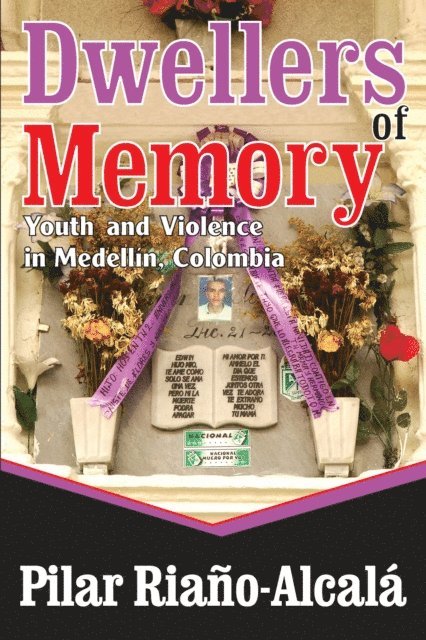
Dwellers of Memory is an ethnographic study of how urban youth in Colombia came to be at the intersection of multiple forms of political, drug-related, and territorial violence in a country undergoing forty years of internal armed conflict. It examines the ways in which youth in the city of Medellin reconfigure their lives and, cultural worlds in the face of widespread violence. This violence has transgressed familiar boundaries and destroyed basic social supports and networks of trust. This volume attempts to map and understand its patterns and flows.The author explores how Medellin's youth locate themselves and make, sense of violence through contradictory and shifting memory practices. The violence has not completely taken over their cultural worlds or their subjectivities. Practices of remembering and forgetting are key methods by which these youth rework their identities and make sense of the impact of violence on their lives. While the experience of violence is rooted in urban space and urban youth, the memory dwellers use a sense of place, oral histories of death, and narratives of fear as survival strategies for inhabiting violent neighborhoods. The book also examines fissures in memory, the contradictory constructions of young people's subjective selves, and practices of gendered violence and terror. All have and continue to pose risks to the historical memory and cultural survival of the residents of Medellin.Dwellers of Memory offers an alternative ethnographic approach to the study of memory and violence, one that calls into question whether the, role of the ethnographer of violence is to be a mere witness of terror, or to oppose it by writing against it. It will be of interest to sociologists, anthropologists, and students of, ethnography.
690 kr
Skickas inom 10-15 vardagar
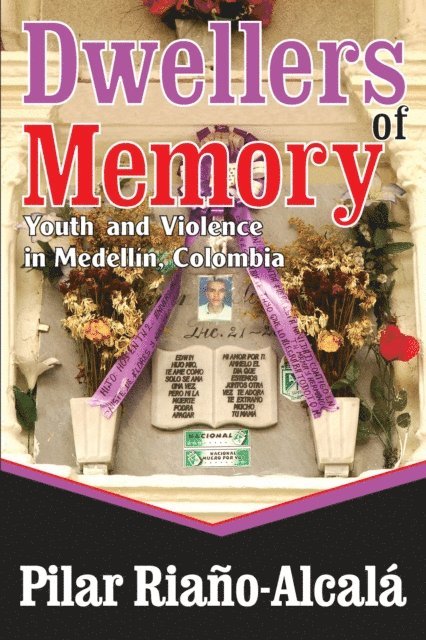
Dwellers of Memory is an ethnographic study of how urban youth in Colombia came to be at the intersection of multiple forms of political, drug-related, and territorial violence in a country undergoing forty years of internal armed conflict. It examines the ways in which youth in the city of Medellin reconfigure their lives and, cultural worlds in the face of widespread violence. This violence has transgressed familiar boundaries and destroyed basic social supports and networks of trust. This volume attempts to map and understand its patterns and flows.The author explores how Medellin's youth locate themselves and make, sense of violence through contradictory and shifting memory practices. The violence has not completely taken over their cultural worlds or their subjectivities. Practices of remembering and forgetting are key methods by which these youth rework their identities and make sense of the impact of violence on their lives. While the experience of violence is rooted in urban space and urban youth, the memory dwellers use a sense of place, oral histories of death, and narratives of fear as survival strategies for inhabiting violent neighborhoods. The book also examines fissures in memory, the contradictory constructions of young people's subjective selves, and practices of gendered violence and terror. All have and continue to pose risks to the historical memory and cultural survival of the residents of Medellin.Dwellers of Memory offers an alternative ethnographic approach to the study of memory and violence, one that calls into question whether the, role of the ethnographer of violence is to be a mere witness of terror, or to oppose it by writing against it. It will be of interest to sociologists, anthropologists, and students of, ethnography.