Piotr Blumczynski - Böcker
Visar alla böcker från författaren Piotr Blumczynski. Handla med fri frakt och snabb leverans.
9 produkter
9 produkter
787 kr
Skickas inom 10-15 vardagar
In this book, Piotr Blumczynski explores the central role of translation as a key epistemological concept as well as a hermeneutic, ethical, linguistic and interpersonal practice. His argument is three-fold: (1) that translation provides a basis for genuine, exciting, serious, innovative and meaningful exchange between various areas of the humanities through both a concept (the WHAT) and a method (the HOW); (2) that, in doing so, it questions and challenges many of the traditional boundaries and offers a transdisciplinary epistemological paradigm, leading to a new understanding of quality, and thus also meaning, truth, and knowledge; and (3) that translational phenomena are studied by a broad range of disciplines in the humanities (including philosophy, theology, linguistics, and anthropology) using various, often seemingly unrelated concepts which nevertheless display a considerable degree of qualitative proximity. The common thread running through all these convictions and binding them together is the insistence that translational phenomena are ubiquitous. Because of its unconventional and innovative approach, this book will be of interest to translation studies scholars looking to situate their research within a broader transdisciplinary model, as well as to students of translation programs and practicing translators who seek a fuller understanding of why and how translation matters.
Languages of COVID-19
Translational and Multilingual Perspectives on Global Healthcare
Inbunden, Engelska, 2022
1 943 kr
Skickas inom 10-15 vardagar
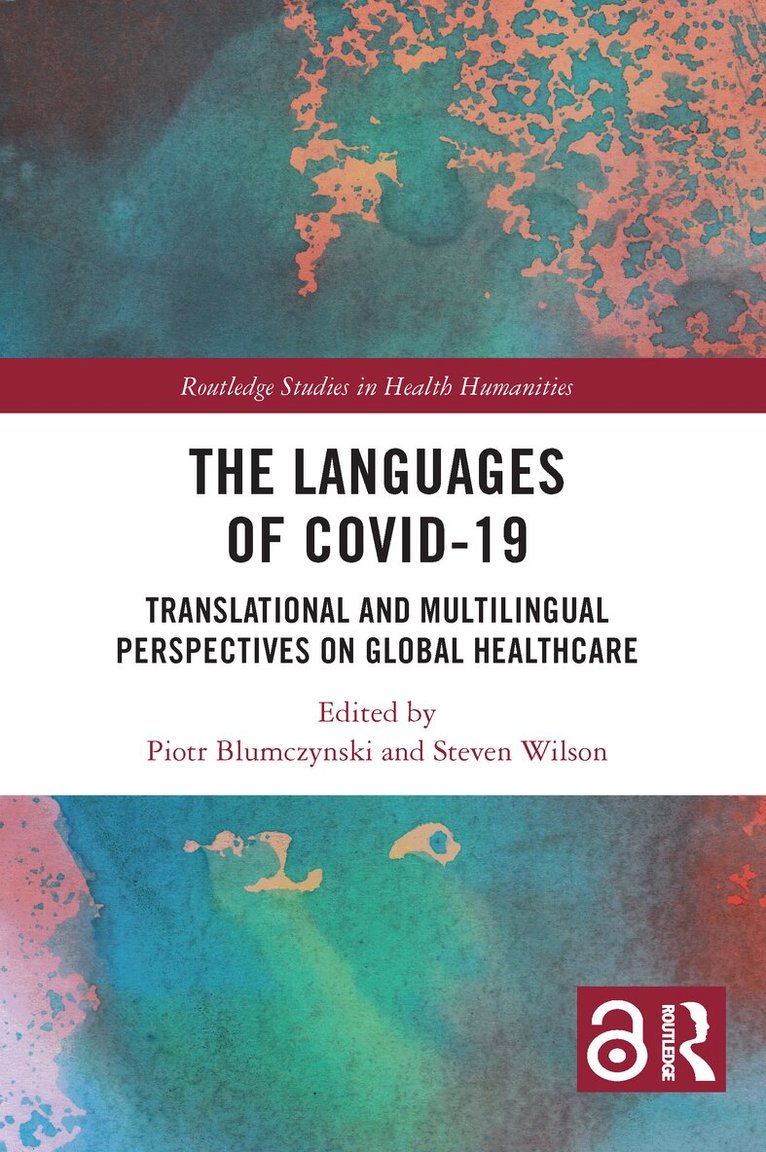
This collection advocates languages-based, translational research to be part of the partnerships and collaborations required to make sense of, and respond to, COVID-19 as one of the major global challenges of our time.Bringing together scholars and practitioners from a wide range of disciplines, this volume is bound by a common thread stressing the importance of linguistic sensitivity, (inter)cultural knowledge and translational mediation in the frontline response to COVID-19. Featuring contributors from around the world and reflecting on the language used to frame COVID-19 in diverse cultural contexts of the Global North and Global South, the book proposes that paying attention to the transmission of ideas, ideologies, narratives and history through processes of translation results in a broadening of social, cultural and medical understandings of COVID-19. Spanning nearly 20 signed and spoken languages, the volume argues that only in going beyond an Anglophone perspective can we better understand the cultural, social and political facets of the pandemic and, in turn, produce a comprehensive, efficient global response to disease management.This book will be of interest to scholars in translation and interpreting studies, modern languages, applied linguistics, cultural studies, Deaf Studies, intercultural communication and medical humanities.
Languages of COVID-19
Translational and Multilingual Perspectives on Global Healthcare
Häftad, Engelska, 2024
593 kr
Skickas inom 10-15 vardagar
This collection advocates languages-based, translational research to be part of the partnerships and collaborations required to make sense of, and respond to, COVID-19 as one of the major global challenges of our time.Bringing together scholars and practitioners from a wide range of disciplines, this volume is bound by a common thread stressing the importance of linguistic sensitivity, (inter)cultural knowledge and translational mediation in the frontline response to COVID-19. Featuring contributors from around the world and reflecting on the language used to frame COVID-19 in diverse cultural contexts of the Global North and Global South, the book proposes that paying attention to the transmission of ideas, ideologies, narratives and history through processes of translation results in a broadening of social, cultural and medical understandings of COVID-19. Spanning nearly 20 signed and spoken languages, the volume argues that only in going beyond an Anglophone perspective can we better understand the cultural, social and political facets of the pandemic and, in turn, produce a comprehensive, efficient global response to disease management.This book will be of interest to scholars in translation and interpreting studies, modern languages, applied linguistics, cultural studies, Deaf Studies, intercultural communication and medical humanities.
1 873 kr
Skickas inom 10-15 vardagar
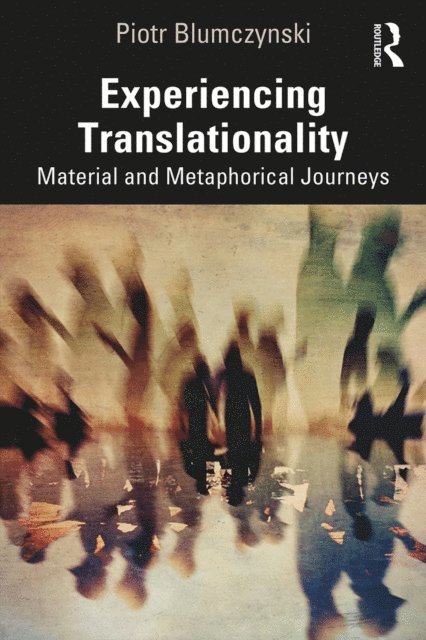
This innovative book takes the concept of translation beyond its traditional boundaries, adding to the growing body of literature which challenges the idea of translation as a primarily linguistic transfer.To gain a fresh perspective on the work of translation in the complex processes of meaning-making across physical, social and cultural domains (conceptualized as translationality), Piotr Blumczynski revisits one of the earliest and most fundamental senses of translation: corporeal transfer. His study of translated religious officials and translated relics reframes our understanding of translation as a process creating a sense of connection with another time, place, object or person. He argues that a promise of translationality animates a broad spectrum of cultural, artistic and commercial endeavours: it is invoked, for example, in museum exhibitions, art galleries, celebrity endorsements, and the manufacturing of musical instruments. Translationality offers a way to reimagine the dynamic entanglements of matter and meaning, space and time, past and present.This book will be of interest to students and scholars in translation studies as well as related disciplines such as the history of religion, anthropology of art, and material culture.
579 kr
Skickas inom 10-15 vardagar
This innovative book takes the concept of translation beyond its traditional boundaries, adding to the growing body of literature which challenges the idea of translation as a primarily linguistic transfer.To gain a fresh perspective on the work of translation in the complex processes of meaning-making across physical, social and cultural domains (conceptualized as translationality), Piotr Blumczynski revisits one of the earliest and most fundamental senses of translation: corporeal transfer. His study of translated religious officials and translated relics reframes our understanding of translation as a process creating a sense of connection with another time, place, object or person. He argues that a promise of translationality animates a broad spectrum of cultural, artistic and commercial endeavours: it is invoked, for example, in museum exhibitions, art galleries, celebrity endorsements, and the manufacturing of musical instruments. Translationality offers a way to reimagine the dynamic entanglements of matter and meaning, space and time, past and present.This book will be of interest to students and scholars in translation studies as well as related disciplines such as the history of religion, anthropology of art, and material culture.
662 kr
Skickas inom 10-15 vardagar
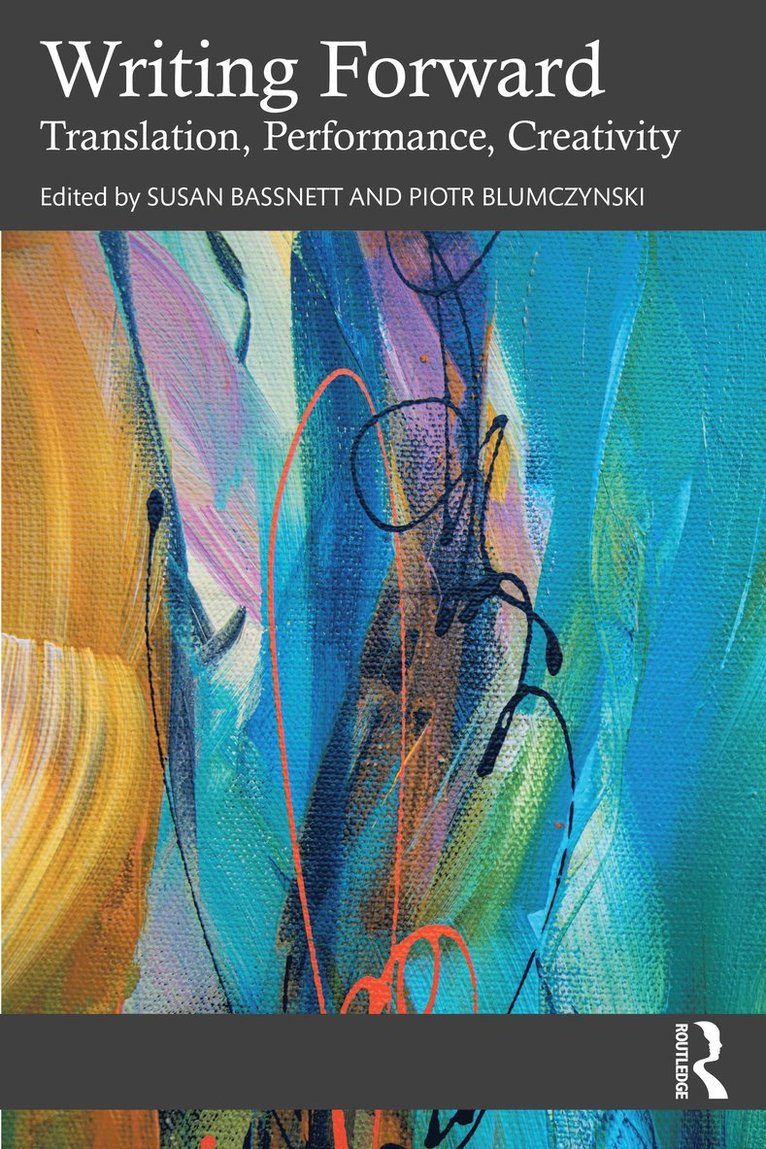
This collection of essays by a team of internationally respected researchers at the cutting edge of translation studies was inspired by the idea of “writing forward” as a strategy for theatre translation proposed by David Johnston, the award-winning translator and scholar.Opening this volume is a conversation between David Johnston and Lawrence Venuti in which they explore a broad range of topics that bear on the translation of theatrical texts for performance. The chapters that follow are grouped into three main parts.Part I, “Extending translation”, contains essays whose respective theoretical emphases test, push, and stretch traditional conceptual boundaries.Part II, “Translating for theatre”, zooms in on various aspects of theatre translation.Part III, “Translation and creativity”, shifts the focus beyond the stage to other forms of artistic expression: poetry, painting, film, and television.Finally, in the short play Noli me tangere, written especially for this volume, Juan Mayorga reflects on theatre as the art of distance and on the mysteriousness of translation as the art of negotiating that distance.Thinking about and practicing translation as “writing forward” underscores its perpetual provisionality and hermeneutic openness; its ability to surprise and stimulate but also remind and reassure. By enriching our understanding of translation, performance, and creativity, this volume will no doubt inspire further explorations into their fascinating complexities. Useful and important reading for advanced students and researchers of literature, theatre, culture, and translation.
2 401 kr
Skickas inom 10-15 vardagar
This collection of essays by a team of internationally respected researchers at the cutting edge of translation studies was inspired by the idea of “writing forward” as a strategy for theatre translation proposed by David Johnston, the award-winning translator and scholar.Opening this volume is a conversation between David Johnston and Lawrence Venuti in which they explore a broad range of topics that bear on the translation of theatrical texts for performance. The chapters that follow are grouped into three main parts.Part I, “Extending translation”, contains essays whose respective theoretical emphases test, push, and stretch traditional conceptual boundaries.Part II, “Translating for theatre”, zooms in on various aspects of theatre translation.Part III, “Translation and creativity”, shifts the focus beyond the stage to other forms of artistic expression: poetry, painting, film, and television.Finally, in the short play Noli me tangere, written especially for this volume, Juan Mayorga reflects on theatre as the art of distance and on the mysteriousness of translation as the art of negotiating that distance.Thinking about and practicing translation as “writing forward” underscores its perpetual provisionality and hermeneutic openness; its ability to surprise and stimulate but also remind and reassure. By enriching our understanding of translation, performance, and creativity, this volume will no doubt inspire further explorations into their fascinating complexities. Useful and important reading for advanced students and researchers of literature, theatre, culture, and translation.
800 kr
Skickas inom 10-15 vardagar
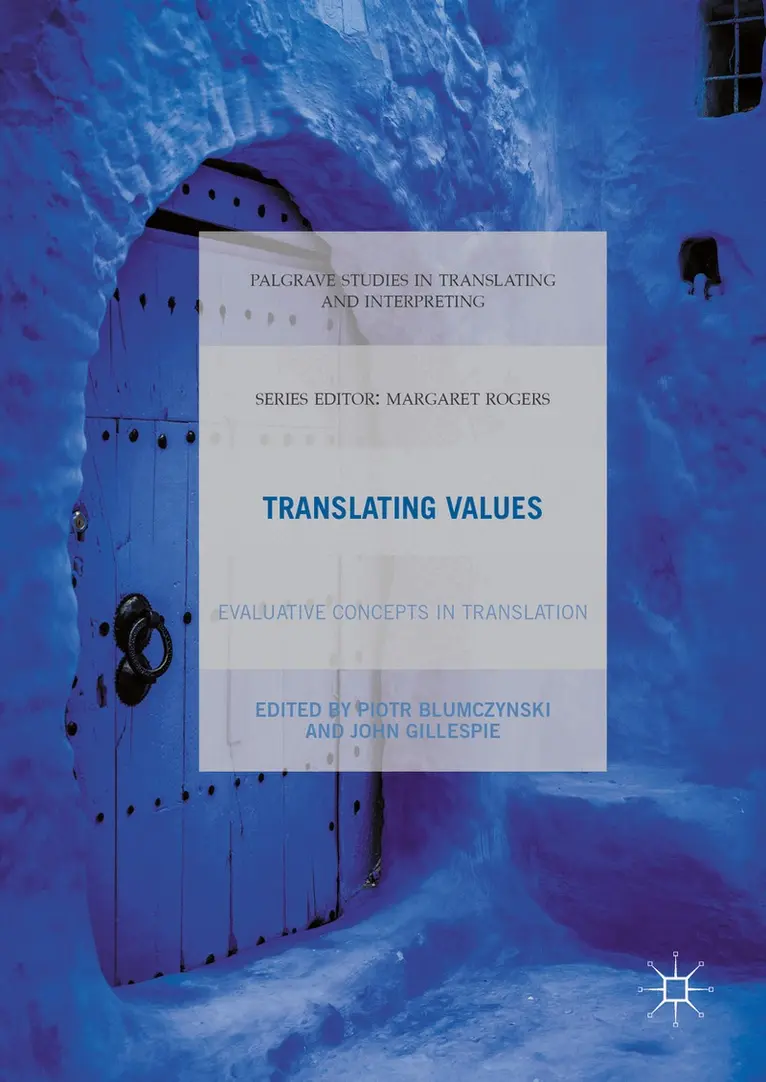
This collection explores the central importance of values and evaluative concepts in cross-cultural translational encounters. Written by a group of international scholars from a diverse range of linguistic and cultural backgrounds, the chapters in this book consider what it means to translate cultures by examining core values and their relationship to key evaluative concepts (such as authenticity, clarity, home, honour, or justice) and how they influence the complex multidimensional process of translation. This book will be of interest to academics studying cross-cultural and inter-linguistic interactions, to translators and interpreters, students of translation and of modern languages, and all those dealing with multilingual and multicultural settings.
2 555 kr
Skickas inom 10-15 vardagar
In this book, Piotr Blumczynski explores the central role of translation as a key epistemological concept as well as a hermeneutic, ethical, linguistic and interpersonal practice. His argument is three-fold: (1) that translation provides a basis for genuine, exciting, serious, innovative and meaningful exchange between various areas of the humanities through both a concept (the WHAT) and a method (the HOW); (2) that, in doing so, it questions and challenges many of the traditional boundaries and offers a transdisciplinary epistemological paradigm, leading to a new understanding of quality, and thus also meaning, truth, and knowledge; and (3) that translational phenomena are studied by a broad range of disciplines in the humanities (including philosophy, theology, linguistics, and anthropology) using various, often seemingly unrelated concepts which nevertheless display a considerable degree of qualitative proximity. The common thread running through all these convictions and binding them together is the insistence that translational phenomena are ubiquitous. Because of its unconventional and innovative approach, this book will be of interest to translation studies scholars looking to situate their research within a broader transdisciplinary model, as well as to students of translation programs and practicing translators who seek a fuller understanding of why and how translation matters.