Piotr Łubiński - Böcker
Visar alla böcker från författaren Piotr Łubiński. Handla med fri frakt och snabb leverans.
3 produkter
3 produkter
635 kr
Skickas inom 10-15 vardagar
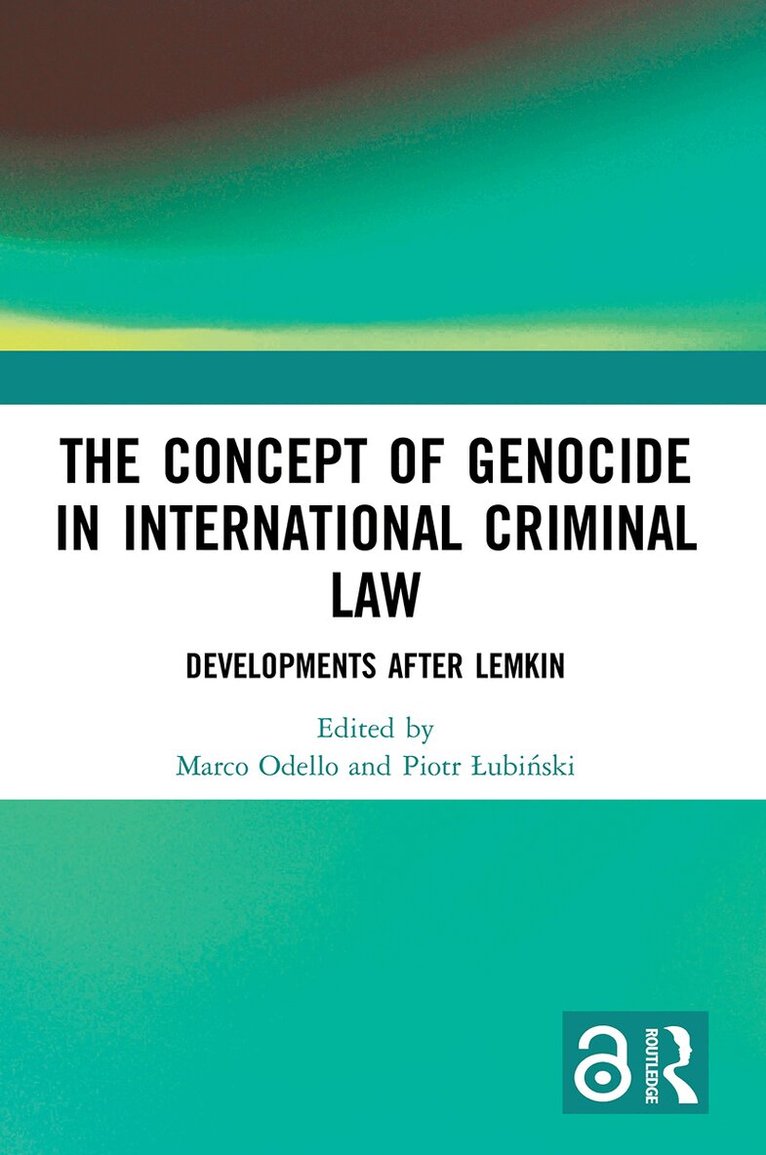
This book presents a review of historical and emerging legal issues that concern the interpretation of the international crime of genocide.The Polish legal expert Raphael Lemkin formulated the concept of genocide during the Nazi occupation of Europe, and it was then incorporated into the 1948 Convention on the Prevention and Punishment of the Crime of Genocide. This volume looks at the issues that are raised both by the existing international law definition of genocide and by the possible developments that continue to emerge under international criminal law. The authors consider how the concept of genocide might be used in different contexts, and see whether the definition in the 1948 convention may need some revision, also in the light of the original ideas that were expressed by Lemkin. The book focuses on specific themes that allow the reader to understand some of the problems related to the legal definition of genocide, in the context of historical and recent developments.As a valuable contribution to the debate on the significance, meaning and application of the crime of genocide the book will be essential reading for students and academics working in the areas of Legal History, International Criminal Law, Human Rights, and Genocide Studies.Chapter 12 of this book is freely available as a downloadable Open Access PDF under a Creative Commons Attribution-Non Commercial-No Derivatives 4.0 license available at http://www.taylorfrancis.com/books/e/9781003015222
2 150 kr
Skickas inom 10-15 vardagar
This book presents a review of historical and emerging legal issues that concern the interpretation of the international crime of genocide.The Polish legal expert Raphael Lemkin formulated the concept of genocide during the Nazi occupation of Europe, and it was then incorporated into the 1948 Convention on the Prevention and Punishment of the Crime of Genocide. This volume looks at the issues that are raised both by the existing international law definition of genocide and by the possible developments that continue to emerge under international criminal law. The authors consider how the concept of genocide might be used in different contexts, and see whether the definition in the 1948 convention may need some revision, also in the light of the original ideas that were expressed by Lemkin. The book focuses on specific themes that allow the reader to understand some of the problems related to the legal definition of genocide, in the context of historical and recent developments.As a valuable contribution to the debate on the significance, meaning and application of the crime of genocide the book will be essential reading for students and academics working in the areas of Legal History, International Criminal Law, Human Rights, and Genocide Studies.Chapter 12 of this book is freely available as a downloadable Open Access PDF under a Creative Commons Attribution-Non Commercial-No Derivatives 4.0 license available at http://www.taylorfrancis.com/books/e/9781003015222
1 921 kr
Skickas inom 10-15 vardagar
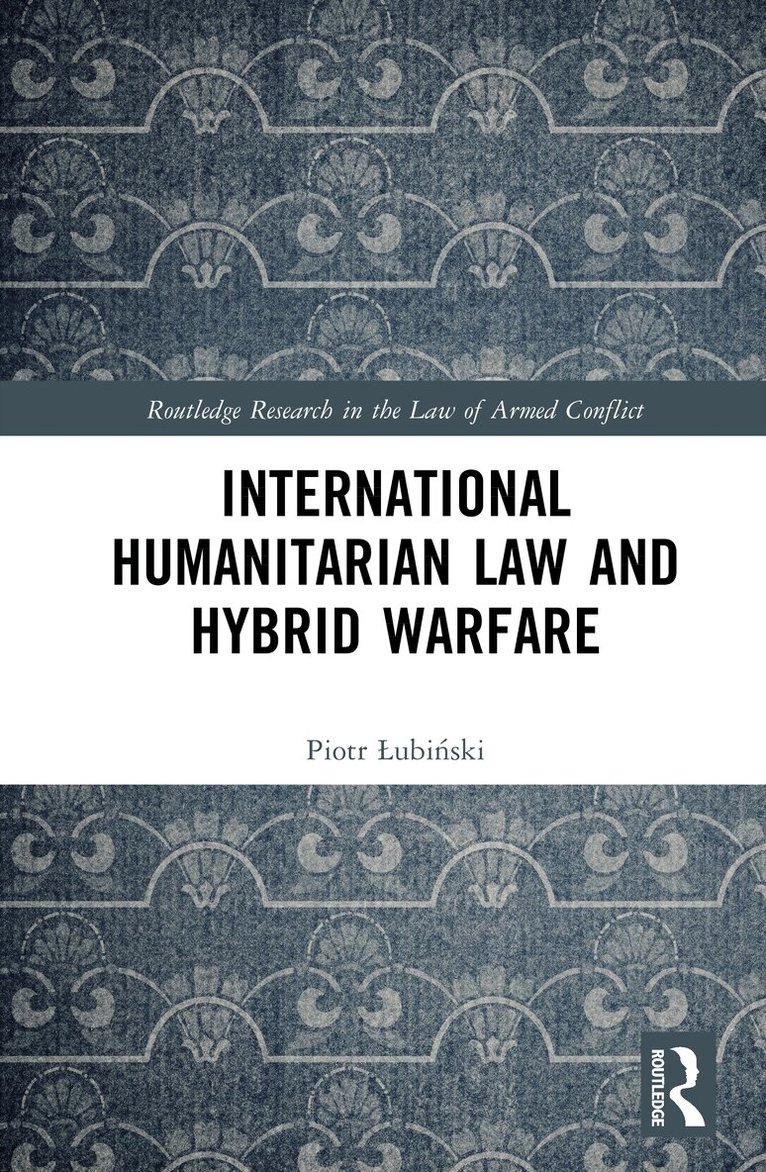
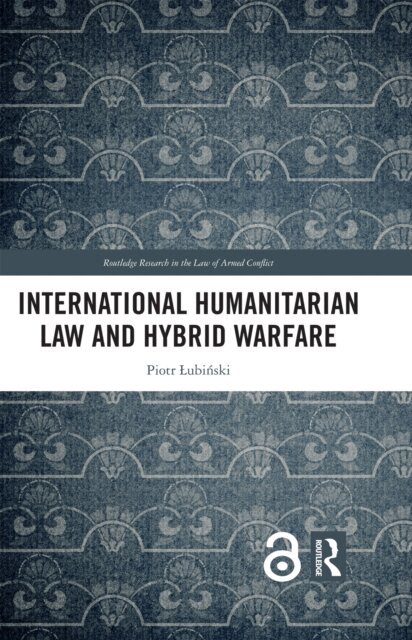
This groundbreaking monograph offers a comprehensive legal and conceptual analysis of hybrid warfare and hybrid threats—two evolving challenges that blur the boundaries between war and peace. Drawing from international law, political science, and security studies, the book explores how states and non-state actors exploit legal, informational, and cyber tools to undermine adversaries without crossing the threshold of conventional warfare. With in-depth case studies and a critical review of doctrines from NATO, the EU, China, and Russia, the author maps the conceptual thresholds that distinguish hybrid threats from hybrid warfare. The book introduces “hybrid legality” as a framework to understand how international humanitarian law, human rights law, and sovereignty norms are manipulated in modern conflicts. Emphasizing the risks of conceptual ambiguity, it warns against the overuse of terms like “hybrid war” and “hybrid attack,” which may lead to alarm fatigue and legal confusion. Instead, it argues for precision and interdisciplinary insight to confront these threats effectively. With a unique focus on legal thresholds and norms, the volume is essential reading for scholars, policymakers, and practitioners navigating today’s increasingly multipolar and legally ambiguous security environment.Chapters 1 and 3 of this book are freely available as a downloadable Open Access PDF at http://www.taylorfrancis.com under a Creative Commons Attribution (CC BY) 4.0 license.