Pooja Rangan - Böcker
Visar alla böcker från författaren Pooja Rangan. Handla med fri frakt och snabb leverans.
5 produkter
5 produkter
1 175 kr
Skickas inom 7-10 vardagar
Documentary films are often celebrated with aural metaphors: they give “voice” to the “voiceless” and ask the public to “listen.” But when did listening become synonymous with social justice? How exactly do documentaries train audiences to listen when they ask them to right historic wrongs or hold power to account?The Documentary Audit challenges the association of listening with accountability and charts oppositional modes of listening otherwise. Pooja Rangan develops a framework for understanding how documentary practices have, under the mantle of accountability, provided a moral cover for listening habits that are used to profile, exclude, and incarcerate.From the British Crown’s promotional films to Zoom meeting recordings, from disability-informed filmmaking in Japan to forensic efforts to expose anti-Palestinian violence in Hebron, Rangan explores how historical and contemporary practitioners have challenged and refused the lures of normative documentary listening habits in order to listen with an accent, listen in crip time, and listen like an abolitionist. Through an interdisciplinary approach that bridges documentary and sound studies while considering raciolinguistics, disability access, and legal forensics, Rangan demonstrates how the question of listening is central to the study of documentary. Far from being a neutral ethic, The Documentary Audit shows, listening creates the reality it purports to verify—with transformative political possibilities.
299 kr
Skickas inom 7-10 vardagar
Documentary films are often celebrated with aural metaphors: they give “voice” to the “voiceless” and ask the public to “listen.” But when did listening become synonymous with social justice? How exactly do documentaries train audiences to listen when they ask them to right historic wrongs or hold power to account?The Documentary Audit challenges the association of listening with accountability and charts oppositional modes of listening otherwise. Pooja Rangan develops a framework for understanding how documentary practices have, under the mantle of accountability, provided a moral cover for listening habits that are used to profile, exclude, and incarcerate.From the British Crown’s promotional films to Zoom meeting recordings, from disability-informed filmmaking in Japan to forensic efforts to expose anti-Palestinian violence in Hebron, Rangan explores how historical and contemporary practitioners have challenged and refused the lures of normative documentary listening habits in order to listen with an accent, listen in crip time, and listen like an abolitionist. Through an interdisciplinary approach that bridges documentary and sound studies while considering raciolinguistics, disability access, and legal forensics, Rangan demonstrates how the question of listening is central to the study of documentary. Far from being a neutral ethic, The Documentary Audit shows, listening creates the reality it purports to verify—with transformative political possibilities.
Del 3 - California Studies in Music, Sound, and Media
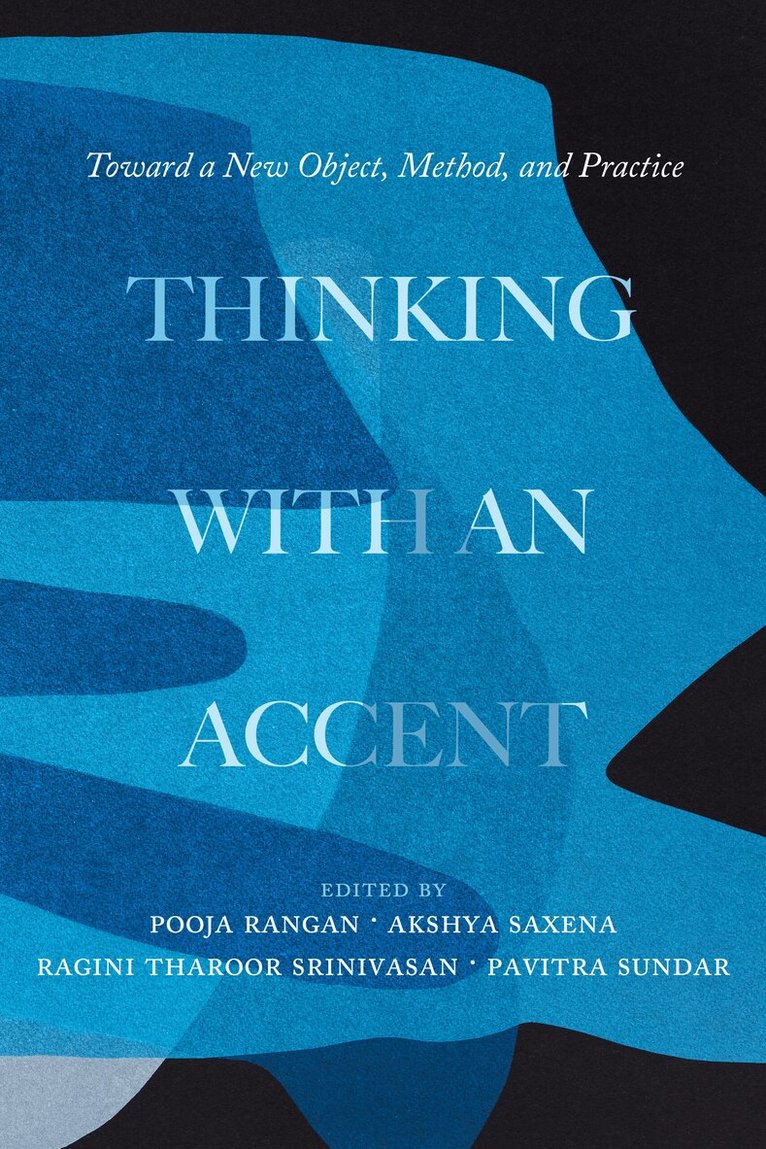
Thinking with an Accent
Toward a New Object, Method, and Practice
Häftad, Engelska, 2023
290 kr
Skickas inom 7-10 vardagar
A free ebook version of this title is available through Luminos, University of California Press’s Open Access publishing program. Visit www.luminosoa.org to learn more.Everyone speaks with an accent, but what is an accent? Thinking with an Accent introduces accent as a powerfully coded yet underexplored mode of perception that includes looking, listening, acting, reading, and thinking. This volume convenes scholars of media, literature, education, law, language, and sound to theorize accent as an object of inquiry, an interdisciplinary method, and an embodied practice. Accent does more than just denote identity: from algorithmic bias and corporate pedagogy to migratory poetics and the politics of comparison, accent mediates global economies of discrimination and desire. Accents happen between bodies and media. They negotiate power and invite attunement. These essays invite the reader to think with an accent—to practice a dialogical and multimodal inquiry that can yield transformative modalities of knowledge, action, and care.
1 563 kr
Skickas inom 7-10 vardagar
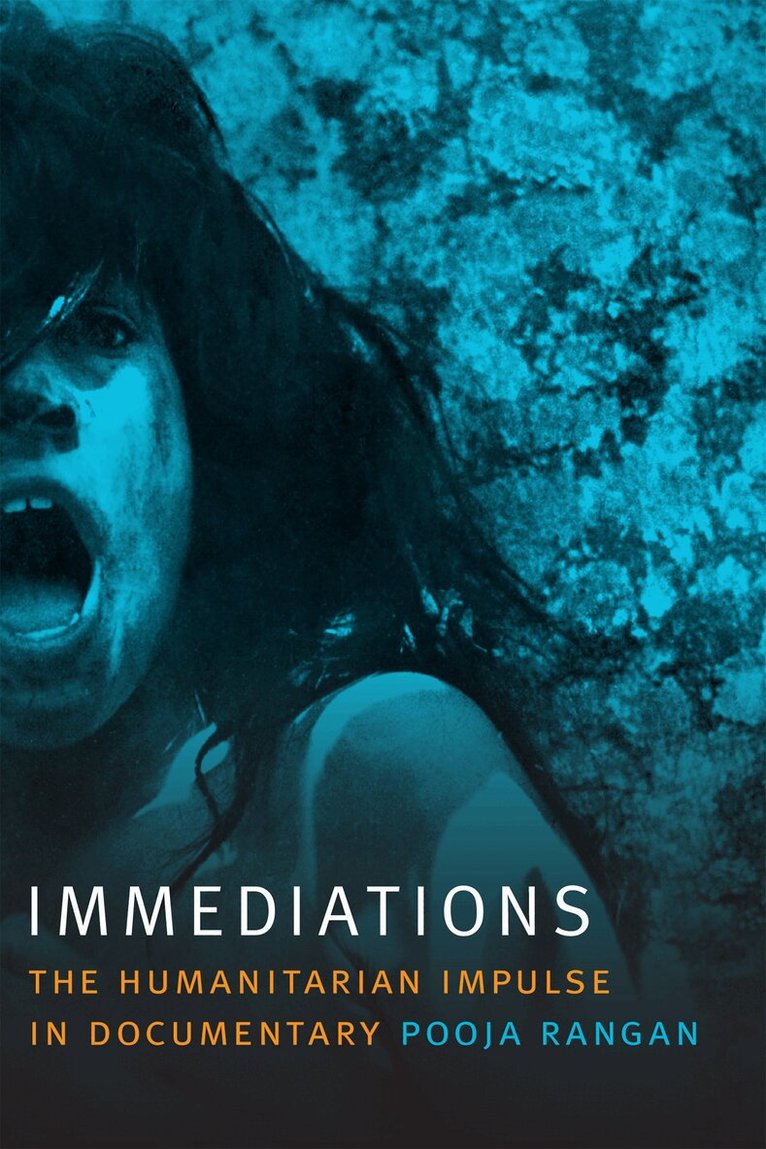
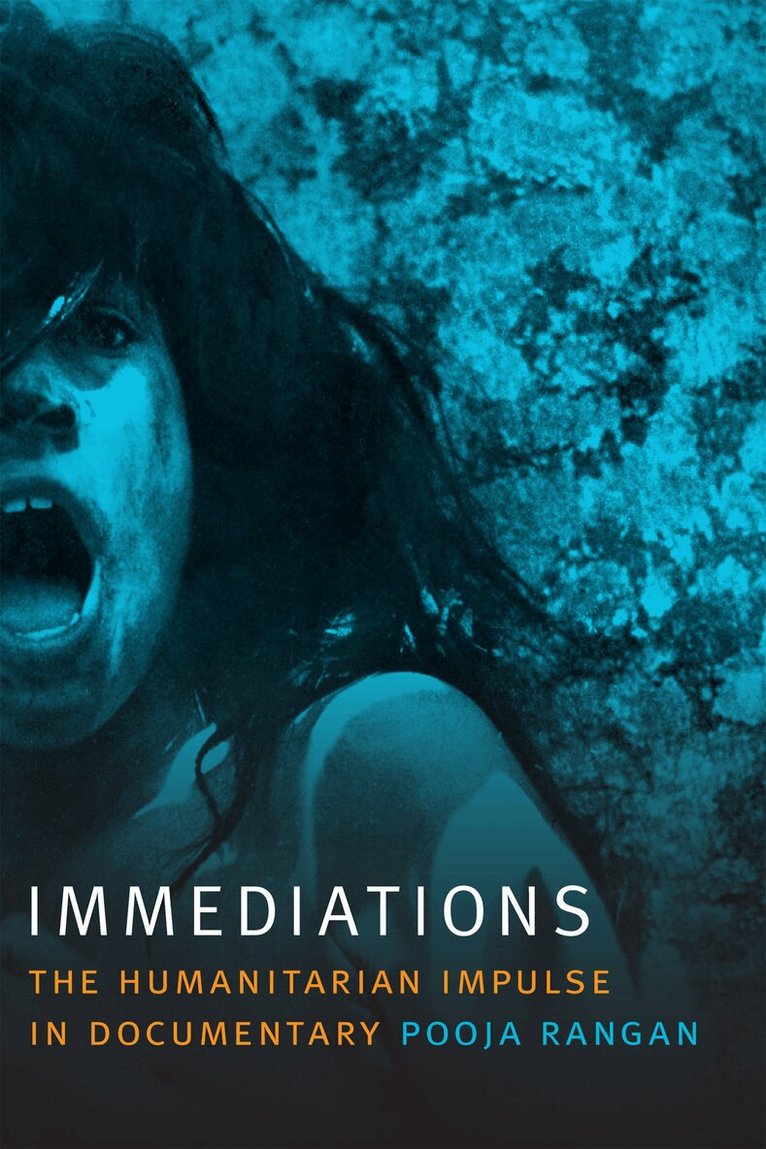
Endangered life is often used to justify humanitarian media intervention, but what if suffering humanity is both the fuel and outcome of such media representations? Pooja Rangan argues that this vicious circle is the result of immediation, a prevailing documentary ethos that seeks to render human suffering urgent and immediate at all costs. Rangan interrogates this ethos in films seeking to “give a voice to the voiceless,” an established method of validating the humanity of marginalized subjects, including children, refugees, autistics, and animals. She focuses on multiple examples of documentary subjects being invited to demonstrate their humanity: photography workshops for the children of sex workers in Calcutta; live eyewitness reporting by Hurricane Katrina survivors; attempts to facilitate speech in nonverbal autistics; and painting lessons for elephants. These subjects are obliged to represent themselves using immediations-tropes that reinforce their status as the “other” and reproduce definitions of the human that exclude non-normative modes of thinking, being, and doing. To counter these effects, Rangan calls for an approach to media that aims not to humanize but to realize the full, radical potential of giving the camera to the other.
386 kr
Skickas inom 7-10 vardagar
Endangered life is often used to justify humanitarian media intervention, but what if suffering humanity is both the fuel and outcome of such media representations? Pooja Rangan argues that this vicious circle is the result of immediation, a prevailing documentary ethos that seeks to render human suffering urgent and immediate at all costs. Rangan interrogates this ethos in films seeking to “give a voice to the voiceless,” an established method of validating the humanity of marginalized subjects, including children, refugees, autistics, and animals. She focuses on multiple examples of documentary subjects being invited to demonstrate their humanity: photography workshops for the children of sex workers in Calcutta; live eyewitness reporting by Hurricane Katrina survivors; attempts to facilitate speech in nonverbal autistics; and painting lessons for elephants. These subjects are obliged to represent themselves using immediations-tropes that reinforce their status as the “other” and reproduce definitions of the human that exclude non-normative modes of thinking, being, and doing. To counter these effects, Rangan calls for an approach to media that aims not to humanize but to realize the full, radical potential of giving the camera to the other.