Pradeep K. Chhibber – författare
Visar alla böcker från författaren . Handla med fri frakt och snabb leverans.
8 produkter
8 produkter
Inbunden, Engelska, 2018
1 279 kr
Skickas inom 5-8 vardagar
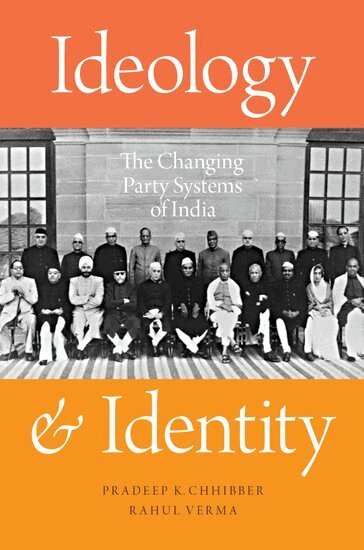
Indian party politics, commonly viewed as chaotic, clientelistic, and corrupt, is nevertheless a model for deepening democracy and accommodating diversity. But if these perspectives are contradictory, they do have one thing in common: the perception of Indian politics as non-ideological in nature. In Ideology and Identity, Pradeep K. Chhibber and Rahul Verma argue that the Western European paradigm of what constitutes an ideology is not entirely applicable to many multiethnic countries in the twentieth century. In these more diverse states, the most important ideological debates center on statism-or the extent to which the state should dominate society, regulate social norms, redistribute private property, and accommodate the needs of various marginalized groups. Using survey data from the Indian National Election Studies (NES) and other studies along with evidence drawn from the Constituent Assembly debates, this book shows how education, the media, and religious practice transmit the competing ideas that lie at the heart of the ideological debates in India.
Häftad, Engelska, 2018
492 kr
Skickas inom 7-10 vardagar
Indian party politics, commonly viewed as chaotic, clientelistic, and corrupt, is nevertheless a model for deepening democracy and accommodating diversity. Historically, though, observers have argued that Indian politics is non-ideological in nature. In contrast, Pradeep Chhibber and Rahul Verma contend that the Western European paradigm of "ideology" is not applicable to many contemporary multiethnic countries. In these more diverse states, the most important ideological debates center on statism-the extent to which the state should dominate and regulate society-and recognition-whether and how the state should accommodate various marginalized groups and protect minority rights from majorities. Using survey data from the Indian National Election Studies and evidence from the Constituent Assembly debates, they show how education, the media, and religious practice transmit the competing ideas that lie at the heart of ideological debates in India.
E-bok
PDF, Engelska, 2018410 kr
Läs direkt efter köp
Indian party politics, commonly viewed as chaotic, clientelistic, and corrupt, is nevertheless a model for deepening democracy and accommodating diversity. Historically, though, observers have argued that Indian politics is non-ideological in nature. In contrast, Pradeep Chhibber and Rahul Verma contend that the Western European paradigm of "ideology" is not applicable to many contemporary multiethnic countries. In these more diverse states, the most important ideological debates center on statism-the extent to which the state should dominate and regulate society-and recognition-whether and how the state should accommodate various marginalized groups and protect minority rights from majorities. Using survey data from the Indian National Election Studies and evidence from the Constituent Assembly debates, they show how education, the media, and religious practice transmit the competing ideas that lie at the heart of ideological debates in India.
E-bok
Engelska, 2018410 kr
Läs direkt efter köp
Indian party politics, commonly viewed as chaotic, clientelistic, and corrupt, is nevertheless a model for deepening democracy and accommodating diversity. Historically, though, observers have argued that Indian politics is non-ideological in nature. In contrast, Pradeep Chhibber and Rahul Verma contend that the Western European paradigm of "ideology" is not applicable to many contemporary multiethnic countries. In these more diverse states, the most important ideological debates center on statism-the extent to which the state should dominate and regulate society-and recognition-whether and how the state should accommodate various marginalized groups and protect minority rights from majorities. Using survey data from the Indian National Election Studies and evidence from the Constituent Assembly debates, they show how education, the media, and religious practice transmit the competing ideas that lie at the heart of ideological debates in India.
E-bok
Engelska, 2010643 kr
Läs direkt efter köp
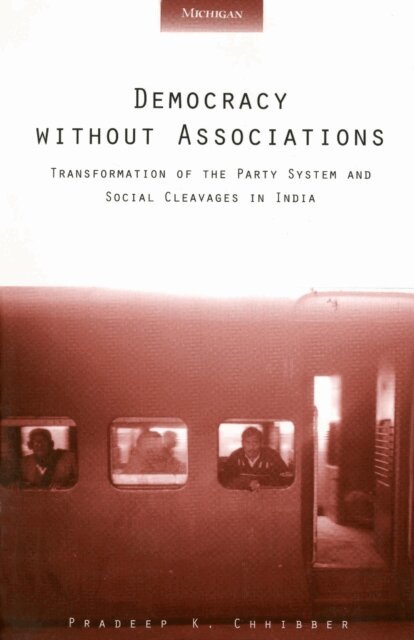
India''s party system has undergone a profound transformation over the last decade. The Congress Party, a catch-all party that brought independence in 1947 and governed India for much of the period since then, no longer dominates the electoral scene. Political parties which draw support from particular caste and religious groups are now more powerful than ever before. Democracy Without Associations explains why religious and caste-based political parties come to dominate the electoral landscape in 1990s India and why catch-all parties have declined. Arguing that political parties and state policy can make some social divisions more salient than others and also determine how these divisions affect the political system, the author offers an explanation for the relationship between electoral competition and the politicization of social differences in India. He notes that the relationship between social cleavages and the party system is not axiomatic and that political parties can influence the links they have to social cleavages. The argument developed for India is also used to account for emergence of class-based parties in Spain and the electoral success of a religious party in Algeria. Democracy Without Associations will interest scholars and students of Indian politics, and party politics, as well as those interested in the impact of social divisions on the political system. Pradeep K. Chhibber is Assistant Professor of Political Science and Associate Director, Center for South and Southeast Asian Studies, University of Michigan.
Inbunden, Engelska, 2027
1 067 kr
Kommande
While ethnic voting is usually linked with stable voting patterns, Indian elections are notoriously fragmented and difficult to predict. The Reciprocity Trap argues that the instability of Indian elections can largely be attributed to the weakness and mobilizational strategy of political parties, which leads to the under-mobilization of the poor. Using an impressive array of data, ranging from geo-coded polling station data to elite interviews, Pradeep Chhibber and Francesca Jensenius show how the poor are more likely to shift their allegiance between elections, to "waste" their vote on unviable contenders, and less likely to participate in all forms of political activities. This groundbreaking work reintegrates class and economic status into the study of South Asian politics, which has long been dominated by discussions of identity politics, showing that while identity groups may provide a stable source of support for parties, the volatile choices of the under-mobilized poor ultimately determine who wins elections. This title is also available as Open Access on Cambridge Core.
Häftad, Engelska, 2027
338 kr
Kommande
While ethnic voting is usually linked with stable voting patterns, Indian elections are notoriously fragmented and difficult to predict. The Reciprocity Trap argues that the instability of Indian elections can largely be attributed to the weakness and mobilizational strategy of political parties, which leads to the under-mobilization of the poor. Using an impressive array of data, ranging from geo-coded polling station data to elite interviews, Pradeep Chhibber and Francesca Jensenius show how the poor are more likely to shift their allegiance between elections, to "waste" their vote on unviable contenders, and less likely to participate in all forms of political activities. This groundbreaking work reintegrates class and economic status into the study of South Asian politics, which has long been dominated by discussions of identity politics, showing that while identity groups may provide a stable source of support for parties, the volatile choices of the under-mobilized poor ultimately determine who wins elections. This title is also available as Open Access on Cambridge Core.
Inbunden, Engelska, 2014
1 325 kr
Skickas inom 7-10 vardagar
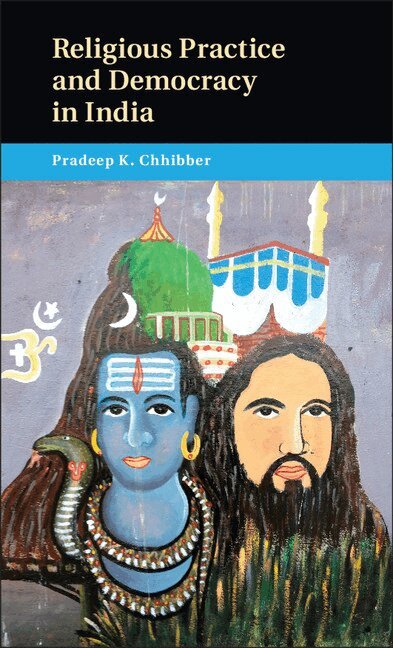
This book demonstrates the close relationship between religion and democracy in India. Religious practice creates ties among citizens that can generate positive and democratic political outcomes. In pursuing this line of inquiry the book questions a dominant strand in some contemporary social sciences - that a religious denomination (Catholic, Hindu, Muslim, Sikh, and so on) is sufficient to explain the relationship between religion and politics or that religion and democracy are antithetical to each other. The book makes a strong case for studying religious practice and placing that practice in the panoply of other social practices and showing that religious practice is positively associated with democracy.