PRIDGEON - Böcker
Visar alla böcker från författaren PRIDGEON. Handla med fri frakt och snabb leverans.
3 produkter
3 produkter
2 890 kr
Skickas inom 5-8 vardagar
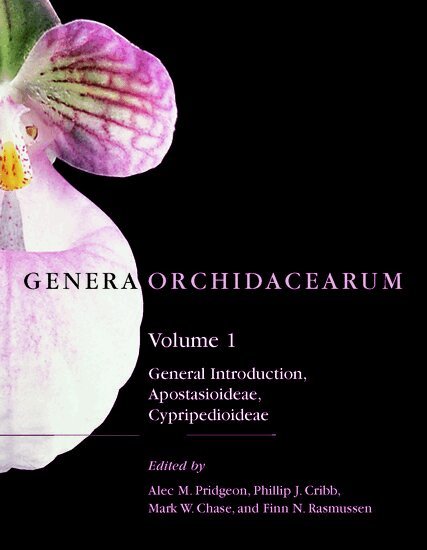
Orchids are among the most popular and widely collected of plant families, with tropical species and hybrids being cultivated the world over for their remarkable flowers. The aim of Genera Orchidacearum is to produce a robust and natural classification of the orchids, something which has eluded plant scientists and orchid enthusiasts for years. The editors, who are all distinguished orchid specialists, will incorporate the wealth of new molecular data into a truly phylogenetic classification, and will identify the areas and taxa needing additional work. To this end, they will draw on the experience of several international contributors. Genera Orchidacearum will be published in a total of five volumes over five years, with each volume providing comprehensive coverage of one or two orchid subfamilies. The series as a whole will be an absolutely indispensable reference tool both for scientists, and orchid breeders, collectors, and enthusiasts. This, the first volume of the Genera Orchidacearum, begins with several general introductory chapters outlining the long history of the efforts of plant scientists and breeders to provide a scientific classification of the orchids. The book goes on to provide descriptions of each of the Apostasioideae and Cypripedioideae subfamilies which comprise around 150 species in seven genera. Very comprehensive descriptions are provided for each of the genera, including the complete nomenclature and type citation, distribution, anatomy, palynology, embryology, cytogenetics, ecology, phenology and pollination, phytochemistry, phylogenetics, cultivation, economic uses, taxonomic notes, and a select bibliography. The Cypripedioideae include the slipper orchids, arguably the most attractive and popular orchids of all, and this volume should have an especially wide appeal as a result. In addition, it is beautifully illustrated with many line drawings and colour photographs.
2 890 kr
Skickas inom 5-8 vardagar
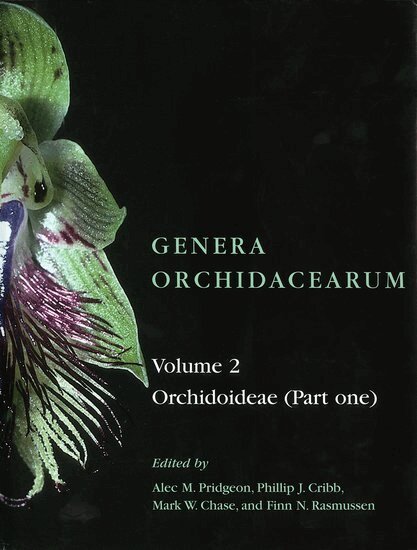
Orchidaceae are the largest monocot family and likely the largest plant family in terms of number of species (ca. 20,000), but for a variety of reasons it remains one of the least understood: lack of a fossil record, relative scarcity of active research until recent years, size and geographical distribution of the family, and the largely tropical distribution of most, which hinders access. The early classifications and generic circumscriptions of Lindley (1830-1840), Bentham and Hooker (1883) and Schlechter (1927) relied mainly on morphological characters, especially floral features. The problem with such reliance on floral features at higher levels of classification is that floral morphology is extremely plastic in evolutionary terms, so that unrelated species may have developed similar structures in response to similar selection, particularly pollinator pressures. Such parallelisms are rife in Orchidaceae, so it is necessary to apply more objective criteria and character choices in trying to unravel the complexities of the family's history. Robert L. Dressler's (Phylogeny and Classification of the Orchid Family, Cambridge University Press, 1993) classification introduced characters from pollen, seeds, and anatomy to supplement traditional characters. The recent surge in molecular approaches, especially multigene analyses, combined with several other types of new data, had not only contradicted key elements of Dressler's concepts at higher levels but will result in the recircumscription of many genera. The aim of Genera Orchidacearum is therefore to produce a more robust and natural account of the orchids at the generic level, incorporate the wealth of new molecular data in a truly phylogenetic classification, and identify those areas and taxa that need additional work.
2 890 kr
Skickas inom 5-8 vardagar
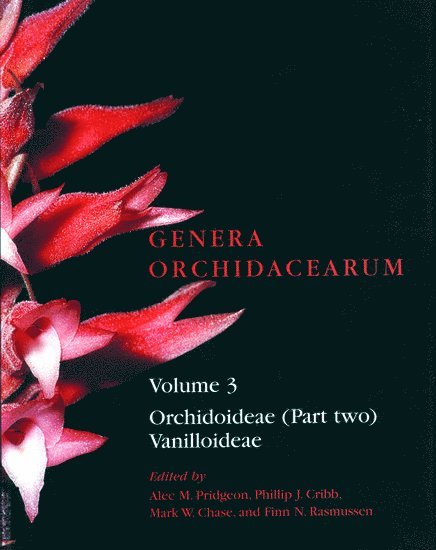
For centuries orchids have been among the most popular of plant families, with thousands of species and hybrids cultivated worldwide for the diversity, beauty, and intricacy of their flowers.The Genera Orchidacearum series represents a robust and natural classification of the orchids, something that has eluded plant scientists and orchid enthusiasts for years. The editors, who are all distinguished orchid specialists, incorporate a wealth of new DNA data into a truly phylogenetic classification, identifying the areas and taxa that merit additional work. To this end, they have invited several international specialists to contribute in their particular areas of expertise. Each volume provides comprehensive coverage of one or two orchid subfamilies and the series as a whole will be an indispensable reference tool for scientists, orchid breeders and growers.Orchidaceae is the largest monocotyledon family and perhaps the largest plant family in terms of number of species, approximately 20,000. However, for a variety of reasons it remains one of the least understood. The fossil record is poor, and active research has been relatively scarce until recent years, in part because of the sheer size and cosmopolitan distribution of the family.This third volume describes the remaining 105 genera of subfamily Orchidoideae and all 15 genera of subfamily Vanilloideae. Comprehensive treatments are provided for each genus, which include complete nomenclature, description, distribution (with map), anatomy, palynology, cytogenetics, phytochemistry, phylogenetics, pollination, ecology, and economic uses. Cultivation notes are included for those genera known to be in hobbyist collections. Genera are beautifully illustrated with line drawings and colour photographs.