Pumla Dineo Gqola – författare
Visar alla böcker från författaren Pumla Dineo Gqola. Handla med fri frakt och snabb leverans.
15 produkter
15 produkter
E-bok
Engelska, 2008386 kr
Läs direkt efter köp
The xenophobic attacks that started in Alexandra, Johannesburg in May 2008 before quickly spreading around the country caused an outcry across the world and raised many fundamental questions: Of what profound social malaise is xenophobia – and the violence that it inspires – a symptom? Have our economic and political choices created new forms of exclusion that fuel anger and distrust? What consequences does the emergence of xenophobia hold for the idea of an equal, non-racial society as symbolised by a democratic South Africa?On 28 May 2008 the Faculty of Humanities in the University of the Witwatersrand, Johannesburg convened an urgent colloquium that focused on searching for short and long-term solutions. Nearly twenty individuals – mostly Wits academics from a variety of disciplines, but also two student leaders, a journalist and a bishop – addressed the unfolding violence in ways that were conversant with the moment, yet rooted in scholarship and ongoing research.Go Home or Die Here emanates directly from the colloquium. It hopes to make sense of the nuances and trajectories of building a democratic society out of a deeply divided and conflictual past, in the conditions of global recession, heightening inequalities and future uncertainty. The authors hoped to pose questions that would lead both to research and to more informed, reflective forms of public action. With extensive photographs by award-winning photographer Alon Skuy, who covered the violence for The Times newspaper, the volume is passionate and engaged, and aims to stimulate reflection, debate and activism among concerned members of a broad public.
Häftad, Engelska, 2021
434 kr
Skickas inom 5-8 vardagar
An anthology dedicated to contemporary Black South African feminist writing influential to today's scholars and radical thinkersSurfacing: On Being Black and Feminist in South Africa is the first collection dedicated to contemporary Black South African feminist perspectives. Leading feminist theorist, Desiree Lewis, and poet and feminist scholar, Gabeba Baderoon, have curated contributions by some of the finest writers and thought leaders into an essential resource. Radical polemic sits side by side with personal essays, and critical theory coexists with rich and stirring life histories. The collection demonstrates a dazzling range of feminist voices from established scholars and authors to emerging thinkers, activists and creative practitioners.The writers within these pages use creative expression, photography and poetry in eclectic, interdisciplinary ways to unearth and interrogate representations of blackness, sexuality, girlhood, history, divinity, and other themes. Surfacing asks: what do the African feminist traditions that exist outside the canon look and feel like? What complex cultural logics are at work outside the centers of power? How do spirituality and feminism influence each other? What are the histories and experiences of queer Africans? What imaginative forms can feminist activism take?Surfacing is indispensable to anyone interested in feminism from Africa, which its contributors show in vivid and challenging conversation with the rest of the world. It will appeal to a diverse audience of students, activists, critical thinkers, academics and artists.
E-bok
PDF, Engelska, 2021386 kr
Läs direkt efter köp
What do African feminist traditions that exist outside the canon look and feel like? What complex cultural logics are at work outside the centres of power? How do spirituality and feminism influence each other? What are the histories and experiences of queer Africans? What imaginative forms can feminist activism take? Surfacing: On Being Black and Feminist in South Africa is the first collection of essays dedicated to contemporary Black South African feminist perspectives. Leading feminist theorist, Desiree Lewis, and poet and feminist scholar, Gabeba Baderoon, have curated contributions by some of the finest writers and thought leaders. Radical polemic sits side by side with personal essays, and critical theory coexists with rich and stirring life histories. By including writings by Patricia McFadden, Panashe Chigumadzi, Sisonke Msimang, Zukiswa Wanner, Yewande Omotoso, Zoë Wicomb and Pumla Dineo Gqola alongside emerging thinkers, activists and creative practitioners, the collection demonstrates a dazzling range of feminist voices. The writers in these pages use creative expression, photography and poetry in eclectic, interdisciplinary ways to unearth and interrogate representations of Blackness, sexuality, girlhood, history, divinity, and other themes. Surfacing is indispensable to anyone interested in feminism from Africa which, the contributors show, is in vivid and challenging conversations with the rest of the world.
E-bok
Engelska, 2021386 kr
Läs direkt efter köp
What do African feminist traditions that exist outside the canon look and feel like? What complex cultural logics are at work outside the centres of power? How do spirituality and feminism influence each other? What are the histories and experiences of queer Africans? What imaginative forms can feminist activism take? Surfacing: On Being Black and Feminist in South Africa is the first collection of essays dedicated to contemporary Black South African feminist perspectives. Leading feminist theorist, Desiree Lewis, and poet and feminist scholar, Gabeba Baderoon, have curated contributions by some of the finest writers and thought leaders. Radical polemic sits side by side with personal essays, and critical theory coexists with rich and stirring life histories. By including writings by Patricia McFadden, Panashe Chigumadzi, Sisonke Msimang, Zukiswa Wanner, Yewande Omotoso, Zoë Wicomb and Pumla Dineo Gqola alongside emerging thinkers, activists and creative practitioners, the collection demonstrates a dazzling range of feminist voices. The writers in these pages use creative expression, photography and poetry in eclectic, interdisciplinary ways to unearth and interrogate representations of Blackness, sexuality, girlhood, history, divinity, and other themes. Surfacing is indispensable to anyone interested in feminism from Africa which, the contributors show, is in vivid and challenging conversations with the rest of the world.
Häftad, Engelska, 2023
219 kr
Skickas inom 5-8 vardagar
This book covers concepts and methods from the work of Isabel Hofmeyr, a leading South African scholar of print cultures and intellectual trajectories in the Atlantic and Indian oceans.
Inbunden, Engelska, 2023
1 454 kr
Skickas inom 3-6 vardagar
This set of essays analyses the work of Isabel Hofmeyr, globally recognised as one of South Africa's foremost literary and Indian Ocean scholars. The essays elucidate Hofmeyr's path-breaking studies of transnational histories of the book, African print cultures, and cultural circulations in the Indian Ocean world. This book draws together reflective and analytical essays by renowned intellectuals from around the world who critically engage with the work of one of the global South's leading scholars of African print cultures and the oceanic humanities. Isabel Hofmeyr's scholarship spans more than four decades, and its sustained and long-term influence on her discipline and beyond is formidable.While much of the history of print cultures has been written primarily from the North, Isabel Hofmeyr is one of the leading thinkers producing new knowledge in this area from Africa, the Indian Ocean world and the global South. Her major contribution encompasses the history of the book as well as shorter textual forms and abridged iterations of canonical works such as John Bunyan's The Pilgrim's Progress. She has done pioneering research on the ways in which such printed matter moves across the globe, focusing on intra-African trajectories and circulations as well as movements across land and sea, port and shore. The essays gathered here are written in a blend of intellectual and personal modes, and mostly by scholars of Indian and African descent. Via their engagement with Hofmeyr's path-breaking work, the essays in turn elaborate and contribute to studies of print culture as well as critical oceanic studies, consolidating their findings from the point of view of global South historical contexts and textual practices.
E-bok
PDF, Engelska, 2023184 kr
Läs direkt efter köp
Isabel Hofmeyr is one of the world’s leading scholars on African print cultures, postcolonial literary histories, Indian Ocean studies and the oceanic humanities. For four decades and counting, her work has produced profound conceptual innovations from the global South and for the world at large. The essays gathered in Reading from the South are written in a blend of intellectual and personal modes, and mostly by scholars of Indian and African descent. Via their engagement with Hofmeyr’s path-breaking work, the essays in turn elaborate and contribute to studies of print culture as well as critical oceanic studies, consolidating their findings from the point of view of global South historical contexts and textual practices. The collection focuses on Hofmeyr’s life and work, her education and early career, her deep rootedness in place, and her political, creative and institution-building activities. The book captures Hofmeyr’s innovative and original scholarship through published works that address a range of topics: orality and literacy, feminist literary criticism, transnational histories of the book, South–South cultural connections, and the phenomenology of reading within the Indian Ocean world and, indeed, around the globe. After reading the collection as a whole, scholars in the field will have a much deeper appreciation of Hofmeyr’s work and the formidable contribution she has made to the study of African print cultures and oceanic humanities at large.
E-bok
Engelska, 2023184 kr
Läs direkt efter köp
Isabel Hofmeyr is one of the world’s leading scholars on African print cultures, postcolonial literary histories, Indian Ocean studies and the oceanic humanities. For four decades and counting, her work has produced profound conceptual innovations from the global South and for the world at large. The essays gathered in Reading from the South are written in a blend of intellectual and personal modes, and mostly by scholars of Indian and African descent. Via their engagement with Hofmeyr’s path-breaking work, the essays in turn elaborate and contribute to studies of print culture as well as critical oceanic studies, consolidating their findings from the point of view of global South historical contexts and textual practices. The collection focuses on Hofmeyr’s life and work, her education and early career, her deep rootedness in place, and her political, creative and institution-building activities. The book captures Hofmeyr’s innovative and original scholarship through published works that address a range of topics: orality and literacy, feminist literary criticism, transnational histories of the book, South–South cultural connections, and the phenomenology of reading within the Indian Ocean world and, indeed, around the globe. After reading the collection as a whole, scholars in the field will have a much deeper appreciation of Hofmeyr’s work and the formidable contribution she has made to the study of African print cultures and oceanic humanities at large.
Häftad, Engelska, 2015
388 kr
Skickas inom 5-8 vardagar
A study of slave memory in South Africa using feminist, postcolonial and memory studiesMuch has been made about South Africa's transition from histories of colonialism, slavery and apartheid. 'Memory' features prominently in the country's reckoning with its pasts. While there has been an outpouring of academic essays, anthologies and other full-length texts which study this transition, most have focused on the Truth and Reconciliation Commission (TRC). What is slavery to me? is the first full-length study of slave memory in the South African context, and examines the relevance and effects of slave memory for contemporary negotiations of South African gendered and racialised identities. It draws from feminist, postcolonial and memory studies and is therefore interdisciplinary in approach. It reads memory as one way of processing this past, and interprets a variety of cultural, literary and filmic texts to ascertain the particular experiences in relation to slave pasts being fashioned, processed and disseminated. Much of the material surveyed across disciplines attributes to memory, or 'popular history making', a dialogue between past and present whilst ascribing sense to both the eras and their relationship. In this sense then, memory is active, entailing a personal relationship with the past which acts as mediator of reality on a day to day basis. The projects studies various negotiations of raced and gendered identities in creative and other public spaces in contemporary South Africa, by being particularly attentive to the encoding of consciousness about the country's slave past. This book extends memory studies in South Africa, provokes new lines of inquiry, and develops new frameworks through which to think about slavery and memory in South Africa.
E-bok
PDF, Engelska, 2011267 kr
Läs direkt efter köp
Why does it matter that nations should care for their archives, and that they should develop a sense of shared identity? And why should these processes take place in the public domain? How can nations possibly speak about a shared sense of identity in pluralistic societies where individuals and groups have multiple identities? And how can such conversations be given relevance in public discussions of reconciliation and development in South Africa? These are the issues that the Public Conversations lecture series – an initiative of the Constitution of Public Intellectual Life Project at Wits University – proceeded from in 2006. Five years later, cross currents in contemporary South Africa have made the resumption of a public debate to clarify the meanings of identity and citizenship even more imperative, and an understanding of ‘archive’ even more urgent. The 2006 lectures were subsequently collected, resulting in this volume which takes its title from Weber’s point, elaborated on in the chapter by Benedict Anderson, that the future asks us to be worthy ancestors to the yet unborn. The book, as did the lecture series, aims to reach a broad and informed reading public because the topic is still of pressing interest in contemporary public discourse. In a changed (and, some might say, degraded) environment of public dialogue, the editor hopes to inspire a re-thinking of the very essence of what it means to be a citizen of South Africa. Becoming Worthy Ancestors aims to make accessible the theoretically informed, sometimes highly academic work of its various contributors. With chapters from high profile international and local contributors, it will be of interest to South African and international audiences. Editing for publication has further enhanced the accessibility of each speaker’s thinking without forfeiting any of its complexity, and the addition of an introductory chapter by the editor contributes to the coherence of the volume. While the target audience is the broad public, the book is based on a core of academic thinking and research.
E-bok
PDF, Engelska, 2008386 kr
Läs direkt efter köp
The xenophobic attacks that started in Alexandra, Johannesburg in May 2008 before quickly spreading around the country caused an outcry across the world and raised many fundamental questions: Of what profound social malaise is xenophobia – and the violence that it inspires – a symptom? Have our economic and political choices created new forms of exclusion that fuel anger and distrust? What consequences does the emergence of xenophobia hold for the idea of an equal, non-racial society as symbolised by a democratic South Africa?On 28 May 2008 the Faculty of Humanities in the University of the Witwatersrand, Johannesburg convened an urgent colloquium that focused on searching for short and long-term solutions. Nearly twenty individuals – mostly Wits academics from a variety of disciplines, but also two student leaders, a journalist and a bishop – addressed the unfolding violence in ways that were conversant with the moment, yet rooted in scholarship and ongoing research.Go Home or Die Here emanates directly from the colloquium. It hopes to make sense of the nuances and trajectories of building a democratic society out of a deeply divided and conflictual past, in the conditions of global recession, heightening inequalities and future uncertainty. The authors hoped to pose questions that would lead both to research and to more informed, reflective forms of public action. With extensive photographs by award-winning photographer Alon Skuy, who covered the violence for The Times newspaper, the volume is passionate and engaged, and aims to stimulate reflection, debate and activism among concerned members of a broad public.
E-bok
PDF, Engelska, 2010398 kr
Läs direkt efter köp
Much has been made about South Africa’s transition from histories of colonialism, slavery and apartheid. “Memory” features prominently in the country’s reckoning with its pasts. While there has been an outpouring of academic essays, anthologies and other full-length texts which study this transition, most have focused on the Truth and Reconciliation Commission (TRC). What is slavery to me? is the first full-length study of slave memory in the South African context, and examines the relevance and effects of slave memory for contemporary negotiations of South African gendered and racialised identities. It draws from feminist, postcolonial and memory studies and is therefore interdisciplinary in approach. It reads memory as one way of processing this past, and interprets a variety of cultural, literary and filmic texts to ascertain the particular experiences in relation to slave pasts being fashioned, processed and disseminated. Much of the material surveyed across disciplines attributes to memory, or “popular history making”, a dialogue between past and present whilst ascribing sense to both the eras and their relationship. In this sense then, memory is active, entailing a personal relationship with the past which acts as mediator of reality on a day to day basis. The projects studies various negotiations of raced and gendered identities in creative and other public spaces in contemporary South Africa, by being particularly attentive to the encoding of consciousness about the country’s slave past. This book extends memory studies in South Africa, provokes new lines of inquiry, and develops new frameworks through which to think about slavery and memory in South Africa.
E-bok
Engelska, 2011267 kr
Läs direkt efter köp
Why does it matter that nations should care for their archives, and that they should develop a sense of shared identity? And why should these processes take place in the public domain? How can nations possibly speak about a shared sense of identity in pluralistic societies where individuals and groups have multiple identities? And how can such conversations be given relevance in public discussions of reconciliation and development in South Africa? These are the issues that the Public Conversations lecture series – an initiative of the Constitution of Public Intellectual Life Project at Wits University – proceeded from in 2006. Five years later, cross currents in contemporary South Africa have made the resumption of a public debate to clarify the meanings of identity and citizenship even more imperative, and an understanding of ‘archive’ even more urgent. The 2006 lectures were subsequently collected, resulting in this volume which takes its title from Weber’s point, elaborated on in the chapter by Benedict Anderson, that the future asks us to be worthy ancestors to the yet unborn. The book, as did the lecture series, aims to reach a broad and informed reading public because the topic is still of pressing interest in contemporary public discourse. In a changed (and, some might say, degraded) environment of public dialogue, the editor hopes to inspire a re-thinking of the very essence of what it means to be a citizen of South Africa. Becoming Worthy Ancestors aims to make accessible the theoretically informed, sometimes highly academic work of its various contributors. With chapters from high profile international and local contributors, it will be of interest to South African and international audiences. Editing for publication has further enhanced the accessibility of each speaker’s thinking without forfeiting any of its complexity, and the addition of an introductory chapter by the editor contributes to the coherence of the volume. While the target audience is the broad public, the book is based on a core of academic thinking and research.
398 kr
Läs direkt efter köp
Much has been made about South Africa’s transition from histories of colonialism, slavery and apartheid. “Memory” features prominently in the country’s reckoning with its pasts. While there has been an outpouring of academic essays, anthologies and other full-length texts which study this transition, most have focused on the Truth and Reconciliation Commission (TRC). What is slavery to me? is the first full-length study of slave memory in the South African context, and examines the relevance and effects of slave memory for contemporary negotiations of South African gendered and racialised identities. It draws from feminist, postcolonial and memory studies and is therefore interdisciplinary in approach. It reads memory as one way of processing this past, and interprets a variety of cultural, literary and filmic texts to ascertain the particular experiences in relation to slave pasts being fashioned, processed and disseminated. Much of the material surveyed across disciplines attributes to memory, or “popular history making”, a dialogue between past and present whilst ascribing sense to both the eras and their relationship. In this sense then, memory is active, entailing a personal relationship with the past which acts as mediator of reality on a day to day basis. The projects studies various negotiations of raced and gendered identities in creative and other public spaces in contemporary South Africa, by being particularly attentive to the encoding of consciousness about the country’s slave past. This book extends memory studies in South Africa, provokes new lines of inquiry, and develops new frameworks through which to think about slavery and memory in South Africa.
Häftad, Engelska, 2022
175 kr
Skickas inom 7-10 vardagar
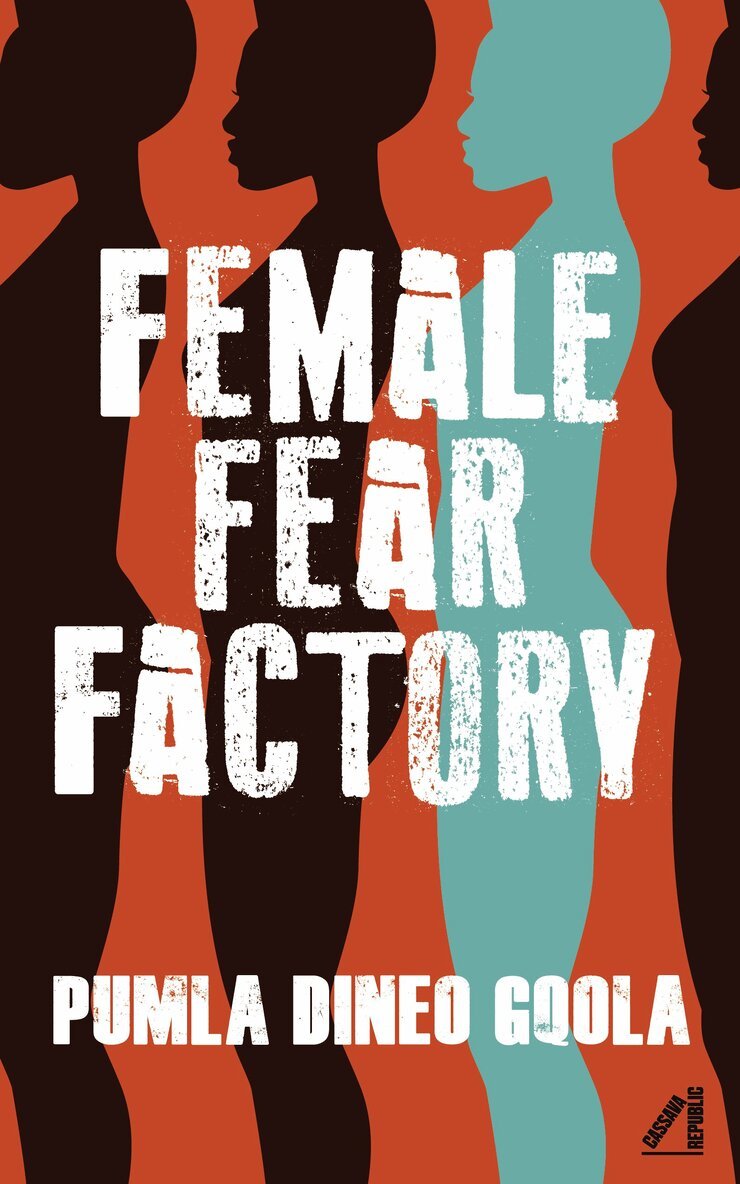
"Patriarchy does not respect national boundaries. It is unabashedly promiscuous in its influences and tethers. Yet, it does use nationalism very productively." Drawing on examples from around the world - from Uganda, Nigeria, South Africa to Saudi Arabia, the Americas and Europe, Gqola traces the construction and machinations of the female fear factory by exposing its lies, myths, and seductions. She shows how seemingly disparate effects like driving bans, higher education rape sexual harassment and femicide are all premised on the construction of people, mostly women, as female, and thereafter the use fear as a tool of patriarchal subjugation and punishment.