R. Eli Paul - Böcker
Visar alla böcker från författaren R. Eli Paul. Handla med fri frakt och snabb leverans.
9 produkter
9 produkter
375 kr
Skickas inom 7-10 vardagar
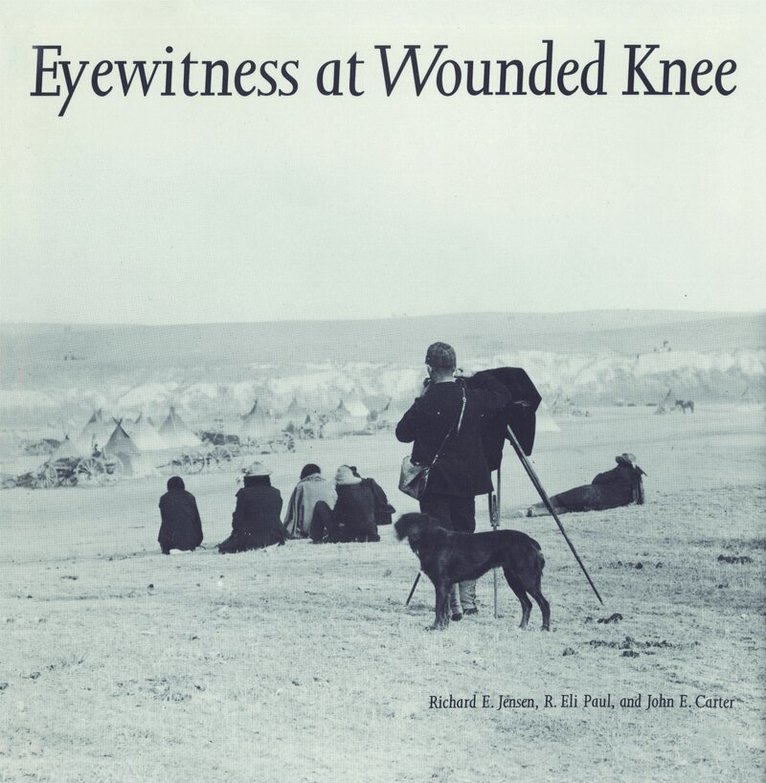
On a wintry day in December 1890, near a creek named Wounded Knee on the Pine Ridge Reservation in South Dakota, the Seventh Cavalry of the U.S. Army opened fire on an encampment of Sioux Indians. This assault claimed more than 250 lives, including those of many Indian women and children. The tragedy at Wounded Knee has often been written about, but the existing photographs have received little attention until now.Eyewitness at Wounded Knee brings together and assesses for the first time some 150 photographs that were made before and immediately after the massacre. Present at the scene were two itinerant photographers, George Trager and Clarence Grant Morelodge, whose work has never before been published. Accompanying commentaries focus on both the Indian and the military sides of the story. Richard E. Jensen analyzes the political and economic quagmire in which the Sioux found themselves after 1877. R. Eli Paul considers the army's role at Wounded Knee. John E. Carter discusses the photographers and also the reporters and relic hunters who were looking to profit from the misfortune of others. For this Bison Books edition each image has been digitally enhanced and restored, making the photographs as compelling as the event itself. Heather Cox Richardson tells the story behind the endeavor to present a meaningful account of this significant historical event.
214 kr
Skickas inom 10-15 vardagar
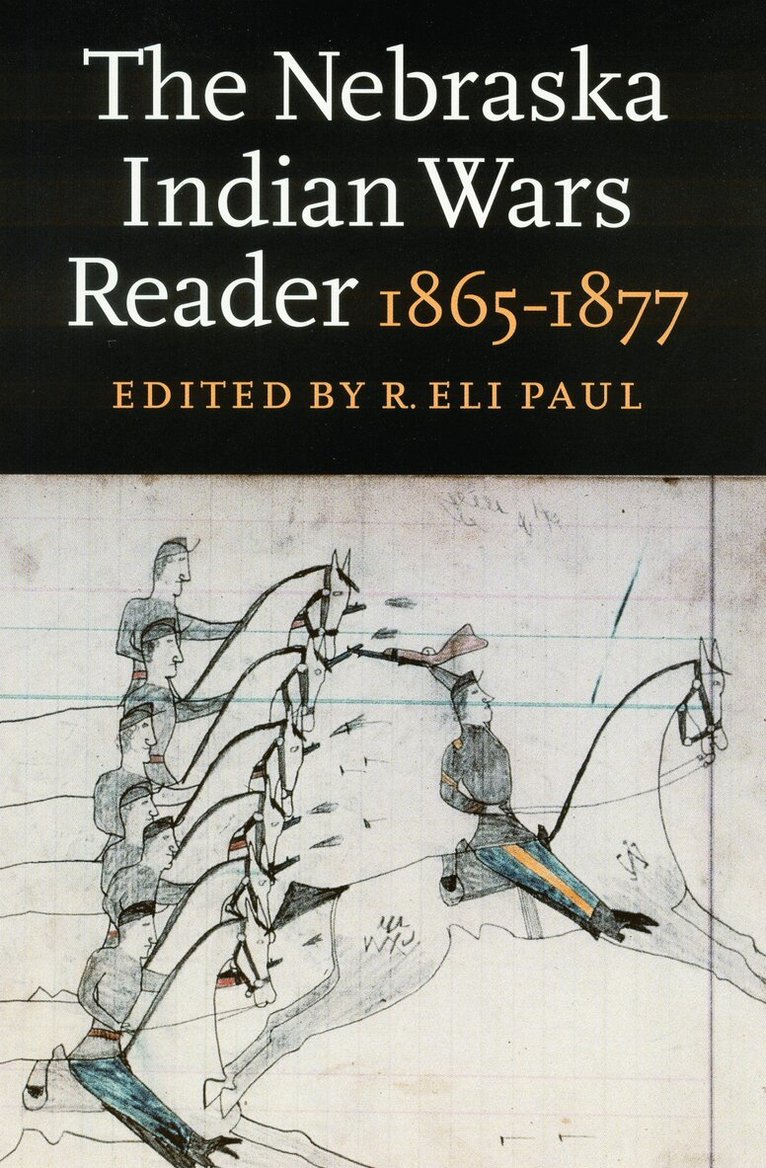
The Nebraska Indian Wars Reader, 1865–1877 provides the first comprehensive look at the Indian Wars in Nebraska, focusing on the years immediately following the Civil War, when hostilities between Plains Indians and white settlers erupted. R. Eli Paul has assembled a first-rate anthology of eyewitness accounts and the most significant historical scholarship on the subject. Readers are treated to a clear, detailed overview of the course of events, the key individuals and groups involved in and affected by the hostilities, and the central issues underlying them. An important and unique feature of the book is the full attention given to Indian actions and perspectives. No full-length study has ever been written on the Nebraska Indian Wars. This anthology of well-written articles from the journal Nebraska History is the essential introduction to this bitterly contested period in the state's history.
242 kr
Skickas inom 10-15 vardagar
In previous accounts, the U.S. Army's first clashes with the powerful Sioux tribe appear as a set of irrational events with a cast of improbable characters - a Mormon cow, a brash lieutenant, a drunken interpreter, an unfortunate Brulé chief, and an incorrigible army commander. R. Eli Paul shows instead that the events that precipitated General William Harney's attack on Chief Little Thunder's Brulé village foreshadowed the entire history of conflict between the United States and the Lakota people.Today Blue Water Creek is merely one of many modest streams coursing through Sioux country. The conflicts along its margins have been overshadowed by later, more spectacular confrontations, including the Great Sioux War and George Custer's untimely demise along another modest stream. The Blue Water legacy has gone largely underappreciated - until now. Blue Water Creek and the First Sioux War, 1854-1856 provides a thorough and objective narrative, using a wealth of eyewitness accounts to reveal the significance of Blue Water Creek in Lakota and U.S. history.
344 kr
Skickas inom 7-10 vardagar
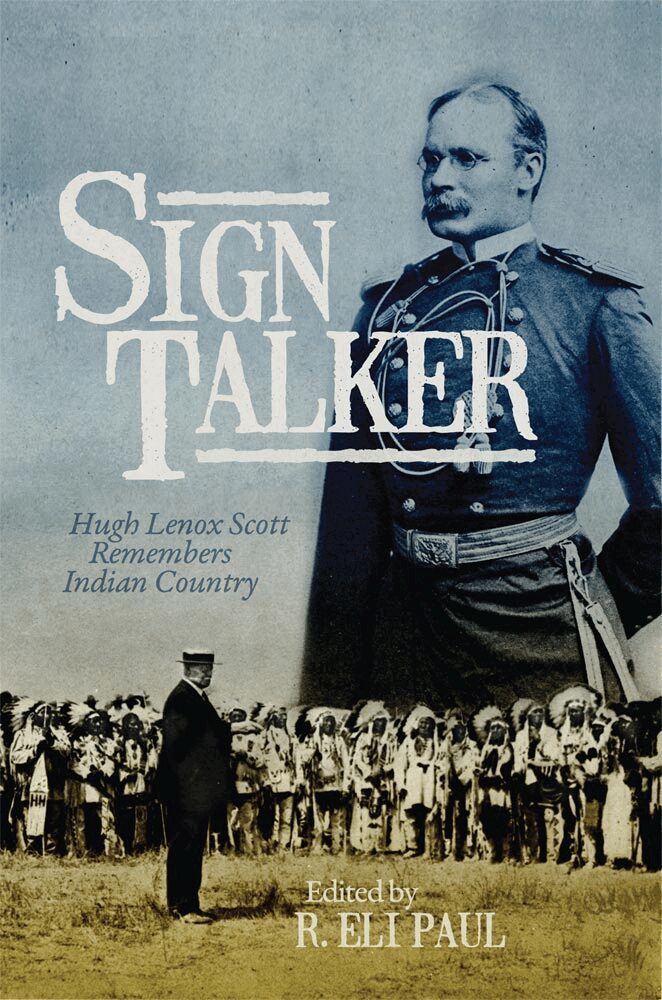
A graduate of West Point, General Hugh Lenox Scott (1853-1934) belonged to the same regiment as George Armstrong Custer. As a member of the Seventh Cavalry, Scott actually began his career at the Little Big Horn when in 1877 he helped rebury Custer's fallen soldiers. Yet Scott was no Custer. His lifelong aversion to violence in resolving disputes and abiding respect for American Indians earned him the reputation as one of the most adept peacemakers ever to serve in the U.S. Army. Sign Talker, an annotated edition of Scott's memoirs, gives new insight into this soldier-diplomat's experiences and accomplishments.Scott's original autobiography, first published in 1928, has remained out of print for decades. In that memoir, he recounted the many phases of his distinguished military career, beginning with his education at West Point and ending with World War I, when, as army chief of staff, he gathered the U.S. forces that saw ultimate victory in Europe. Sign Talker reproduces the first - and arguably most compelling - portion of the memoir, including Scott's involvement with Plains Indians and his service at western forts. In his in-depth introduction to this volume, editor R. Eli Paul places Scott's autobiography in a larger historical context. According to Paul, Scott stood apart from his fellow officers because of his enlightened views and forward-looking actions. Through Scott's own words, we learn how he became an expert in Plains Indian Sign Language so that he could communicate directly with Indians and bypass intermediaries. Possessing deep empathy for the plight of Native peoples and concern for the wrongs they had suffered, he played an important role in helping them achieve small, yet significant victories in the aftermath of the brutal Indian wars.As historians continue to debate the details of the Indian wars, and as we critically examine our nation's current foreign policy, the unique legacy of General Scott provides a model of military leadership. Sign Talker restores an undervalued diplomat to well-deserved prominence in the story of U.S.-Indian relations.
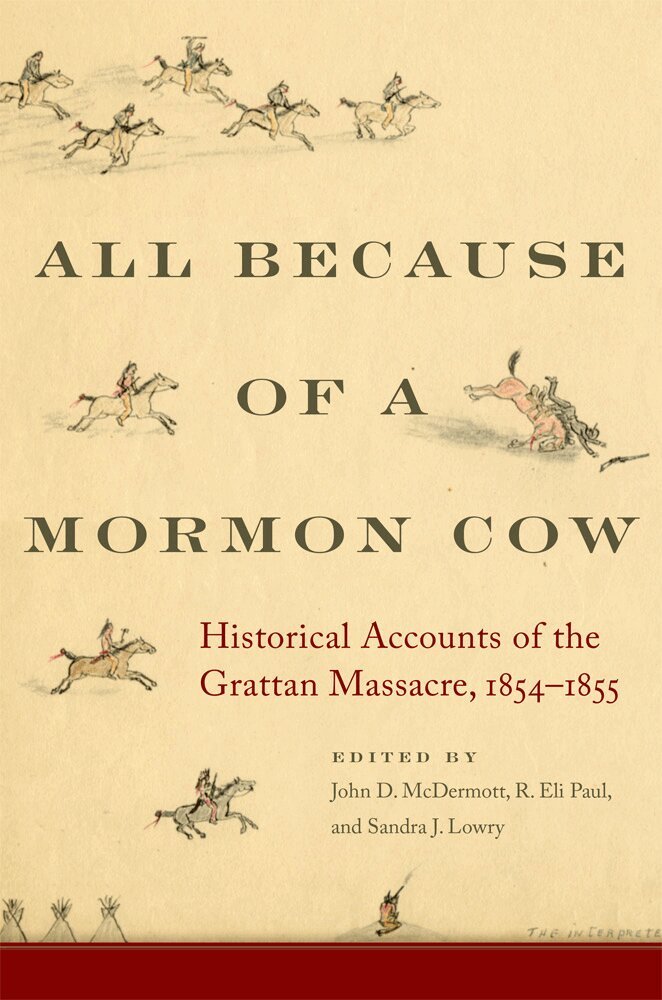
All Because of a Mormon Cow
Historical Accounts of the Grattan Massacre, 1854-1855
Inbunden, Engelska, 2018
334 kr
Skickas inom 7-10 vardagar
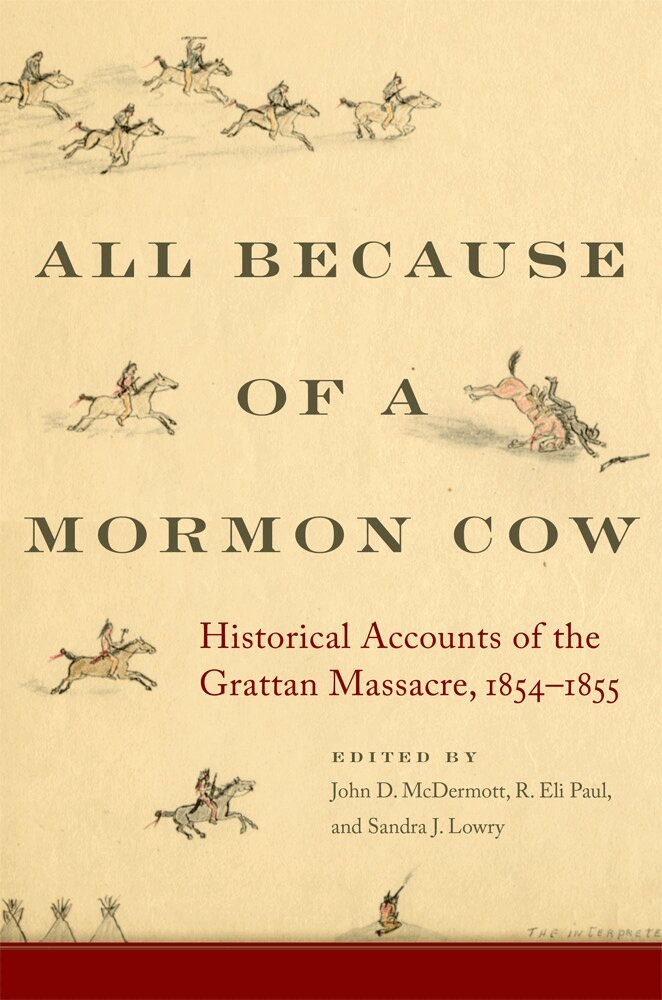
On August 19, 1854, U.S. Army lieutenant John L. Grattan led a detachment of twenty-nine soldiers and one civilian interpreter to a large Lakota encampment near Fort Laramie to arrest an Indian man accused of killing a Mormon emigrant's cow. The terrible series of events that followed, which became known as the Grattan Massacre, unleashed the opening volley in the First Sioux War - and marked the beginning of a generation of Indian warfare on the Great Plains. All Because of a Mormon Cow tells, for the first time, the full story of this seminal event in the history of the American West.Where previous accounts of the Grattan Massacre have made do with limited primary sources, this volume includes eighty contemporary, annotated accounts of the fight and its aftermath, many newly discovered or recovered from obscurity. Recorded when the events were fresh in their narrators' memories, these documents bring a sense of immediacy to a story more than a century and a half old. Alongside the voices heard here - of the Indian leaders Little Thunder and Big Partisan, of Mormons from passing emigrant trains, and of government officials charged with investigating the massacre, among many others - the editors include a substantial and thorough introduction that underscores the significance of the Grattan Massacre in all its depth and detail.All Because of a Mormon Cow offers a better understanding even as it evokes the drama of a highly controversial episode in the history of relations between Indians and non-Indians in the American West.
All Because of a Mormon Cow
Historical Accounts of the Grattan Massacre, 1854-1855
Häftad, Engelska, 2025
269 kr
Skickas inom 10-15 vardagar
On August 9, 1854, U.S. Army lieutenant John L. Grattan led a detachment of twenty-nine soldiers and one civilian interpreter to a large Lakota encampment near Fort Laramie to arrest an Indian man accused of killing a Mormon emigrant's cow. The terrible series of events that followed, which became known as the Grattan Massacre, unleashed the opening volley in the First Sioux War - and marked the beginning of a generation of Indian warfare on the Great Plains. All Because of a Mormon Cow tells, for the first time, the full story of this seminal event in the history of the American West. Where previous accounts of the Grattan Massacre have made do with limited primary sources, this volume includes eighty contemporary, annotated accounts of the fight and its aftermath, many newly discovered or recovered from obscurity. Recorded when the events were fresh in their narrators' memories, these documents bring a sense of immediacy to a story more than a century and a half old. Alongside the voices heard here - of the Indian leaders Little Thunder and Big Partisan, of Mormons from passing emigrant trains, and of government officials charged with investigating the massacre, among many others - the editors include a substantial and thorough introduction that underscores the significance of the Grattan Massacre in all its depth and detail. All Because of a Mormon Cow offers a better understanding even as it evokes the drama of a highly controversial episode in the history of relations between Indians and non-Indians in the American West.
229 kr
Skickas inom 3-6 vardagar
386 kr
Skickas inom 7-10 vardagar
In 1981 the suspended walkways-or “skywalks”-in Kansas City’s Hyatt Regency hotel fell and killed 114 people. It was the deadliest building collapse in the United States until the fall of New York’s Twin Towers on 9/11. In Skywalks R. Eli Paul follows the actions of attorney Robert Gordon, an insider to the bitter litigation that followed. Representing the plaintiffs in a class action lawsuit against those who designed, built, inspected, owned, and managed the hotel, Gordon was tenacious in uncovering damaging facts. He wanted his findings presented before a jury, where his legal team would assign blame from underlings to corporate higher-ups, while securing a massive judgment in his clients’ favor.But when the case was settled out from under Gordon, he turned to another medium to get the truth out: a quixotic book project that consumed the rest of his life. For a decade the irascible attorney-turned-writer churned through a succession of high-powered literary agents, talented ghost writers, and New York trade publishers. Gordon’s resistance to collaboration and compromise resulted in a controversial but unpublishable manuscript, “House of Cards,” finished long after the public’s interest had waned. His conclusions, still explosive but never receiving their proper attention, laid the blame for the disaster largely at the feet of the hotel’s owner and Kansas City’s most visible and powerful corporation, Hallmark Cards Inc.Gordon gave up his lucrative law practice and lived the rest of his life as a virtual recluse in his mansion in Mission Hills, Kansas. David had fought Goliath, and to his despair, Goliath had won. Gordon died in 2008 without ever seeing his book published or the full truth told. Skywalks is a long-overdue corrective, built on a foundation of untapped historical materials Gordon compiled, as well as his own unpublished writings.
332 kr
Skickas inom 7-10 vardagar
Romanticized scenes of heroic soldiers fighting on the vast plains are strewn throughout early chronicles of the old frontier army. Such interpretations rarely convey the complex truth or reality of the day-to-day existence of the soldiers or of the American Indians on whose land the battles took place.As new documents surface, coupled with increased digital access for scholars, in-depth examinations of the army’s role during this time in United States history are moving forward. Under the direction of editor R. Eli Paul, contributors to this book present new primary sources and fresh interpretations of the Regular Army in the West in fitting tribute to the careers of Thomas R. Buecker and John D. (“Jack”) McDermott.Centering on military conflicts and postings around present-day South Dakota and in the Black Hills between 1854 and 1890, the contributors highlight the diverse experiences of those associated with the American frontier army and the people they fought on the Great Plains. Observations formed by studying personal letters, recorded memories, and contemporary monuments provide an analysis of how the army and its soldiers are remembered today. Firsthand accounts give previously ignored groups a voice, and readers learn more about lesser-known actors—foot soldiers, minorities, and others on the periphery of popular history. Individually, the essays bring much needed context to this era; together, they present a more complete picture of those confronted with and involved in the nineteenth-century mission of expansion and control.