R. George Ratcliffe - Böcker
Visar alla böcker från författaren R. George Ratcliffe. Handla med fri frakt och snabb leverans.
2 produkter
2 produkter
1 993 kr
Skickas inom 5-8 vardagar
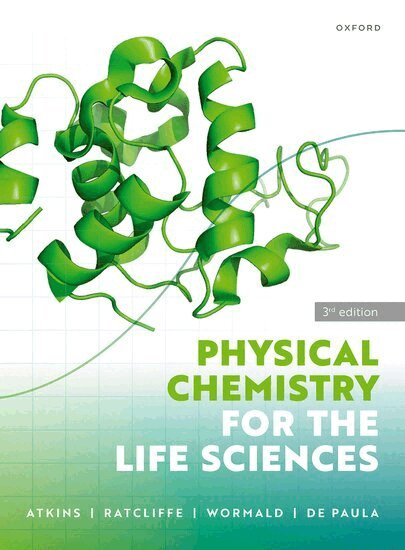
Molecular assemblies, macromolecules, proteins, nucleic acids: they form a substantial part of all living organisms, from plants to humans. Indeed, they are critical for keeping them alive. But how do they operate? Chemical processes are at the core of life: understanding life means unveiling the physical principles on which it is built. From thermodynamics to molecular interactions, Physical Chemistry for the Life Sciences 3rd edition explains how the principles of physical chemistry apply to the processes of life. Offering worked examples and multiple case studies throughout, students are supported to master even the most complex concepts and how they apply in biological contexts, while acquiring key problem-solving and mathematical skills. Directly addressing the main challenges faced by students, its pedagogically rich approach provides an accessible and holistic guide The extended scope of this new edition includes the essential techniques that can be used to characterize biological systems, including biochemical spectroscopy, x-ray diffraction, and spectrometry.
Del 42 - Proceedings of the Phytochemical Society of Europe
Regulation of Primary Metabolic Pathways in Plants
Häftad, Engelska, 2012
535 kr
Skickas inom 10-15 vardagar
Over the past decade, advances in molecular biology have provided the impetus for a resurgence of interest in plant metabolism. At a general level, the potential for modifying the quantity or quality of harvestable crop products through genetic manipulation has provided an agronomic rationale for seeking a greater understanding of primary plant metabolism and its regulation. Moreover, the now facile techniques for transformation of many plant species and the consequential capacity to manipulate the amounts of specific individual enzymes within specific cell types provides an exciting direct approach for studying metabolic problems. Such transgenic plants are also becoming invaluable tools in studies at the interface between metabolism and other sub-disciplines such as physiology and ecology. The interest generated in plant metabolism by these developments has also encouraged the re-introduction of more conventional biochemical techniques for metabolic analysis. Finally, in common with other areas of cell biology, the wealth of information that can be obtained at the nucleic acid level has provided the stimulus for identification and characterisation of metabolic processes in far greater detail than previously envisaged. The result of these advances it that researchers now have the confidence to address problems in plant metabolism at levels not previously attempted. This book presents the proceedings of an international conference held on 9-11 January 1997 at St Hugh's College, Oxford under the auspices of the Phytochemical Society of Europe.