R. Howard Bloch – författare
Visar alla böcker från författaren R. Howard Bloch. Handla med fri frakt och snabb leverans.
18 produkter
18 produkter
Häftad, Engelska, 1995
254 kr
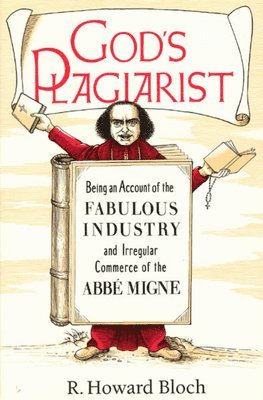
This is an account of Jacques-Paul Migne, an entrepreneur of the 19th century. A priest in Orleans from 1824 to 1833, Migne then moved to Paris, where, in the space of a decade, he built one of the most extensive publishing ventures of all time. His assembly-line production and marketing of the massive editions of the Church Fathers placed him at the forefront of France's new commerce. Characterized by the police as one of the great "schemers" of the century, this priest-entrepreneur put the most questionable of business practices in the service of his devotion to Catholicism. Part detective novel, part morality tale, Bloch's narrative should interest scholars of 19th-century French intellectual history and also general readers interested in the history of publishing.
E-bok
PDF, Engelska, 2011898 kr
Läs direkt efter köp
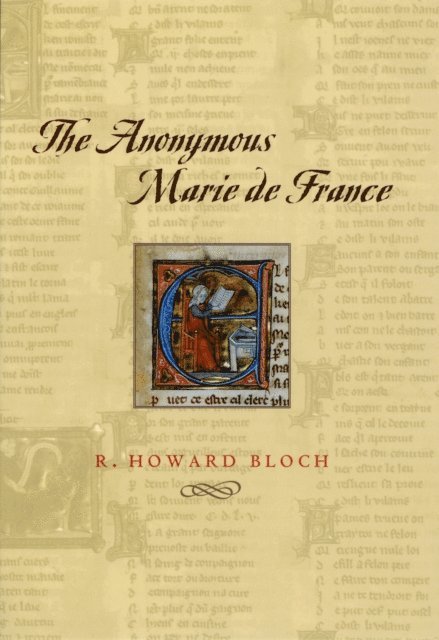
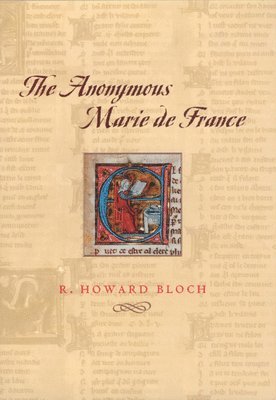
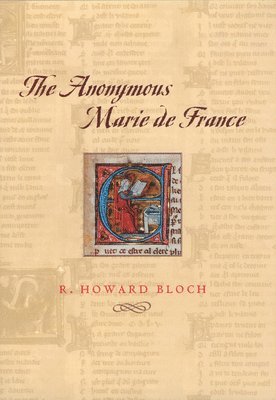
This book by one of our most admired and influential medievalists offers a fundamental reconception of the person generally assumed to be the first woman writer in French, the author known as Marie de France. The Anonymous Marie de France is the first work to consider all of the writing ascribed to Marie, including her famous Lais, her 103 animal fables, and the earliest vernacular Saint Patrick''s Purgatory. Evidence about Marie de France''s life is so meager that we know next to nothing about her-not where she was born and to what rank, who her parents were, whether she was married or single, where she lived and might have traveled, whether she dwelled in cloister or at court, nor whether in England or France. In the face of this great writer''s near anonymity, scholars have assumed her to be a simple, naive, and modest Christian figure. Bloch''s claim, in contrast, is that Marie is among the most self-conscious, sophisticated, complicated, and disturbing figures of her time-the Joyce of the twelfth century. At a moment of great historical turning, the so-called Renaissance of the twelfth century, Marie was both a disrupter of prevailing cultural values and a founder of new ones. Her works, Bloch argues, reveal an author obsessed by writing, by memory, and by translation, and acutely aware not only of her role in the preservation of cultural memory, but of the transforming psychological, social, and political effects of writing within an oral tradition. Marie''s intervention lies in her obsession with the performative capacities of literature and in her acute awareness of the role of the subject in interpreting his or her own world. According to Bloch, Marie develops a theology of language in the Lais, which emphasize the impossibility of living in the flesh along with a social vision of feudalism in decline. She elaborates an ethics of language in the Fables, which, within the context of the court of Henry II, frame and form the urban values and legal institutions of the Anglo-Norman world. And in her Espurgatoire, she produces a startling examination of the afterlife which Bloch links to the English conquest and occupation of medieval Ireland. With a penetrating glimpse into works such as these, The Anonymous Marie de France recovers the central achievements of one of the most pivotal figures in French literature. It is a study that will be of enormous value to medievalists, literary scholars, historians of France, and anyone interested in the advent of female authorship.
Inbunden, Engelska, 1994
827 kr
Skickas inom 5-8 vardagar
This text provides an account of the abbe Jacques-Paul Migne, one of the great entrepreneurs of the 19th century. A priest in Orleans from 1824 to 1833, Migne then moved to Paris, where, in the space of a decade, he built one of the most extensive publishing ventures of all time. Using the latest innovations in print technology, advertising and merchandising, the abbe's assembly-line production and innovative marketing of the massive editions of the Church Fathers placed him at the forefront of France's new commerce. Characterized by the police as one of the great "schemers" of the century, this priest-entrepreneur put the most questionable of business practices in the service of his devotion to Catholicism. Part detective novel, part morality tale, Bloch's narrative should be of interest to scholars of 19th-century French intellectual history, as well as to general readers interested in the history of publishing.
Häftad, Engelska, 1992
714 kr
Skickas inom 3-6 vardagar
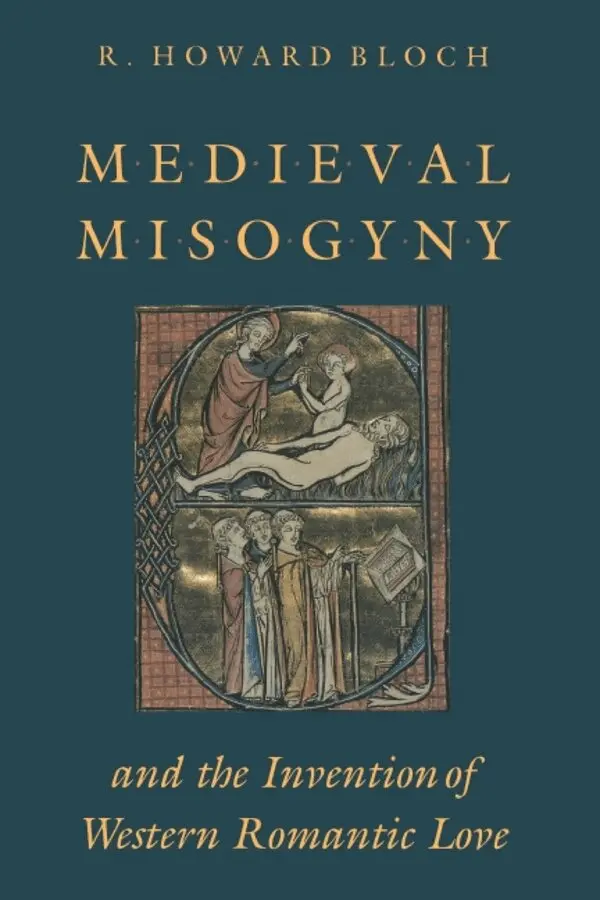
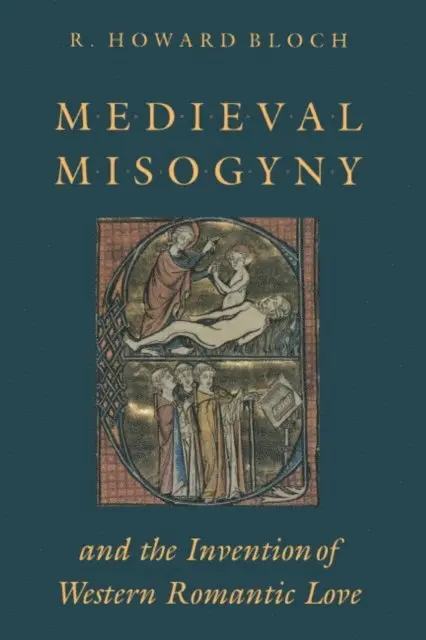
Until now the advent of Western romantic love has been seen as a liberation from--or antidote to--ten centuries of misogyny. In this major contribution to gender studies, R. Howard Bloch demonstrates how similar the ubiquitous antifeminism of medieval times and the romantic idealization of woman actually are. Through analyses of a broad range of patristic and medieval texts, Bloch explores the Christian construction of gender in which the flesh is feminized, the feminine is aestheticized, and aesthetics are condemned in theological terms. Tracing the underlying theme of virginity from the Church Fathers to the courtly poets, Bloch establishes the continuity between early Christian antifeminism and the idealization of woman that emerged in the twelfth and thirteenth centuries. In conclusion he explains the likely social, economic, and legal causes for the seeming inversion of the terms of misogyny into those of an idealizing tradition of love that exists alongside its earlier avatar until the current era. This startling study will be of great value to students of medieval literature as well as to historians of culture and gender.
Häftad, Engelska, 1986
360 kr
Skickas inom 5-8 vardagar
Häftad, Engelska, 2006
427 kr
Skickas inom 5-8 vardagar
"The Anonymous Marie de France" offers a fundamental reconception of the person generally assumed to be the first woman writer in French, the woman now referred to as Marie de France. Written by renowned medievalist R. Howard Bloch, it is the first book to consider all of the writing ascribed to Marie, including her famous "Lais", her 103 animal fables, and the earliest vernacular, "Saint Patrick's Purgatory". Marie is, Bloch asserts, one of the most self-conscious, sophisticated, and disturbing figures of her time - a writer whose works reveal an acute awareness not only of her role in the preservation of cultural memory, but also of the transformative psychological, social, and political effects of her writing within an oral tradition. "The Anonymous Marie de France" recovers the central achievements of one of the most pivotal figures in French literature. It is a study that will be of enormous value to medievalists, literary scholars, historians of France, and anyone interested in the advent of female authorship.
E-bok
Engelska, 2009777 kr
Läs direkt efter köp
Until now the advent of Western romantic love has been seen as a liberation from—or antidote to—ten centuries of misogyny. In this major contribution to gender studies, R. Howard Bloch demonstrates how similar the ubiquitous antifeminism of medieval times and the romantic idealization of woman actually are. Through analyses of a broad range of patristic and medieval texts, Bloch explores the Christian construction of gender in which the flesh is feminized, the feminine is aestheticized, and aesthetics are condemned in theological terms. Tracing the underlying theme of virginity from the Church Fathers to the courtly poets, Bloch establishes the continuity between early Christian antifeminism and the idealization of woman that emerged in the twelfth and thirteenth centuries. In conclusion he explains the likely social, economic, and legal causes for the seeming inversion of the terms of misogyny into those of an idealizing tradition of love that exists alongside its earlier avatar until the current era. This startling study will be of great value to students of medieval literature as well as to historians of culture and gender.
E-bok
Engelska, 200989 kr
Läs direkt efter köp
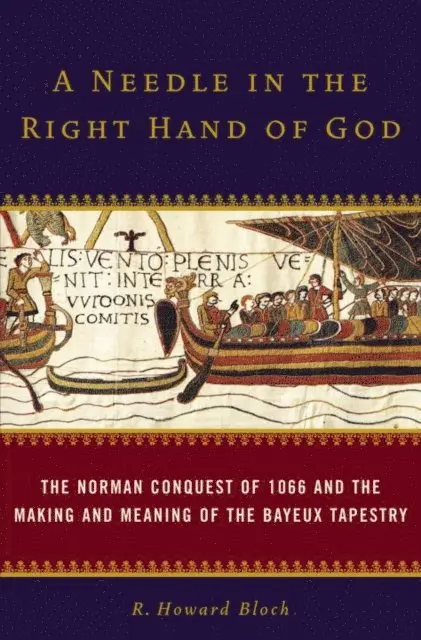
The Bayeux Tapestry is the world’s most famous textile–an exquisite 230-foot-long embroidered panorama depicting the events surrounding the Norman Conquest of 1066. It is also one of history’s most mysterious and compelling works of art. This haunting stitched account of the battle that redrew the map of medieval Europe has inspired dreams of theft, waves of nationalism, visions of limitless power, and esthetic rapture. In his fascinating new book, Yale professor R. Howard Bloch reveals the history, the hidden meaning, the deep beauty, and the enduring allure of this astonishing piece of cloth.Bloch opens with a gripping account of the event that inspired the Tapestry: the swift, bloody Battle of Hastings, in which the Norman bastard William defeated the Anglo-Saxon king, Harold, and laid claim to England under his new title, William the Conqueror. But to truly understand the connection between battle and embroidery, one must retrace the web of international intrigue and scandal that climaxed at Hastings. Bloch demonstrates how, with astonishing intimacy and immediacy, the artisans who fashioned this work of textile art brought to life a moment that changed the course of British culture and history. Every age has cherished the Tapestry for different reasons and read new meaning into its enigmatic words and images. French nationalists in the mid-nineteenth century, fired by Tapestry’s evocation of military glory, unearthed the lost French epic “The Song of Roland,” which Norman troops sang as they marched to victory in 1066. As the Nazis tightened their grip on Europe, Hitler sent a team to France to study the Tapestry, decode its Nordic elements, and, at the end of the war, with Paris under siege, bring the precious cloth to Berlin. The richest horde of buried Anglo-Saxon treasure, the matchless beauty of Byzantine silk, Aesop’s strange fable “The Swallow and the Linseed,” the colony that Anglo-Saxon nobles founded in the Middle East following their defeat at Hastings–all are brilliantly woven into Bloch’s riveting narrative.Seamlessly integrating Norman, Anglo-Saxon, Viking, and Byzantine elements, the Bayeux Tapestry ranks with Chartres and the Tower of London as a crowning achievement of medieval Europe. And yet, more than a work of art, the Tapestry served as the suture that bound up the wounds of 1066. Enhanced by a stunning full-color insert that includes reproductions of the complete Tapestry, A Needle in the Right Hand of God will stand with The Professor and the Madman and How the Irish Saved Civilization as a triumph of popular history.From the Hardcover edition.
E-bok
Engelska, 2023387 kr
Läs direkt efter köp
This title was originally published in 1989. This title was originally published in 1989.
Häftad, Engelska, 2022
558 kr
Skickas inom 5-8 vardagar
Medieval French Literature and Law explores the intricate relationship between medieval French literature and the profound judicial transformations of the 12th and 13th centuries. By examining literary texts alongside customary legal materials, the book reveals how both spheres participated in articulating the values and struggles of a society in transition. Far from existing in separate domains, literature and law in medieval France shared a common cultural mission: to preserve tradition, negotiate societal tensions, and affirm communal identity. Through oral performances, epic tales, and courtly poetry, medieval literature often mirrored the legal mechanisms of feudal courts, showcasing trials by combat, oaths, and ordeals as integral to both narrative structure and communal values.The work delves into how the literary and legal practices of the period reflected and influenced each other. The shift from feudal judicial systems reliant on physical violence to the monarchy's centralized, document-driven processes found parallels in literature’s evolution from the epic's dramatic conflicts to the courtly lyric's introspective nuance. Texts like La Mort Artu and Raoul de Cambrai not only depict the inadequacies of feudal legal institutions but also illuminate the broader political and cultural transformations of the High Middle Ages. By situating these literary artifacts within their historical context, the book provides a richer understanding of how vernacular literature and legal codification shaped and were shaped by the dynamic interplay of power, tradition, and social order.Ideal for historians and literary scholars alike, this study redefines our understanding of medieval French culture, offering fresh insights into the collaborative evolution of law and literature during a pivotal era.This title is part of UC Press's Voices Revived program, which commemorates University of California Press’s mission to seek out and cultivate the brightest minds and give them voice, reach, and impact. Drawing on a backlist dating to 1893, Voices Revived makes high-quality, peer-reviewed scholarship accessible once again using print-on-demand technology. This title was originally published in 1977.
E-bok
Engelska, 2023374 kr
Läs direkt efter köp
This title is part of UC Press's Voices Revived program, which commemorates University of California Press’s mission to seek out and cultivate the brightest minds and give them voice, reach, and impact. Drawing on a backlist dating to 1893, Voices Revived makes high-quality, peer-reviewed scholarship accessible once again using print-on-demand technology. This title was originally published in 1977.
Inbunden, Engelska, 2022
1 291 kr
Skickas inom 5-8 vardagar
Medieval French Literature and Law explores the intricate relationship between medieval French literature and the profound judicial transformations of the 12th and 13th centuries. By examining literary texts alongside customary legal materials, the book reveals how both spheres participated in articulating the values and struggles of a society in transition. Far from existing in separate domains, literature and law in medieval France shared a common cultural mission: to preserve tradition, negotiate societal tensions, and affirm communal identity. Through oral performances, epic tales, and courtly poetry, medieval literature often mirrored the legal mechanisms of feudal courts, showcasing trials by combat, oaths, and ordeals as integral to both narrative structure and communal values.The work delves into how the literary and legal practices of the period reflected and influenced each other. The shift from feudal judicial systems reliant on physical violence to the monarchy's centralized, document-driven processes found parallels in literature’s evolution from the epic's dramatic conflicts to the courtly lyric's introspective nuance. Texts like La Mort Artu and Raoul de Cambrai not only depict the inadequacies of feudal legal institutions but also illuminate the broader political and cultural transformations of the High Middle Ages. By situating these literary artifacts within their historical context, the book provides a richer understanding of how vernacular literature and legal codification shaped and were shaped by the dynamic interplay of power, tradition, and social order.Ideal for historians and literary scholars alike, this study redefines our understanding of medieval French culture, offering fresh insights into the collaborative evolution of law and literature during a pivotal era.This title is part of UC Press's Voices Revived program, which commemorates University of California Press’s mission to seek out and cultivate the brightest minds and give them voice, reach, and impact. Drawing on a backlist dating to 1893, Voices Revived makes high-quality, peer-reviewed scholarship accessible once again using print-on-demand technology. This title was originally published in 1977.
Inbunden, Engelska, 2016
302 kr
Skickas inom 5-8 vardagar
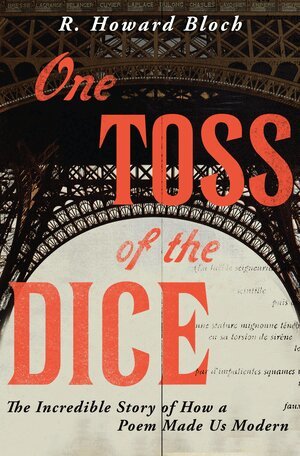
The forerunner of our digital age, a French poem about a shipwreck published in 1897, with its mind-bending possibilities of being read up and down, backwards and forwards, even sideways, launched modernism. Stéphane Mallarmé’s “One Toss of the Dice” has for over a century tantalised everyone from physicists to composers to graphic artists. R. Howard Bloch decodes the poem still considered among the most enigmatic ever written. Creating a shimmering portrait of Belle-époque Paris with a cast of exotic characters—Napoleon III, the Lumiere brothers, Auguste Rodin, Berthe Morisot, even an expatriate American dentist, Bloch positions Mallarmé as the spiritual giant of late-nineteenth-century France. Featuring a new translation of the poem by J.D. McClatchy, One Toss of the Dice reveals how a masterpiece shaped our perceptual world.
Häftad, Engelska, 2024
233 kr
Skickas inom 5-8 vardagar
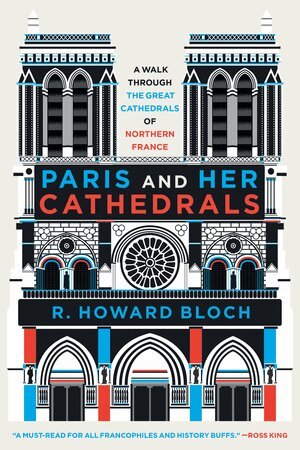
Over the years, R. Howard Bloch has become renowned for the insider tours of Paris that he gives to students abroad. Long sought after by travellers and history buffs for his near-encyclopaedic knowledge of French cathedrals, the eminent French literature scholar finally shares his expertise with a wider audience.In Paris and Her Cathedrals, six of the most sublime cathedrals in the penumbra of Paris—Saint-Denis, Notre-Dame, Chartres, Sainte-Chapelle, Amiens, Reims—are illumined in magnificent detail as Bloch, taking us from the High Middle Ages to the devastating fire that set Notre-Dame ablaze in 2019, traces the evolution of each in turn. Written from the premise that “seeing is enhanced by knowing”, each chapter is organised along the lines of a walk around and then through the space of the cathedral, such that the actual or virtual visitor feels the rich sweep of the church, “the essence of these architectural wonders” (Antonia Felix).Animating the past with lush evocations of architectural splendour—from flying buttresses and jewel-encrusted shrines to hidden burial grounds and secret chambers—Bloch then contextualises the cathedrals within the annals of French history. Here thrilling tales of kingly intrigue—as in Saint-Chapelle, where the pious King Louis IX amassed relics, including Christ’s crown of thorns—and audacious abbots are interspersed with anecdotes about the meeting of aristocratic and everyday life, culminating in “a rich, colourful narrative that clearly but expertly explains the history and symbolism of some of the world’s most magnificent buildings” (Ross King).To be read in preparation for an enlightened visit or merely to open a window upon the High Middle Ages in France, Paris and Her Cathedrals is a “revelation,” an “indispensable guide” (Garry Wills) to these awe-inspiring structures. Complete with the author’s own photographs, this beautifully illustrated volume vitally enhances our understanding of the history of Paris and its environs.
Inbunden, Engelska, 2014
871 kr
Skickas inom 5-8 vardagar
In the early 1990s, Stephen Nichols introduced the term "new medievalism" to describe an alternative to the traditional philological approach to the study of the romantic texts in the medieval period. While the old approach focused on formal aspects of language, this new approach was historicist and moved beyond a narrow focus on language to examine the broader social and cultural contexts in which literary works were composed and disseminated. Within the field, this transformation of medieval studies was as important as the genetic revolution to the study of biology and has had an enormous influence on the study of medieval literature. Rethinking the New Medievalism offers both a historical account of the movement and its achievements while indicating - in Nichols' innovative spirit - still newer directions for medieval studies. The essays deal with questions of authorship, theology, and material philology and are written by members of a wide philological and critical circle that Nichols nourished for forty years. Daniel Heller-Roazen's essay, for example, demonstrates the conjunction of the old philology and the new.In a close examination of the history of the words used for maritime raiders from Ancient Greece to the present (pirate, plunderer, bandit), Roazen draws a fine line between lawlessness and lawfulness, between judicial action and war, between war and public policy. Other contributors include Jack Abecassis, Marina Brownlee, Jacqueline Cerquiglini-Toulet, Andreas Kablitz, and Ursula Peters.
Häftad, Engelska, 2014
427 kr
Skickas inom 5-8 vardagar
In the early 1990s, Stephen Nichols introduced the term "new medievalism" to describe an alternative to the traditional philological approach to the study of the romantic texts in the medieval period. While the old approach focused on formal aspects of language, this new approach was historicist and moved beyond a narrow focus on language to examine the broader social and cultural contexts in which literary works were composed and disseminated. Within the field, this transformation of medieval studies was as important as the genetic revolution to the study of biology and has had an enormous influence on the study of medieval literature. Rethinking the New Medievalism offers both a historical account of the movement and its achievements while indicating - in Nichols' innovative spirit - still newer directions for medieval studies. The essays deal with questions of authorship, theology, and material philology and are written by members of a wide philological and critical circle that Nichols nourished for forty years. Daniel Heller-Roazen's essay, for example, demonstrates the conjunction of the old philology and the new.In a close examination of the history of the words used for maritime raiders from Ancient Greece to the present (pirate, plunderer, bandit), Roazen draws a fine line between lawlessness and lawfulness, between judicial action and war, between war and public policy. Other contributors include Jack Abecassis, Marina Brownlee, Jacqueline Cerquiglini-Toulet, Andreas Kablitz, and Ursula Peters.
Inbunden, Engelska, 2022
304 kr
Skickas inom 5-8 vardagar
Eminent French literature professor R. Howard Bloch has become renowned for his insider tours of Paris, given to college students abroad. Long sought after for his encyclopaedic knowledge of French cathedrals, Bloch has at last decided to share his intimate knowledge with a wider audience.Here, six cathedrals—Saint-Denis, Chartres, Sainte-Chapelle, Reims, Amiens and Notre-Dame—are illumined in magnificent detail as Bloch, taking us from the High Middle Ages to the devastating fire that set Notre-Dame ablaze in 2019, traces the evolution of each in turn. Contextualising the cathedrals within the annals of French history, Bloch animates the past with lush evocations of architectural splendour—high-flying buttresses and jewel-encrusted shrines, hidden burial grounds and secret chambers—and thrilling tales of kingly intrigue, audacious architects and the meeting of aristocratic and everyday life. Complete with the author’s own photographs, Paris and Her Cathedrals vitally enhances our understanding of the history of Paris and its environs.
Inbunden, Engelska, 2003
727 kr
Tillfälligt slut
"The Anonymous Marie de France" offers a fundamental reconception of the person generally assumed to be the first woman writer in French, the woman now referred to as Marie de France. Written by renowned medievalist R. Howard Bloch, it is the first book to consider all of the writing ascribed to Marie, including her famous "Lais", her 103 animal fables, and the earliest vernacular, "Saint Patrick's Purgatory". Marie is, Bloch asserts, one of the most self-conscious, sophisticated, and disturbing figures of her time - a writer whose works reveal an acute awareness not only of her role in the preservation of cultural memory, but also of the transformative psychological, social, and political effects of her writing within an oral tradition. "The Anonymous Marie de France" recovers the central achievements of one of the most pivotal figures in French literature. It is a study that will be of enormous value to medievalists, literary scholars, historians of France, and anyone interested in the advent of female authorship.