R. Menzel - Böcker
Visar alla böcker från författaren R. Menzel. Handla med fri frakt och snabb leverans.
3 produkter
3 produkter
4 431 kr
Skickas inom 7-10 vardagar
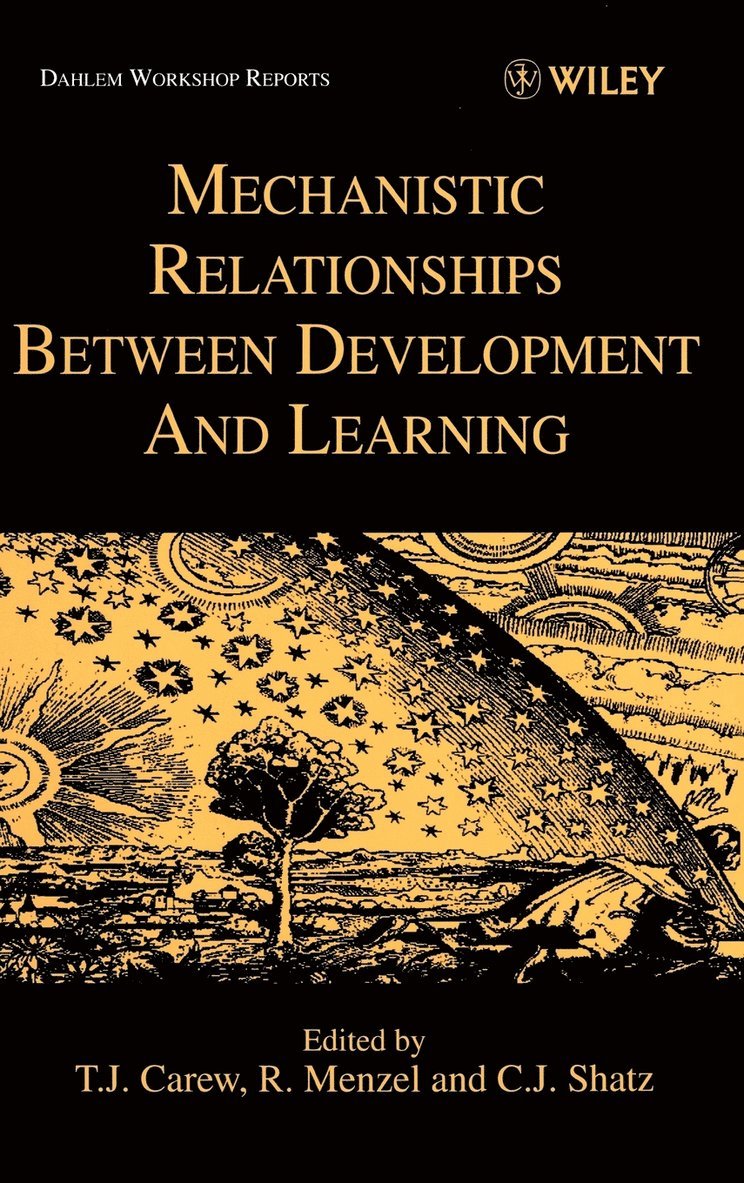
At the turn of the century, the pioneering neuroscientist Ramon y Cajal articulated the hypothesis that growth processes involved in the development of the central nervous system may persist into adulthood, where they might be retained to mediate the formation and maintenance of memory. Over the decades since Cajal s seminal suggestion, extensive experimental attention has been directed at elucidating the cellular and molecular mechanisms underlying both neuronal development and learning and memory. Many exciting technical and conceptual advances have been made on each front. Thus, as we approach the end of this century, the field is now poised to assess the status of Cajal s provocative hypothesis directly. This volume reflects a highly interdisciplinary dialog among experts in the fields of development and learning and memory, who came together not only to assess the validity of the general hypotheses that development and learning might share mechanistic features, but also to identify issues, preparations, and paradigms that would allow for a rigorous evaluation of ways to advance the hypothesis, on the one hand, and determine its fundamental limitations, on the other. Towards this end, the volume is organized into four levels of analysis: behavioral, systems, cellular, and molecular. At each level, neuroscientists from the general fields of development and learning engage in lively exchange of ideas which serve to highlight the similarities and differences of both the concepts and the experimental approaches used in their diverse fields. The result of this endeavor is a collection of seminal chapters and summary reports that provide a novel synthesis of important advances in two exciting areas of modern neuroscience. Goal of this Dahlem Workshop: to evaluate the validity of the general thesis that mechanisms utilized in the development of the nervous system are reutilized in the adult to mediate formation and maintenance of memory.
Comparative Physiology and Evolution of Vision in Invertebrates
A: Invertebrate Photoreceptors
Häftad, Engelska, 2011
1 632 kr
Skickas inom 10-15 vardagar
In the comparative physiology of photoreception by the Protista and the invertebrates two aspects are emphasized: (1) the diversity of visual processes in these groups and (2) their bearing upon general mechanisms of photoreception. Invertebrates have evolved a far greater variety of adaptations than vertebrates modifications aiding survival in the remarkably different biotopes they occupy. The number of species in itself suggests this multiformity; each of them has peculiarities of its own, in morphology as well as in physiology and behavior. But these special adaptations are variations on a few great themes. Although the catalogue of invertebrate species is immense, the literature concerning them nearly rivals it in extent-even if one considers only that fraction dealing with visual physiology. Taxonomy proceeds by grouping the species, categorizing them in genera, families, orders, and progressively larger units. Similarly, comparative physiology aims at an analogous, more or less compre hensive, classification. This Part A of Volume VII/6, like Part B that follows it, emphasizes the broad questions that concern groups larger than the individual species; in some cases these questions have general applicability. The middle course between approaches that are too specialized and those that are too general is often elusive, but here we attempt to follow it. The vast number of special adaptations-probably, as we have said, as large as the number of species-is beyond the range even of a handbook.
1 069 kr
Skickas inom 10-15 vardagar
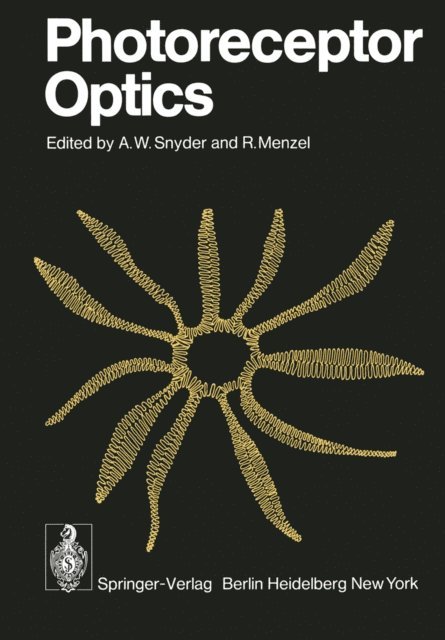
The above consideration indicates that at present many of the experi mental facts on PS in animals can be quantitatively explained within the limits of the "universal" photoreceptor membrane concept. Of course, existence of preferential orientation of the absorbing dipoles in the tubuli of the rhabdomeres can not be totally rejected. We hope that the concept of the "universal" photoreceptor membrane may serve as the useful instrument when dealing with newly discovered properties of visual cells so that true mechanisms of electrical and optical coupling will be searched for instead of assumptions being made on additional properties of the photoreceptor membrane in every new animal under study. 5. Absorption Spectrum of the Universal Photoreceptor Membrane and Spectral Sensitivity of the Photoreceptor 5. 1 Preliminary Notes It seems nearly self-evident that the absorption spectrum of the pho toreceptor membrane coincides exactly with that of the visual pigment it contains. Hence, the membrane must exhibit three bands of absorp tion - the principal band with its peak within the limits of visible spectrum (or a-peak); the secondary band between 340 and 380 nm (S peak); and the third, protein band, in the ultraviolet (UV) at 280 nm (COLLINS et al. , 1952). The main peak of absorption is located within the range 433-575 nm for retinol-based pigments and between 438 and 620 nm for 3-dehydroretinol-based pigments, the position of Amax de pending on many ecological factors.