
Rachael Miyung Joo – författare
Visar alla böcker från författaren Rachael Miyung Joo. Handla med fri frakt och snabb leverans.
3 produkter
3 produkter
Häftad, Engelska, 2012
428 kr
Skickas inom 5-8 vardagar
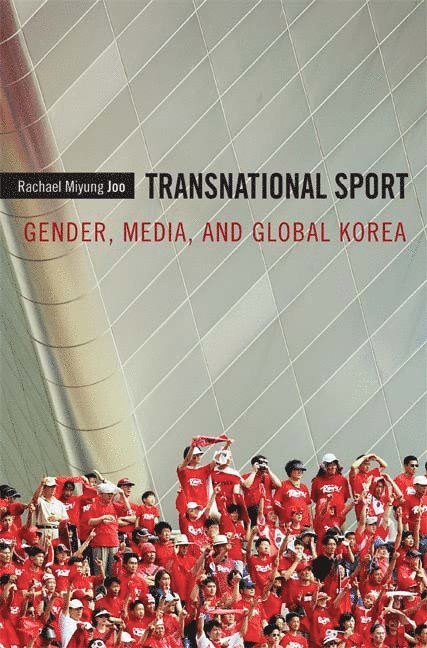
Based on ethnographic research in Seoul and Los Angeles, Transnational Sport tells how sports shape experiences of global Koreanness, and how those experiences are affected by national cultures. Rachael Miyung Joo focuses on superstar Korean athletes and sporting events produced for transnational media consumption. She explains how Korean athletes who achieve success on the world stage represent a powerful, globalized Korea for Koreans within the country and those in the diaspora. Celebrity Korean women athletes are highly visible in the Ladies Professional Golf Association. In the media, these young golfers are represented as daughters to be protected within the patriarchal Korean family and as hypersexualized Asian women with commercial appeal. Meanwhile, the hard-muscled bodies of male athletes, such as Korean baseball and soccer players, symbolize Korean masculine dominance in the global capitalist arena. Turning from particular athletes to a mega-event, Joo discusses the 2002 FIFA World Cup Korea/Japan, a watershed moment in recent Korean history. New ideas of global Koreanness coalesced around this momentous event. Women and youth assumed newly prominent roles in Korean culture, and, Joo suggests, new models of public culture emerged as thousands of individuals were joined by a shared purpose.
E-bok
PDF, Engelska, 2012610 kr
Läs direkt efter köp
Based on ethnographic research in Seoul and Los Angeles, Transnational Sport tells how sports shape experiences of global Koreanness, and how those experiences are affected by national cultures. Rachael Miyung Joo focuses on superstar Korean athletes and sporting events produced for transnational media consumption. She explains how Korean athletes who achieve success on the world stage represent a powerful, globalized Korea for Koreans within the country and those in the diaspora. Celebrity Korean women athletes are highly visible in the Ladies Professional Golf Association. In the media, these young golfers are represented as daughters to be protected within the patriarchal Korean family and as hypersexualized Asian women with commercial appeal. Meanwhile, the hard-muscled bodies of male athletes, such as Korean baseball and soccer players, symbolize Korean masculine dominance in the global capitalist arena. Turning from particular athletes to a mega-event, Joo discusses the 2002 FIFA World Cup Korea/Japan, a watershed moment in recent Korean history. New ideas of global Koreanness coalesced around this momentous event. Women and youth assumed newly prominent roles in Korean culture, and, Joo suggests, new models of public culture emerged as thousands of individuals were joined by a shared purpose.
E-bok
PDF, Engelska, 20184 983 kr
Läs direkt efter köp
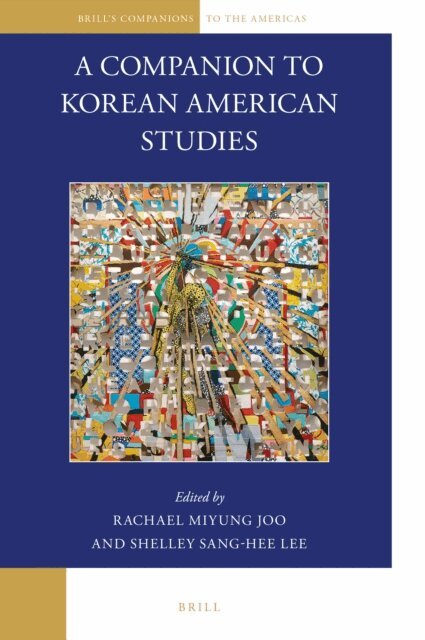
A Companion to Korean American Studies presents interdisciplinary works from a number of authors who have contributed to the field of Korean American Studies. This collection ranges from chapters detailing the histories of Korean migration to the United States to contemporary flows of popular culture between South Korea and the United States. The authors present on Korean American history, gender relations, cultural formations, social relations, and politics. Contributors are: Sohyun An, Chinbo Chong, Angie Y. Chung, Rhoanne Esteban, Sue-Je Lee Gage, Hahrie Han, Jane Hong, Michael Hurt, Rachael Miyung Joo, Jane Junn, Miliann Kang, Ann H. Kim, Anthony Yooshin Kim, Eleana Kim, Jinwon Kim, Ju Yon Kim, Kevin Y. Kim, Nadia Y. Kim, Soo Mee Kim, Robert Ji-Song Ku, EunSook Lee, Se Hwa Lee, S. Heijin Lee, Shelley Sang-Hee Lee, John Lie, Pei-te Lien, Kimberly McKee, Pyong Gap Min, Arissa H. Oh, Edward J.W. Park, Jerry Z. Park, Josephine Nock-Hee Park, Margaret Rhee and Kenneth Vaughan.