Rachel A. Cichowski – författare
Visar alla böcker från författaren Rachel A. Cichowski. Handla med fri frakt och snabb leverans.
6 produkter
State of the European Union, 6
Law, Politics, and Society
Av Rachel A. Cichowski, Tanja A. Borzel
E-bok, 2003
319 kr
Lägg i varukorg
Law, Politics and Society is the sixth and latest addition to the European Union Studies Association series, State of the European Union. The contributors of this volume take the dynamic interaction between law, politics and society as a starting point to think critically about recent developments …
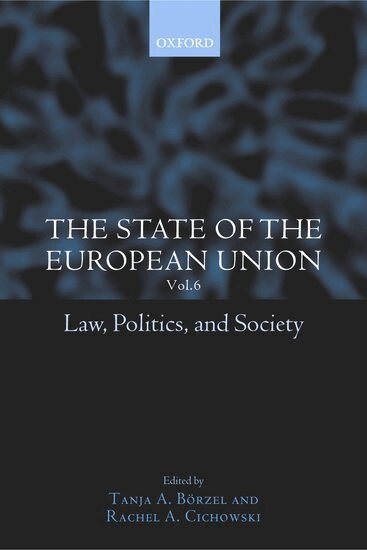
State of the European Union, 6
Law, Politics, and Society
Av Rachel A. Cichowski, Tanja A. Borzel
E-bok, 2005
343 kr
Lägg i varukorg
Law, Politics and Society is the sixth and latest addition to the European Union Studies Association series, State of the European Union . The contributors of this volume take the dynamic interaction between law, politics and society as a starting point to think critically about recent developments …
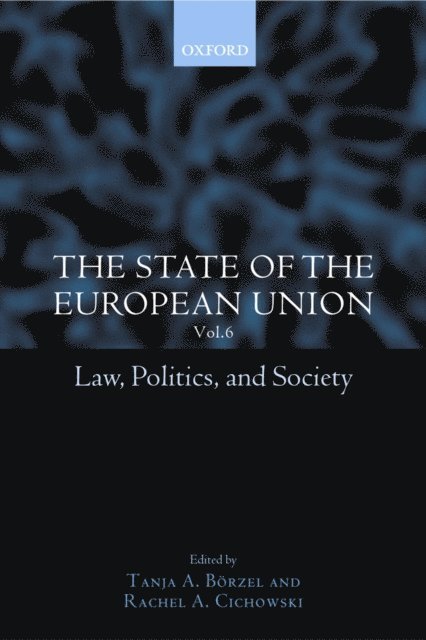
The State of the European Union, 6
Law, Politics, and Society
Av Tanja A. Börzel, Rachel A. Cichowski
Inbunden, 2003
2923 kr
Lägg i varukorg
Law, Politics and Society is the sixth and latest addition to the European Union Studies Association series, State of the European Union. The contributors of this volume take the dynamic interaction between law, politics and society as a starting point to think critically about recent developments …
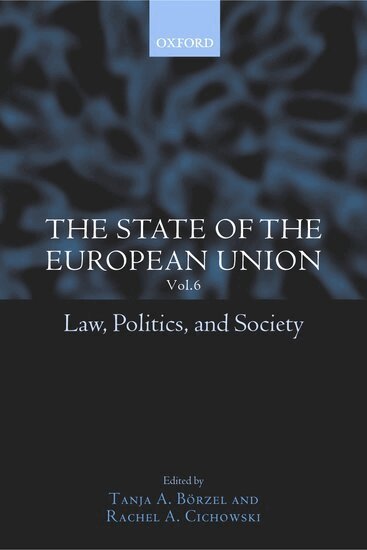
The State of the European Union, 6
Law, Politics, and Society
Av Tanja A. Börzel, Rachel A. Cichowski
Häftad, 2003
621 kr
Lägg i varukorg
The contributors of this volume take the dynamic interaction between law, politics and society as a starting point to think critically about recent developments and future innovations in European integration and EU studies. The book provides an overview of key events between 2000 and 2002 in the …
The European Court and Civil Society
Litigation, Mobilization and Governance
Häftad, 2007
553 kr
Lägg i varukorg
The European Union today stands on the brink of radical institutional and constitutional change. The most recent enlargement and proposed legal reforms reflect a commitment to democracy: stabilizing political life for citizens governed by new regimes, and constructing a European Union more …
The European Court and Civil Society
Litigation, Mobilization and Governance
Inbunden, 2007
1563 kr
Lägg i varukorg
The European Union today stands on the brink of radical institutional and constitutional change. The most recent enlargement and proposed legal reforms reflect a commitment to democracy: stabilizing political life for citizens governed by new regimes, and constructing a European Union more …