Rachel Shteir - Böcker
Visar alla böcker från författaren Rachel Shteir. Handla med fri frakt och snabb leverans.
4 produkter
4 produkter
314 kr
Skickas inom 3-6 vardagar
382 kr
Skickas inom 5-8 vardagar
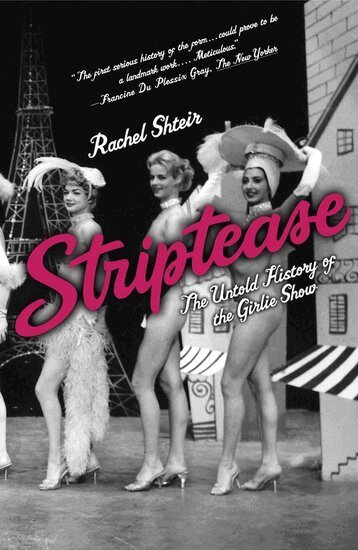
Striptease recreates the combustible mixture of license, independence, and sexual curiosity that allowed strippers to thrive for nearly a century. Rachel Shteir brings to life striptease's Golden Age, the years between the Jazz Age and the Sexual Revolution, when strippers performed around the country, in burlesque theatres, nightclubs, vaudeville houses, carnivals, fairs, and even in glorious palaces on the Great White Way. Taking us behind the scenes, Shteir introduces us to a diverse cast of characters that collided on the burlesque stage, from tight-laced political reformers and flamboyant impresarios, to drag queens, shimmy girls, cootch dancers, tit serenaders, and even girls next door, lured into the profession by big-city aspirations. Throughout the book, readers will find essential profiles of famed performers, including Gypsy Rose Lee, 'the Literary Stripper'; Lili St. Cyr, the 1950s mistress of exotic striptease; and Blaze Starr, the 'human heat wave'. who literally set the stage on fire. striptease is an insightful and entertaining portrait of an art form at once reviled and embraced by the American public. Blending careful research and vivid narration, Rachel Shteir captures striptease's combination of sham and seduction while illuminating its surprisingly persistent hold on the American imagination.
441 kr
Skickas inom 5-8 vardagar
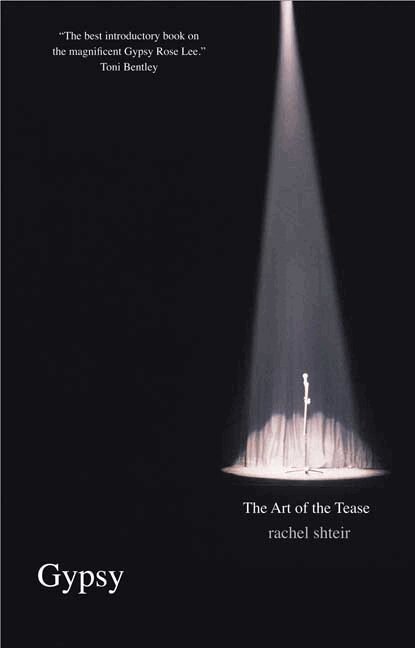
A revealing portrait of Gypsy Rose Lee, the “Striptease Intellectual” of 1930s burlesque A true icon of America at a turning point in its history, Gypsy Rose Lee was the first—and the only—stripper to become a household name, write novels, and win the adulation of intellectuals, bankers, socialites, and ordinary Americans. Her outrageous blend of funny-smart sex symbol with the aura of high culture—she boasted that she liked to read Great Books and listen to classical music while taking off her clothes on-stage—inspired a musical, memoirs, a portrait by Max Ernst, and a species of rose. Gypsy is the first book about Gypsy Rose Lee’s life, fame, and place in America not written by a family member, and it reveals her deep impact on the social and cultural transformations taking shape during her life. Rachel Shteir, author of the prize-winning Striptease, gives us Gypsy’s story from her arrival in New York in 1931 to her sojourns in Hollywood, her friendships and rivalries with writers and artists, the Sondheim musical, family memoirs that retold her history in divergent ways, and a television biopic currently in the making. With verve, audacity, and native guile, Gypsy Rose Lee moved striptease from the margins of American life to Broadway, Hollywood, and Main Street. Gypsy tells how she did it, and why.
251 kr
Skickas inom 7-10 vardagar
A new portrait of Betty Friedan, the author and activist acclaimed as the mother of second-wave feminism Finalist, 2024 National Book Critics Circle Awards in Biography • A New Yorker Best of the Week Pick “A lucid portrait of Friedan as a bold yet flawed advocate for women’s equality.”—Publishers Weekly The feminist writer and activist Betty Friedan (1921–2006), pathbreaking author of The Feminine Mystique, was powerful and polarizing. In this biography, the first in more than twenty years, Rachel Shteir draws on Friedan’s papers and on interviews with family, colleagues, and friends to create a nuanced portrait. Friedan, born Bettye Naomi Goldstein, chafed at society’s restrictions from a young age. As a journalist she covered racism, sexism, labor, class inequality, and anti-Semitism. As a wife and mother, she struggled to balance her work and homemaking. Her malaise as a housewife and her research into the feelings of other women resulted in The Feminine Mystique (1963), which made her a celebrity. Using her influence, Friedan cofounded the National Organization for Women, the National Women’s Political Caucus, and the National Association to Repeal Abortion Laws. She fought for the Equal Rights Amendment, universal childcare, and workplace protections for mothers, but she disagreed with the women’s liberation movement over “sexual politics.” Her volatility and public conflicts fractured key relationships. Shteir considers how Friedan’s Judaism was essential to her feminism, presenting a new Friedan for a new era.