
Radu J. Bogdan – författare
Visar alla böcker från författaren Radu J. Bogdan. Handla med fri frakt och snabb leverans.
8 produkter
8 produkter
70 kr
Tillfälligt slut
508 kr
Skickas inom 3-6 vardagar
557 kr
Skickas inom 7-10 vardagar
The contributors to this volume examine recent controversies about the importance of common sense psychology for our understanding of the human mind. Common sense provides a familiar and friendly psychological scheme by which to talk about the mind. Its categories (belief, desire, intention, consciousness, emotion, and so on) tend to portray the mind as quite different from the rest of nature, and thus irreducible to physical matters and its laws. In this volume a variety of positions on common sense psychology from critical to supportive, from exegetical to speculative, are represented. Among the questions posed are: Is common sense psychology an empirical theory, a body of analytic knowledge, a practice or a strategy? If it is a legitimate enterprise can it be naturalized or not? If it is not legitimate can it be eliminated? Is its fate tied to our understanding of consciousness? Should we approach its concepts and generalizations from the standpoint of conceptual analysis or from the philosophy of science?
1 303 kr
Skickas inom 7-10 vardagar
The contributors to this volume examine recent controversies about the importance of common sense psychology for our understanding of the human mind. Common sense provides a familiar and friendly psychological scheme by which to talk about the mind. Its categories (belief, desire, intention, consciousness, emotion, and so on) tend to portray the mind as quite different from the rest of nature, and thus irreducible to physical matters and its laws. In this volume a variety of positions on common sense psychology from critical to supportive, from exegetical to speculative, are represented. Among the questions posed are: Is common sense psychology an empirical theory, a body of analytic knowledge, a practice or a strategy? If it is a legitimate enterprise can it be naturalized or not? If it is not legitimate can it be eliminated? Is its fate tied to our understanding of consciousness? Should we approach its concepts and generalizations from the standpoint of conceptual analysis or from the philosophy of science?
2 074 kr
Skickas inom 10-15 vardagar
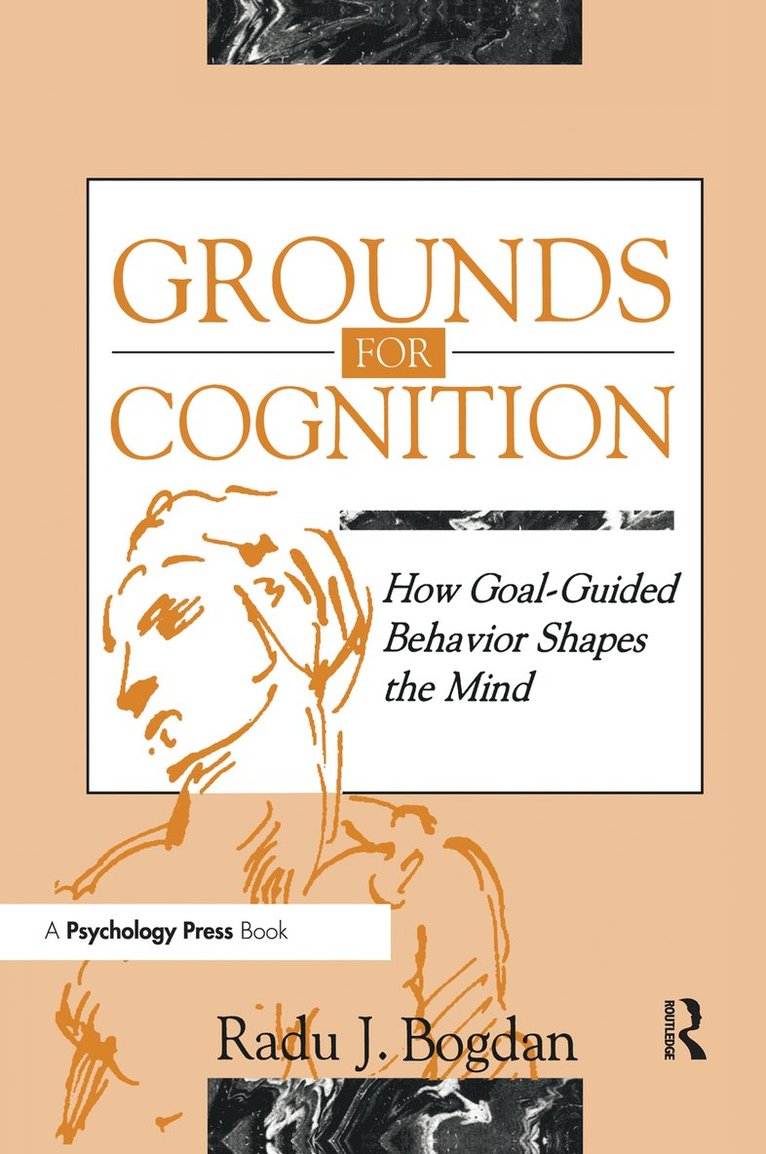
Q: Why do organisms need cognition? A: To get information about their environments. Q: Why such information? A: Because organisms need to guide their behaviors to goals. Q: Why guidance? A: Because it leads to goal satisfaction. Q: Why goals? Cognition is a naturally selected response by genetic programs to the evolutionary pressure of guiding behaviors to goals. Organisms are material systems that maintain and replicate themselves by engaging their world in goal-directed ways. This is how guidance of behavior to goal grounds and explains cognition and the main forms in which it manages information. Guidance to goal also makes a difference to the understanding of human cognition. Simpler forms of cognition evolve to handle fixed informational transactions with the world, whereas human cognition evolves the abilities to script flexible goal situations that fit specific contexts of behavior. This teleoevolutionary approach has important implications for cognitive science, two of which are programmatic. One is that information that guides to goal is not exclusively cognitive; guidance is also affected by ecological facts and regularities as well as by design assumptions about them. The other implication is that the functional analyses dominant in cognitive science and philosophy of mind are incomplete and weak. They are incomplete in that they focus only on the explicitly encoded cognitive information and its behavioral consequences, thus ignoring the larger guidance arrangements; and weak because causal and functional relations implement but underdetermine goal-directed and goal-guided procesess. A work dealing expressly with the foundations of cognitive science, this book addresses basic but seldom-asked questions about the evolutionary rationale of cognition and the way this rationale has shaped the major types of cognition. It also provides a teleological answer to these basic questions in terms of goal directedness and particularly guidance of behavior to goal. In so doing, the work defends the scientific respectability and the explanatory necessity of teleology by showing that goal directedness characterizes the work of genetic programs.
714 kr
Skickas inom 10-15 vardagar
Q: Why do organisms need cognition? A: To get information about their environments. Q: Why such information? A: Because organisms need to guide their behaviors to goals. Q: Why guidance? A: Because it leads to goal satisfaction. Q: Why goals? Cognition is a naturally selected response by genetic programs to the evolutionary pressure of guiding behaviors to goals. Organisms are material systems that maintain and replicate themselves by engaging their world in goal-directed ways. This is how guidance of behavior to goal grounds and explains cognition and the main forms in which it manages information. Guidance to goal also makes a difference to the understanding of human cognition. Simpler forms of cognition evolve to handle fixed informational transactions with the world, whereas human cognition evolves the abilities to script flexible goal situations that fit specific contexts of behavior. This teleoevolutionary approach has important implications for cognitive science, two of which are programmatic. One is that information that guides to goal is not exclusively cognitive; guidance is also affected by ecological facts and regularities as well as by design assumptions about them. The other implication is that the functional analyses dominant in cognitive science and philosophy of mind are incomplete and weak. They are incomplete in that they focus only on the explicitly encoded cognitive information and its behavioral consequences, thus ignoring the larger guidance arrangements; and weak because causal and functional relations implement but underdetermine goal-directed and goal-guided procesess. A work dealing expressly with the foundations of cognitive science, this book addresses basic but seldom-asked questions about the evolutionary rationale of cognition and the way this rationale has shaped the major types of cognition. It also provides a teleological answer to these basic questions in terms of goal directedness and particularly guidance of behavior to goal. In so doing, the work defends the scientific respectability and the explanatory necessity of teleology by showing that goal directedness characterizes the work of genetic programs.
414 kr
Skickas inom 7-10 vardagar
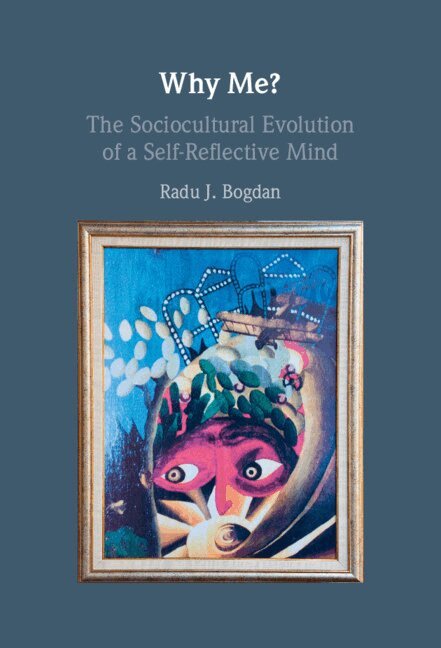
This book explores the evolution of the mental competence for self-reflection: why it evolved, under what selection pressures, in what environments, out of what precursors, and with what mental resources. Integrating evolutionary, psychological, and philosophical perspectives, Radu J. Bogdan argues that the competence for self-reflection, uniquely human and initially autobiographical, evolved under strong and persistent sociocultural and political (collaborative and competitive) pressures on the developing minds of older children and later adults. Self-reflection originated in a basic propensity of the human brain to rehearse anticipatively mental states, speech acts, actions, and states of the world in order to service one's elaborate goal policies. These goal policies integrate offline representations of one's own mental states and actions and those of others in order to handle the challenges of a complex and dynamic sociopolitical and sociocultural life, calling for an adaptive intramental self-regulation: that intramental adaptation is self-reflection.
1 394 kr
Skickas inom 7-10 vardagar
This book explores the evolution of the mental competence for self-reflection: why it evolved, under what selection pressures, in what environments, out of what precursors, and with what mental resources. Integrating evolutionary, psychological, and philosophical perspectives, Radu J. Bogdan argues that the competence for self-reflection, uniquely human and initially autobiographical, evolved under strong and persistent sociocultural and political (collaborative and competitive) pressures on the developing minds of older children and later adults. Self-reflection originated in a basic propensity of the human brain to rehearse anticipatively mental states, speech acts, actions, and states of the world in order to service one's elaborate goal policies. These goal policies integrate offline representations of one's own mental states and actions and those of others in order to handle the challenges of a complex and dynamic sociopolitical and sociocultural life, calling for an adaptive intramental self-regulation: that intramental adaptation is self-reflection.