Rafal Ablamowicz – författare
Visar alla böcker från författaren Rafal Ablamowicz. Handla med fri frakt och snabb leverans.
10 produkter
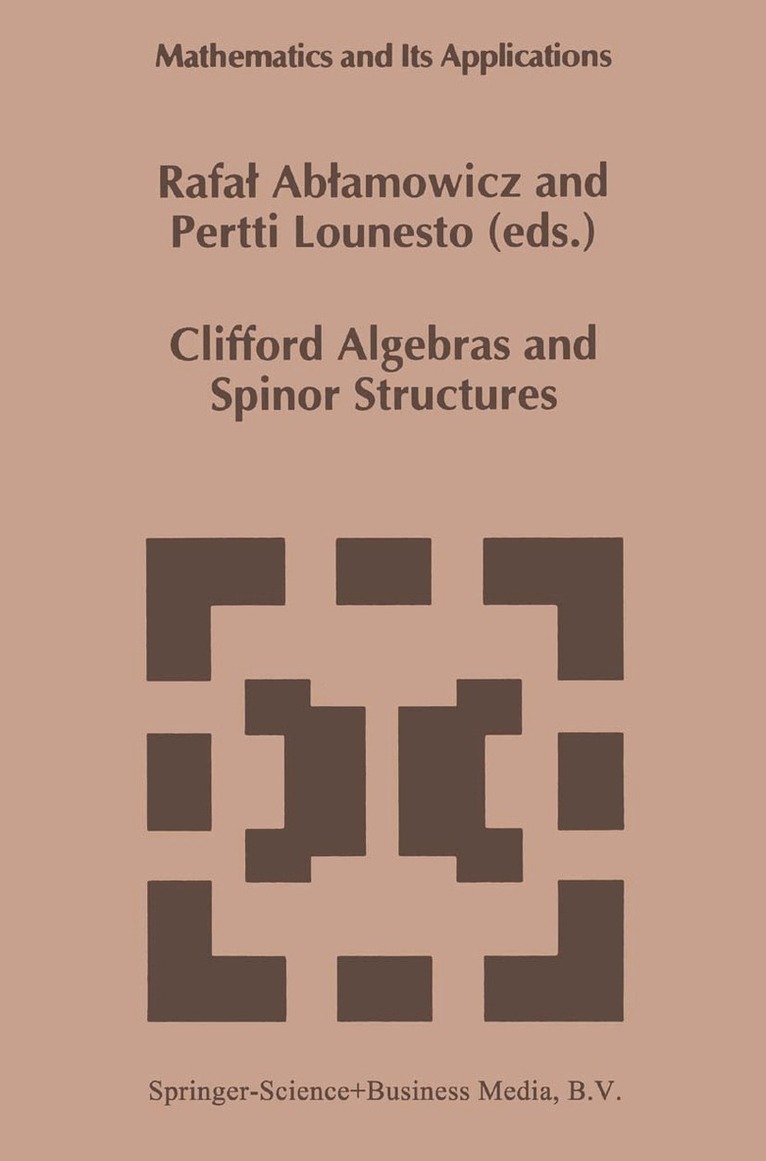
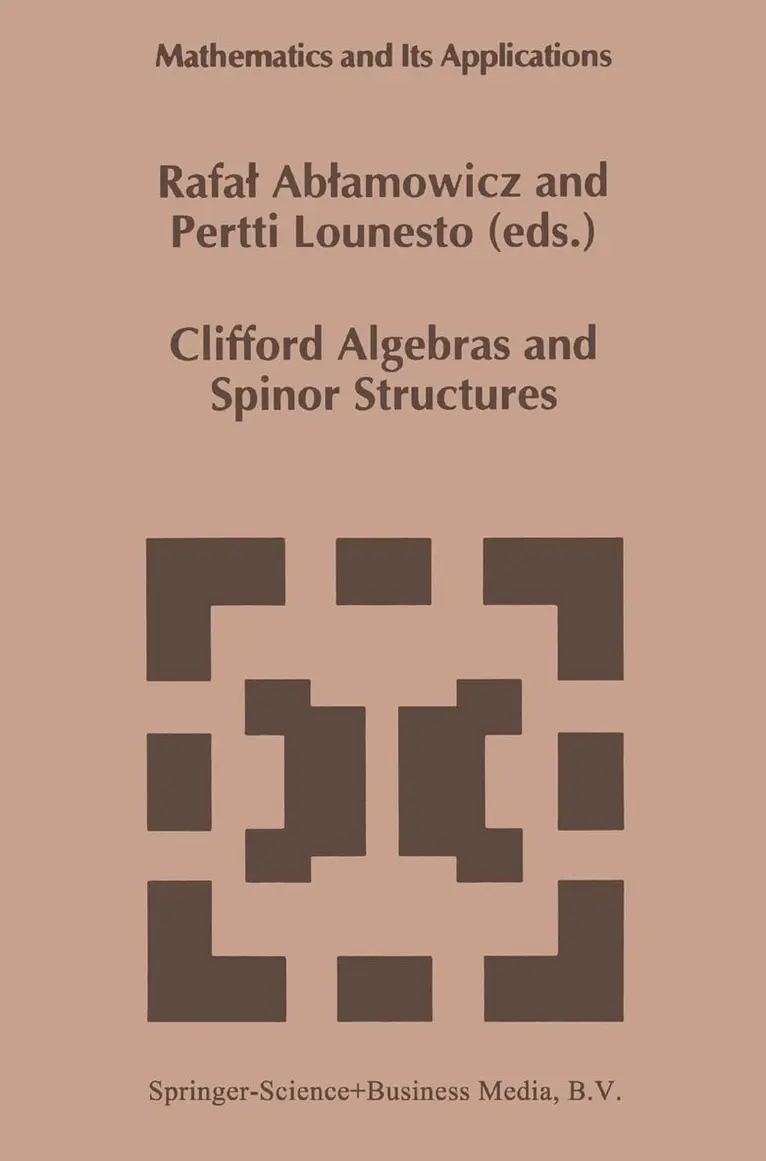
Clifford Algebras and Spinor Structures
A Special Volume Dedicated to the Memory of Albert Crumeyrolle (1919–1992)
Av Rafal Ablamowicz, P. Lounesto
Inbunden, 1995
1096 kr
Lägg i varukorg
This volume is dedicated to the memory of Albert Crumeyrolle, who died on June 17, 1992. In organizing the volume we gave priority to: articles summarizing Crumeyrolle's own work in differential geometry, general relativity and spinors, articles which give the reader an idea of the depth and …
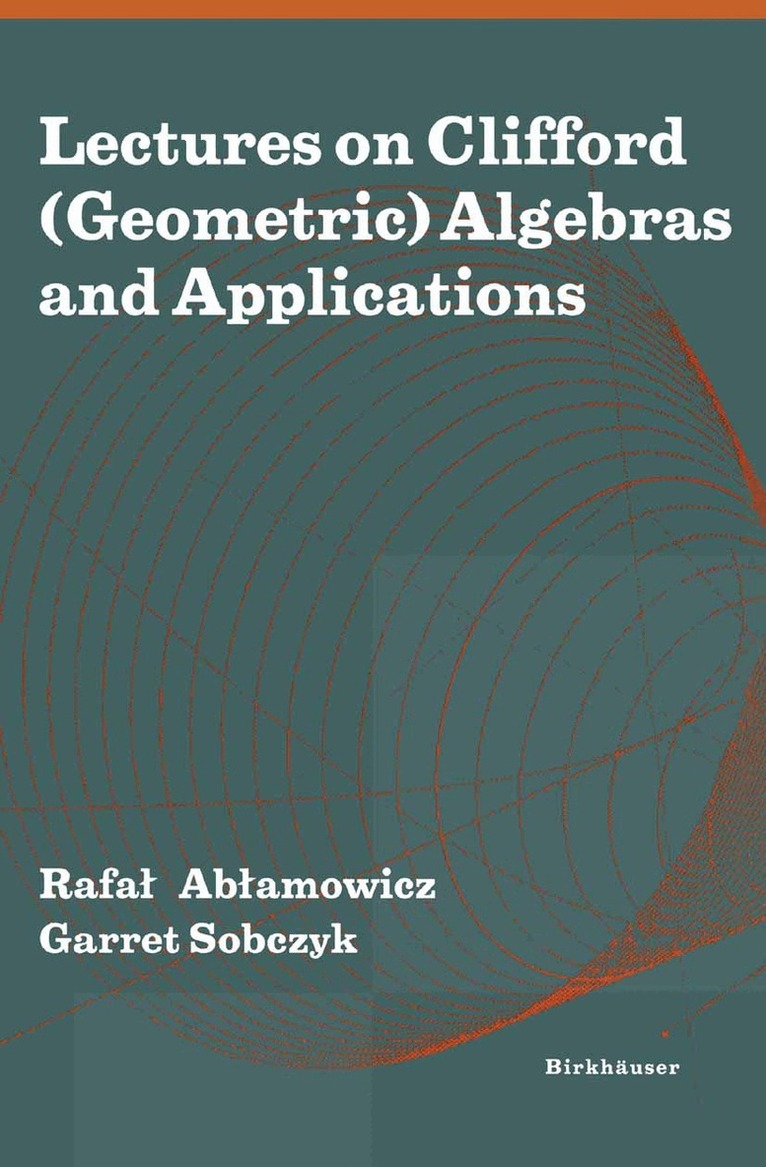
Lectures on Clifford (Geometric) Algebras and Applications
Av Rafal Ablamowicz, Garret Sobczyk
Häftad, 2003
660 kr
Lägg i varukorg
Advances in technology over the last 25 years have created a situation in which workers in diverse areas of computerscience and engineering have found it neces sary to increase their knowledge of related fields in order to make further progress. Clifford (geometric) algebra offers a unified …
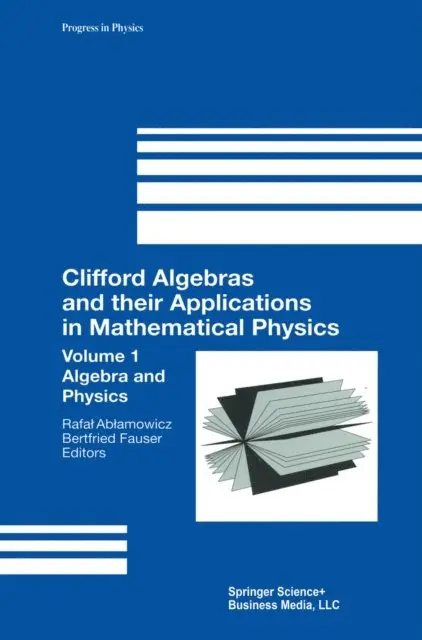
Algebra and Physics
Av R. Ablamowicz, Rafal Ablamowicz m. fl.
Inbunden, 2000
878 kr
Lägg i varukorg
The first part of a two-volume set concerning the field of Clifford (geometric) algebra, this work consists of thematically organized chapters that provide a broad overview of cutting-edge topics in mathematical physics and the physical applications of Clifford algebras. This volume is devoted …
Lectures on Clifford (Geometric) Algebras and Applications
Av Garret Sobczyk, Rafal Ablamowicz
E-bok, 2011
897 kr
Lägg i varukorg
Advances in technology over the last 25 years have created a situation in which workers in diverse areas of computerscience and engineering have found it neces sary to increase their knowledge of related fields in order to make further progress. Clifford (geometric) algebra offers a unified …
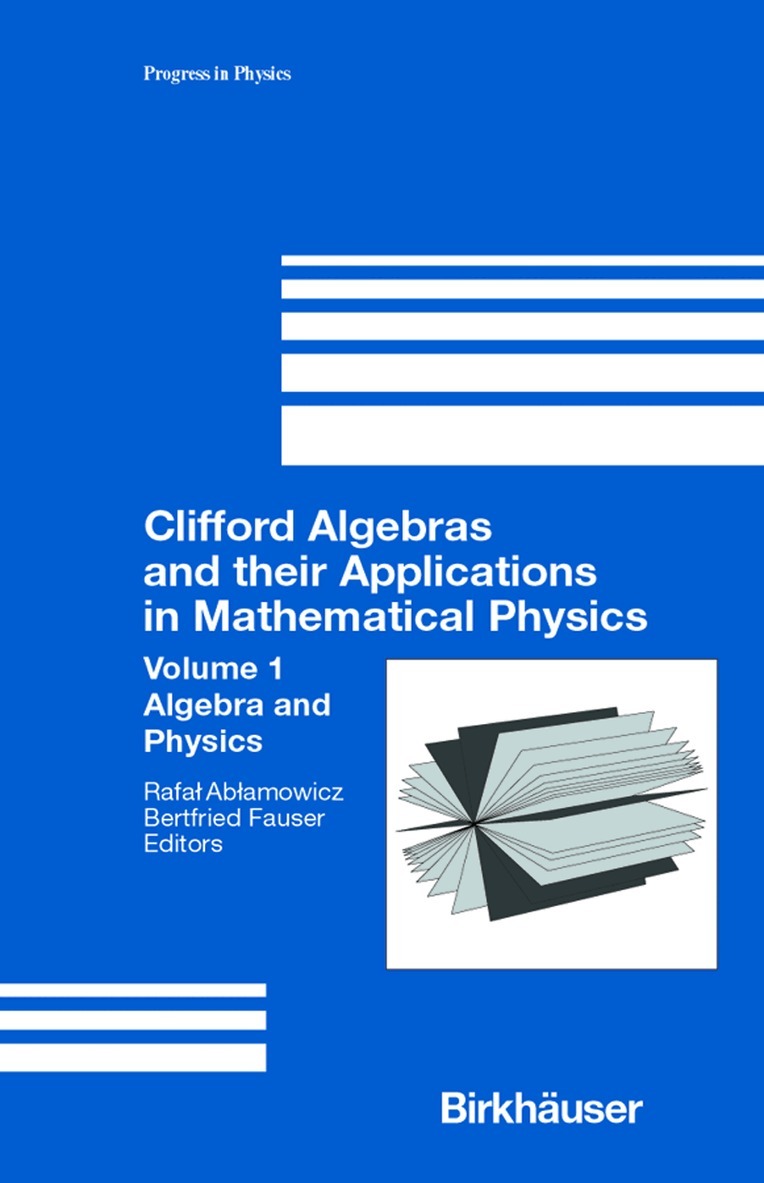
Clifford Algebras and their Applications in Mathematical Physics
Volume 1: Algebra and Physics
Av Bertfried Fauser, Rafal Ablamowicz
E-bok, 2012
718 kr
Lägg i varukorg
The plausible relativistic physical variables describing a spinning, charged and massive particle are, besides the charge itself, its Minkowski (four) po sition X, its relativistic linear (four) momentum P and also its so-called Lorentz (four) angular momentum E # 0, the latter forming four trans …
Clifford Algebras and their Applications in Mathematical Physics
Volume 1: Algebra and Physics
Av Rafal Ablamowicz, Bertfried Fauser
Häftad, 2012
552 kr
Lägg i varukorg
The plausible relativistic physical variables describing a spinning, charged and massive particle are, besides the charge itself, its Minkowski (four) po sition X, its relativistic linear (four) momentum P and also its so-called Lorentz (four) angular momentum E # 0, the latter forming four trans …
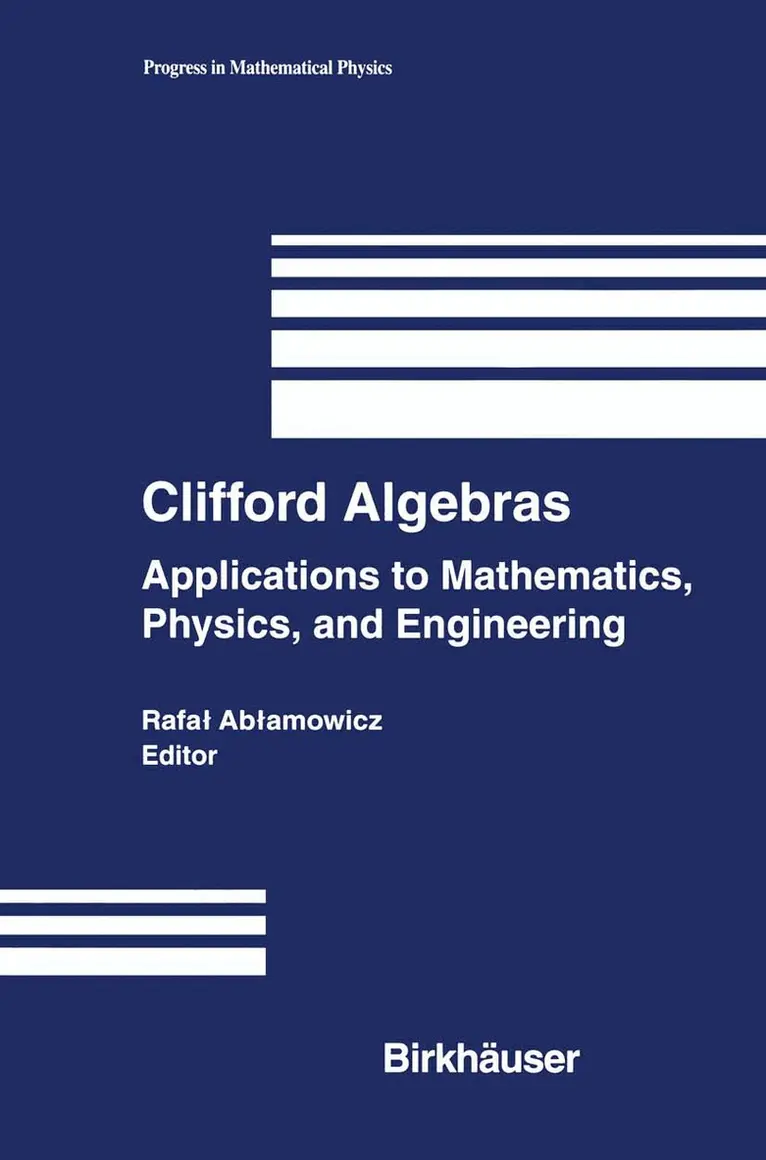
Clifford Algebras
Applications to Mathematics, Physics, and Engineering
Häftad, 2011
552 kr
Lägg i varukorg
The invited papers in this volume provide a detailed examination of Clifford algebras and their significance to analysis, geometry, mathematical structures, physics, and applications in engineering. While the papers collected in this volume require that the reader possess a solid knowledge of …
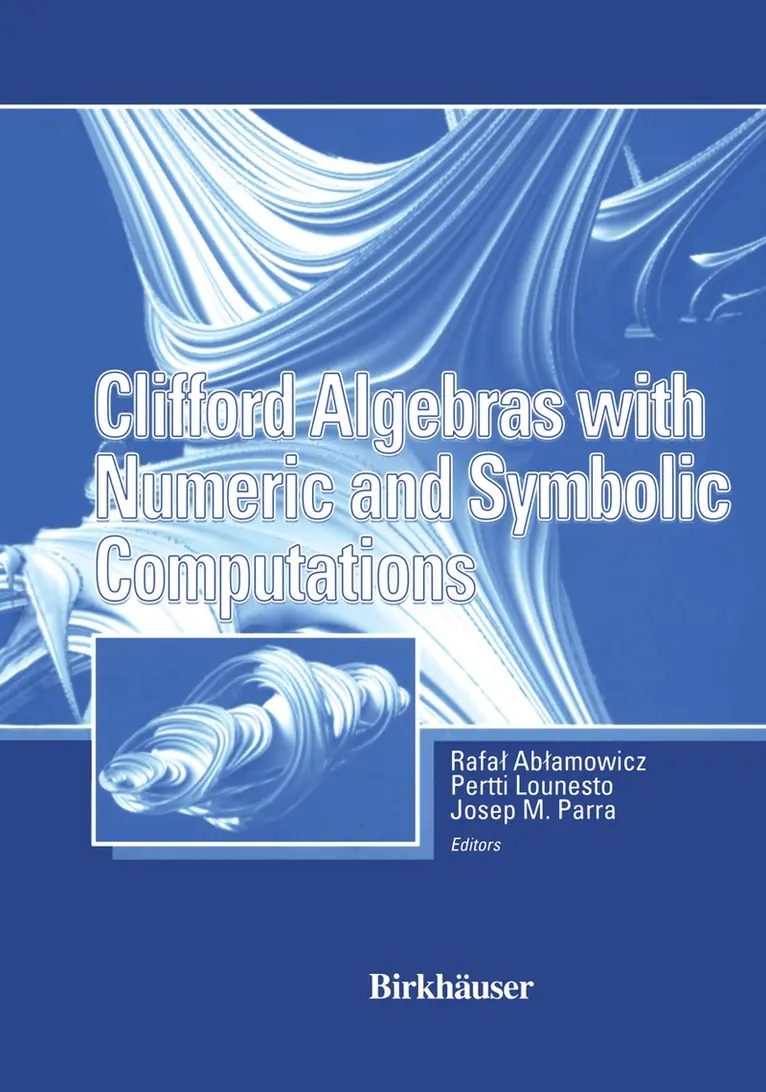
Clifford Algebras with Numeric and Symbolic Computations
Av Rafal Ablamowicz, Joseph Parra m. fl.
Häftad, 2012
552 kr
Lägg i varukorg
Clifford algebras are at a crossing point in a variety of research areas, including abstract algebra, crystallography, projective geometry, quantum mechanics, differential geometry and analysis. For many researchers working in this field in ma- thematics and physics, computer algebra software …
Clifford Algebras and Spinor Structures
A Special Volume Dedicated to the Memory of Albert Crumeyrolle (1919–1992)
Av Rafal Ablamowicz, P. Lounesto
Häftad, 2010
1096 kr
Lägg i varukorg
This volume is dedicated to the memory of Albert Crumeyrolle, who died on June 17, 1992. In organizing the volume we gave priority to: articles summarizing Crumeyrolle's own work in differential geometry, general relativity and spinors, articles which give the reader an idea of the depth and …
Clifford Algebras and Spinor Structures
A Special Volume Dedicated to the Memory of Albert Crumeyrolle (1919–1992)
Av P. Lounesto, Rafal Ablamowicz
E-bok, 2013
1459 kr
Lägg i varukorg
This volume is dedicated to the memory of Albert Crumeyrolle, who died on June 17, 1992. In organizing the volume we gave priority to: articles summarizing Crumeyrolle''s own work in differential geometry, general relativity and spinors, articles which give the reader an idea of the depth and …