Ramazan Hakkı Öztan – författare
Visar alla böcker från författaren Ramazan Hakkı Öztan. Handla med fri frakt och snabb leverans.
2 produkter
2 produkter
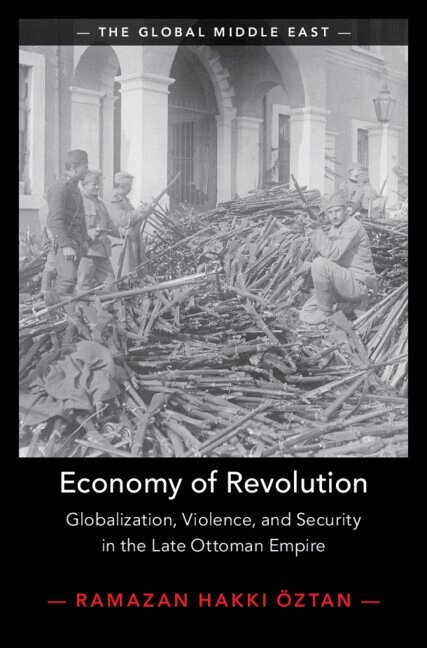
Economy of Revolution
Globalization, Violence and Security in Late Ottoman Empire
Inbunden, Engelska, 2026
1 292 kr
Kommande
How did the global circulation of modern technologies of warfare transform armed resistance? Focusing on the European territories of the Ottoman Empire, Ramazan Hakkı Öztan explores how revolutionary organizations navigated a world newly rich in material resources by the late nineteenth century. Unlike those who came before them, these revolutionaries operated in an increasingly connected global economy of violence that fed military-grade surplus weapons and newly invented explosives into their hands. Tracing commodity flows, Öztan profiles arms dealers, smugglers, and informers active in this economy of revolution. While revolutionaries tapped into transnational circuits, exchanged technical know-how, and engaged in calculated acts of violence, bureaucrats sought to dismantle black markets, gather counterintelligence, and wage their own campaigns of repression. Situating these connected histories across time and space, this global history explains the transformation of rebellion and imperial coercion by the turn of the twentieth century. This is a Flip it Open title and may be available open access on Cambridge Core.
Economy of Revolution
Globalization, Violence and Security in Late Ottoman Empire
Häftad, Engelska, 2026
486 kr
Kommande
How did the global circulation of modern technologies of warfare transform armed resistance? Focusing on the European territories of the Ottoman Empire, Ramazan Hakkı Öztan explores how revolutionary organizations navigated a world newly rich in material resources by the late nineteenth century. Unlike those who came before them, these revolutionaries operated in an increasingly connected global economy of violence that fed military-grade surplus weapons and newly invented explosives into their hands. Tracing commodity flows, Öztan profiles arms dealers, smugglers, and informers active in this economy of revolution. While revolutionaries tapped into transnational circuits, exchanged technical know-how, and engaged in calculated acts of violence, bureaucrats sought to dismantle black markets, gather counterintelligence, and wage their own campaigns of repression. Situating these connected histories across time and space, this global history explains the transformation of rebellion and imperial coercion by the turn of the twentieth century. This is a Flip it Open title and may be available open access on Cambridge Core.