Ramon Eduardo Ruiz - Böcker
Visar alla böcker från författaren Ramon Eduardo Ruiz. Handla med fri frakt och snabb leverans.
5 produkter
5 produkter
2 091 kr
Skickas inom 10-15 vardagar
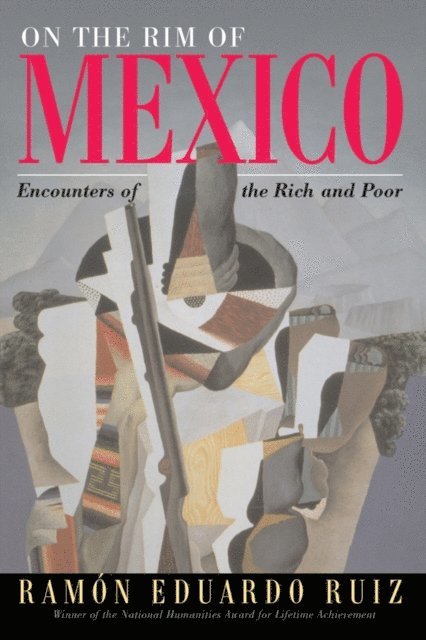
The vast stretch of mostly arid lands and deserts that makes up the border between Mexico and the United States is not only one of the longest international boundaries in the world, setting apart two entirely different countries for more than two thousand miles, it is the backdrop for a seemingly endless series of major binational news stories. Witness the headline-grabbing attention garnered by NAFTA and the global economy; the assembly plants labeled saviors of the Mexican poor; the accounts applauding the capture of Mexican drug lords; and the columns upon columns devoted to stories about illegal immigration. Nowhere else does a poor, Third World country, like Mexico, share a common border with a wealthy, powerful neighbor del otro lado (on the other side). Here, as one goes, so goes the other.On the Rim of Mexico: Encounters of the Rich and Poor addresses the ties and asymmetries across the Mexico-U.S. border, from Tijuana/San Diego to Matamoros/Brownsville. Based on author Ram-duardo Ruiz's extensive research, travels, remembrances, and first-hand interviews with the people on the Mexican side, the book probes the history, economics, and customs which have shaped this region today. While the author considers many timely issues (the impact of drug trafficking, legal and illegal immigration, assembly plants and the global economy, and the ecological disaster in the making), the book is also an examination of the borderlands themselves: what they are, how they came to be, and salient aspects of life in this region of the world. Moreover, it is an exploration of binational themes. For Mexicans who live and die next door to the almighty Uncle Sam, nearly everything has a binational ring?even personal identity. On the Rim of Mexico is a moving portrait of the people, places, and issues which make-up border life today.

253 kr
Skickas inom 5-8 vardagar
Professor Ruiz's analysis begins with Cuba's historic relationship with the United States, examining the effect of the sugar industry and U.S. foreign policy on Cuba's economy, social structure, and political development. He shows how the lack of cohesion in Cuban society affected the courses of events, and analyzes the sources of Cuban nationalism and anti-Americanism. Focusing on issues of economic development and social justice in Cuban history, he traces Cuba's revolutionary tradition and leaders, from the struggle for independence from Spain in the 1890's, through the revolution led by José Marti in 1933, up to Fidel Castro. He takes up the question why--and when--Castro turned to Communism, and discusses the ideology of the Revolution in the perspective of the history of socialist ideas in Cuba.By placing the events of 1959 in the context of Cuban history, Cuba: The Making of a Revolution meets the need for an authoritative analysis of the background of the Revolution, and sheds new light on its causes and outcome.
364 kr
Skickas inom 5-8 vardagar
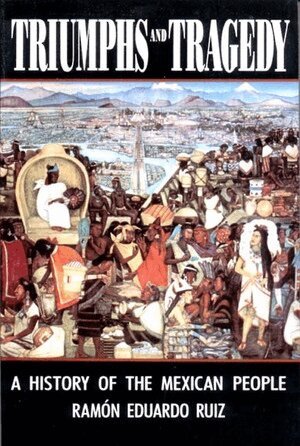
Winner of a Commonwealth gold medal for Nonfiction and lauded as one of the five best history books of the year by the Los Angeles Times, this epic history of Mexico tells the story of that country's tumultuous origin and development—from its Olmec, Aztec, and Mayan heritage to its present-day incarnation as a dependent, struggling and economically unstable modern country. The history of Mexico, writes Ramón Eduardo Ruiz, one of our most distinguished Mexicanists, is one long tragedy intermittently punctuated by triumph.
594 kr
Skickas inom 10-15 vardagar
The vast stretch of mostly arid lands and deserts that makes up the border between Mexico and the United States is not only one of the longest international boundaries in the world, setting apart two entirely different countries for more than two thousand miles, it is the backdrop for a seemingly endless series of major binational news stories. Witness the headline-grabbing attention garnered by NAFTA and the global economy; the assembly plants labeled saviors of the Mexican poor; the accounts applauding the capture of Mexican drug lords; and the columns upon columns devoted to stories about illegal immigration. Nowhere else does a poor, Third World country, like Mexico, share a common border with a wealthy, powerful neighbor del otro lado (on the other side). Here, as one goes, so goes the other.On the Rim of Mexico: Encounters of the Rich and Poor addresses the ties and asymmetries across the Mexico-U.S. border, from Tijuana/San Diego to Matamoros/Brownsville. Based on author Ram-duardo Ruiz's extensive research, travels, remembrances, and first-hand interviews with the people on the Mexican side, the book probes the history, economics, and customs which have shaped this region today. While the author considers many timely issues (the impact of drug trafficking, legal and illegal immigration, assembly plants and the global economy, and the ecological disaster in the making), the book is also an examination of the borderlands themselves: what they are, how they came to be, and salient aspects of life in this region of the world. Moreover, it is an exploration of binational themes. For Mexicans who live and die next door to the almighty Uncle Sam, nearly everything has a binational ring?even personal identity. On the Rim of Mexico is a moving portrait of the people, places, and issues which make-up border life today.
370 kr
Skickas inom 11-20 vardagar
Capitalism, the economic system of Western Europe and the United States at the turn of the century, had a major impact on every country of the Third World. In the Western Hemisphere, no country escaped its influence, particularly the North American version, increasingly omnipotent. Mexico, next door to the powerful colossus, often felt the brunt of that impact. The People of Sonora and Yankee Capitalists examines how the advent of North American dollars between 1882 and 1910 helped reshape the economic, social, and political contours of a Mexican province on the border of Arizona. The activity of Yankee promoters, particularly miners, land speculators, and cattle barons, altered dramatically the colonial structure left behind by its former Spanish masters. Even the psychology of the inhabitants of Sonora underwent a kind of metamorphosis. This book, in short, explains what happened to Mexico’s traditional society when Yankee capitalists made their appearance.