Rawi Abdelal - Böcker
Visar alla böcker från författaren Rawi Abdelal. Handla med fri frakt och snabb leverans.
8 produkter
8 produkter
705 kr
Skickas inom 7-10 vardagar
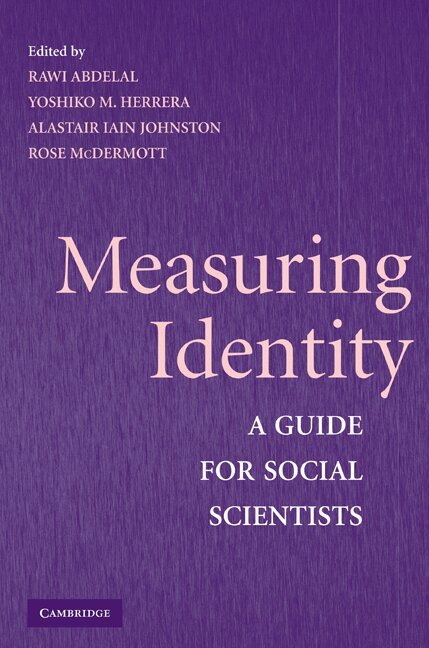
The concept of identity has become increasingly prominent in the social sciences and humanities. Analysis of the development of social identities is an important focus of scholarly research, and scholars using social identities as the building blocks of social, political, and economic life have attempted to account for a number of discrete outcomes by treating identities as causal factors. The dominant implication of the vast literature on identity is that social identities are among the most important social facts of the world in which we live. Abdelal, Herrera, Johnston, and McDermott have brought together leading scholars from a variety of disciplines to consider the conceptual and methodological challenges associated with treating identity as a variable, offer a synthetic theoretical framework, and demonstrate the possibilities offered by various methods of measurement. The book represents a collection of empirically-grounded theoretical discussions of a range of methodological techniques for the study of identities.
410 kr
Skickas inom 7-10 vardagar
The concept of identity has become increasingly prominent in the social sciences and humanities. Analysis of the development of social identities is an important focus of scholarly research, and scholars using social identities as the building blocks of social, political, and economic life have attempted to account for a number of discrete outcomes by treating identities as causal factors. The dominant implication of the vast literature on identity is that social identities are among the most important social facts of the world in which we live. Abdelal, Herrera, Johnston, and McDermott have brought together leading scholars from a variety of disciplines to consider the conceptual and methodological challenges associated with treating identity as a variable, offer a synthetic theoretical framework, and demonstrate the possibilities offered by various methods of measurement. The book represents a collection of empirically-grounded theoretical discussions of a range of methodological techniques for the study of identities.
238 kr
Skickas inom 7-10 vardagar
Listen to a short interview with Rawi AbdelalHost: Chris Gondek | Producer: Heron & CraneThe rise of global financial markets in the last decades of the twentieth century was premised on one fundamental idea: that capital ought to flow across country borders with minimal restriction and regulation. Freedom for capital movements became the new orthodoxy.In an intellectual, legal, and political history of financial globalization, Rawi Abdelal shows that this was not always the case. Transactions routinely executed by bankers, managers, and investors during the 1990s--trading foreign stocks and bonds, borrowing in foreign currencies--had been illegal in many countries only decades, and sometimes just a year or two, earlier.How and why did the world shift from an orthodoxy of free capital movements in 1914 to an orthodoxy of capital controls in 1944 and then back again by 1994? How have such standards of appropriate behavior been codified and transmitted internationally? Contrary to conventional accounts, Abdelal argues that neither the U.S. Treasury nor Wall Street bankers have preferred or promoted multilateral, liberal rules for global finance. Instead, European policy makers conceived and promoted the liberal rules that compose the international financial architecture. Whereas U.S. policy makers have tended to embrace unilateral, ad hoc globalization, French and European policy makers have promoted a rule-based, "managed" globalization. This contest over the character of globalization continues today.
National Purpose in the World Economy
Post-Soviet States in Comparative Perspective
Inbunden, Engelska, 2001
694 kr
Skickas inom 10-15 vardagar
How do national identities affect the world economy? Building on the insight that nationalisms and national identities endow economic policy with social purpose, Rawi Abdelal proposes a novel theoretical framework, a distinctively Nationalist perspective on international political economy, to answer this question. Using this framework, and drawing on field research in Lithuania, Ukraine, and Belarus, he provides an in-depth look at the link between national identity and the economic policies of the new states formed by the breakup of the Soviet Union.All these states, from the Baltic coast to central Asia, were economically dependent on Russia during the 1990s. However, they reacted very differently to that dependence, and their reactions can be traced, Abdelal contends, to their individual societies. Some, such as Belarus, found dependence inevitable and sought economic reintegration with Russia. Others, like Lithuania, interpreted dependence as a large-scale security threat and reoriented their economies away from Russia. A third group, typified by Ukraine, demonstrated no coherent economic policy at all regarding dependence.Abdelal distinguishes the Nationalist tradition in international political economy from the Realist tradition, and shows that economic nationalism is different than mercantilism. He demonstrates the ways that national identity affects economic policy and explains why some governments seek economic autonomy while others prefer regional reintegration. He then applies his approach to other cases of economic reorganization after the end of empire—eastern Europe in the 1920s after the Habsburgs, 1950s Indonesia, and French West Africa in the 1960s.
1 563 kr
Skickas inom 10-15 vardagar
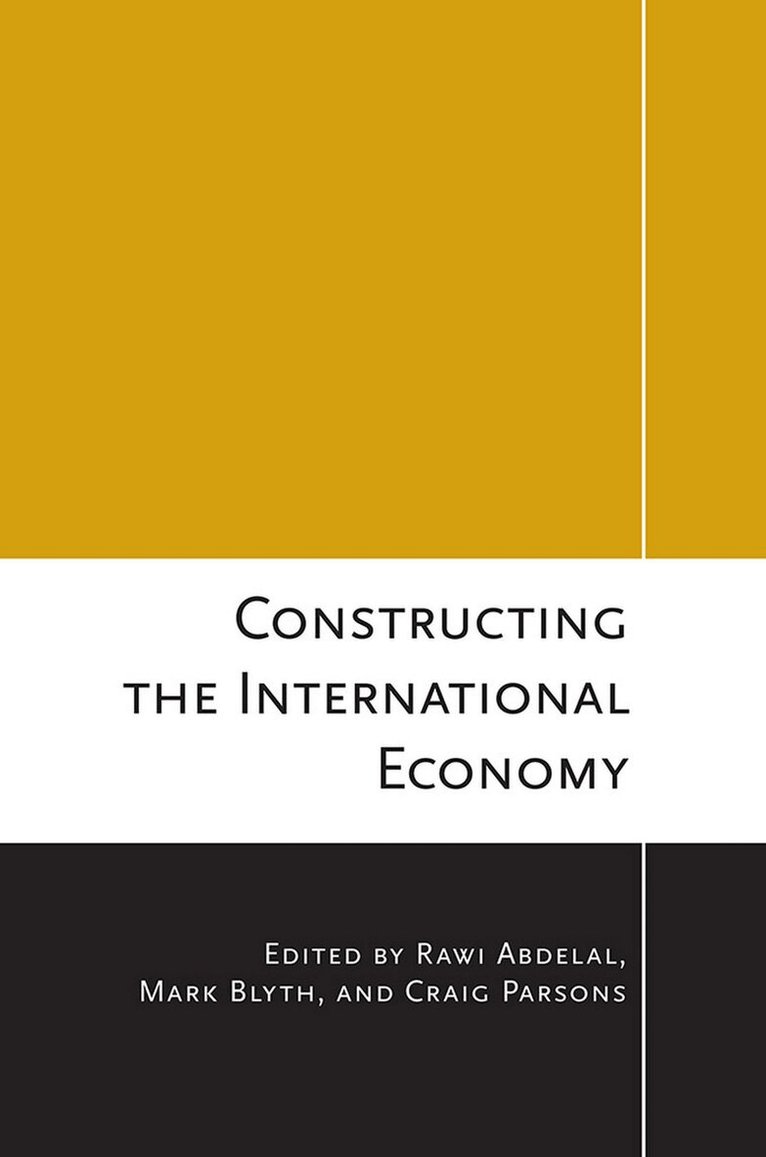
Focusing empirically on how political and economic forces are always mediated and interpreted by agents, both in individual countries and in the international sphere, Constructing the International Economy sets out what such constructions and what various forms of constructivism mean, both as ways of understanding the world and as sets of varying methods for achieving that understanding. It rejects the assumption that material interests either linearly or simply determine economic outcomes and demands that analysts consider, as a plausible hypothesis, that economies might vary substantially for nonmaterial reasons that affect both institutions and agents' interests.Constructing the International Economy portrays the diversity of models and approaches that exist among constructivists writing on the international political economy. The authors outline and relate several different arguments for why scholars might attend to social construction, inviting the widest possible array of scholars to engage with such approaches. They examine points of terminological or theoretical confusion that create unnecessary barriers to engagement between constructivists and nonconstructivist work and among different types of constructivism. This book provides a tool kit that both constructivists and their critics can use to debate how much and when social construction matters in this deeply important realm.
296 kr
Skickas inom 10-15 vardagar
Focusing empirically on how political and economic forces are always mediated and interpreted by agents, both in individual countries and in the international sphere, Constructing the International Economy sets out what such constructions and what various forms of constructivism mean, both as ways of understanding the world and as sets of varying methods for achieving that understanding. It rejects the assumption that material interests either linearly or simply determine economic outcomes and demands that analysts consider, as a plausible hypothesis, that economies might vary substantially for nonmaterial reasons that affect both institutions and agents' interests.Constructing the International Economy portrays the diversity of models and approaches that exist among constructivists writing on the international political economy. The authors outline and relate several different arguments for why scholars might attend to social construction, inviting the widest possible array of scholars to engage with such approaches. They examine points of terminological or theoretical confusion that create unnecessary barriers to engagement between constructivists and nonconstructivist work and among different types of constructivism. This book provides a tool kit that both constructivists and their critics can use to debate how much and when social construction matters in this deeply important realm.
National Purpose in the World Economy
Post-Soviet States in Comparative Perspective
Häftad, Engelska, 2005
434 kr
Skickas inom 10-15 vardagar
How do national identities affect the world economy? Building on the insight that nationalisms and national identities endow economic policy with social purpose, Rawi Abdelal proposes a novel theoretical framework, a distinctively Nationalist perspective on international political economy, to answer this question. Using this framework, and drawing on field research in Lithuania, Ukraine, and Belarus, he provides an in-depth look at the link between national identity and the economic policies of the new states formed by the breakup of the Soviet Union.All these states, from the Baltic coast to central Asia, were economically dependent on Russia during the 1990s. However, they reacted very differently to that dependence, and their reactions can be traced, Abdelal contends, to their individual societies. Some, such as Belarus, found dependence inevitable and sought economic reintegration with Russia. Others, like Lithuania, interpreted dependence as a large-scale security threat and reoriented their economies away from Russia. A third group, typified by Ukraine, demonstrated no coherent economic policy at all regarding dependence.Abdelal distinguishes the Nationalist tradition in international political economy from the Realist tradition, and shows that economic nationalism is different than mercantilism. He demonstrates the ways that national identity affects economic policy and explains why some governments seek economic autonomy while others prefer regional reintegration. He then applies his approach to other cases of economic reorganization after the end of empire—eastern Europe in the 1920s after the Habsburgs, 1950s Indonesia, and French West Africa in the 1960s.
Del 4 - World Scientific Studies in International Economics
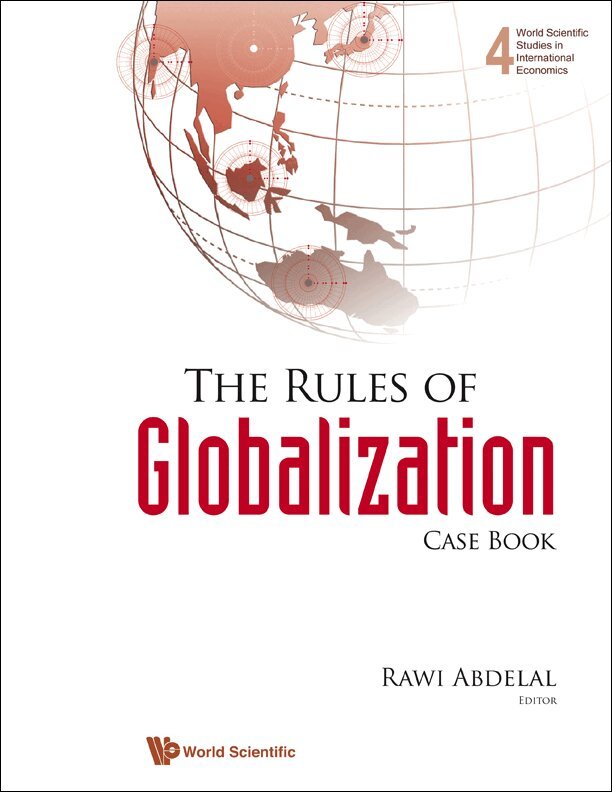
Rules Of Globalization, The (Casebook)
Häftad, Engelska, 2008
1 910 kr
Skickas inom 5-8 vardagar
This is a book about the politics of the global economy — about how firms prosper by understanding those politics, or fail by misunderstanding them. Understanding the politics of globalization may once have been a luxury; it is now, for most high-level managers, simply a necessity. The book contains cases which can be used by instructors and students to build a framework of analysis that enables them to understand the challenges of international trade and investment and master the opportunities they represent. This framework is based on a systematic evaluation of the informal and formal rules that define markets for goods, services, and capital. These insightful cases allow for evaluation of: the political and economic origins of our current era of globalization and how the rules that constrain and enable firms are changing; the impact of governments' policies and which tools are available for predicting, avoiding, or even employing the long arm of the government; and the influence of informal and formal institutions on opportunities for success in international finance and trade.