Raymond Biesinger - Böcker
Visar alla böcker från författaren Raymond Biesinger. Handla med fri frakt och snabb leverans.
2 produkter
2 produkter
232 kr
Skickas inom 3-6 vardagar
A veteran illustrator imparts practical advice for the working creative with candid humour. New York Times and New Yorker illustrator Raymond Biesenger has over twenty years of experience as a self-employed creative. You might say he s been through it all: from chasing down a concert promoter for payment on a fifty-dollar Megadeth poster design, to a regular stint at Monocle, to confronting a government agency for stylistic theft. Biesinger s ingenuity for solving the most unexpected issues extends far beyond his primary task of filling the page. Sure, everything an aspiring creative needs to know might be at their fingertips. But the question of what to do when their work has been exploited remains. In 9 Times My Work Has Been Ripped Off, Biesenger undertakes the challenge of answering that ever-present question by revisiting some of the most unforgettable and at times irrationally absurd moments in his career with a wink and an encouraging nudge. 9 Times proves time and time again that creative problems will more often than not require creative solutions. This portable, and elegantly illustrated guide to navigating and maneuvering the least glamorous aspects of the creative industry is a future classic suitable for everybody from the earnest novice to the seasoned professional.
223 kr
Skickas
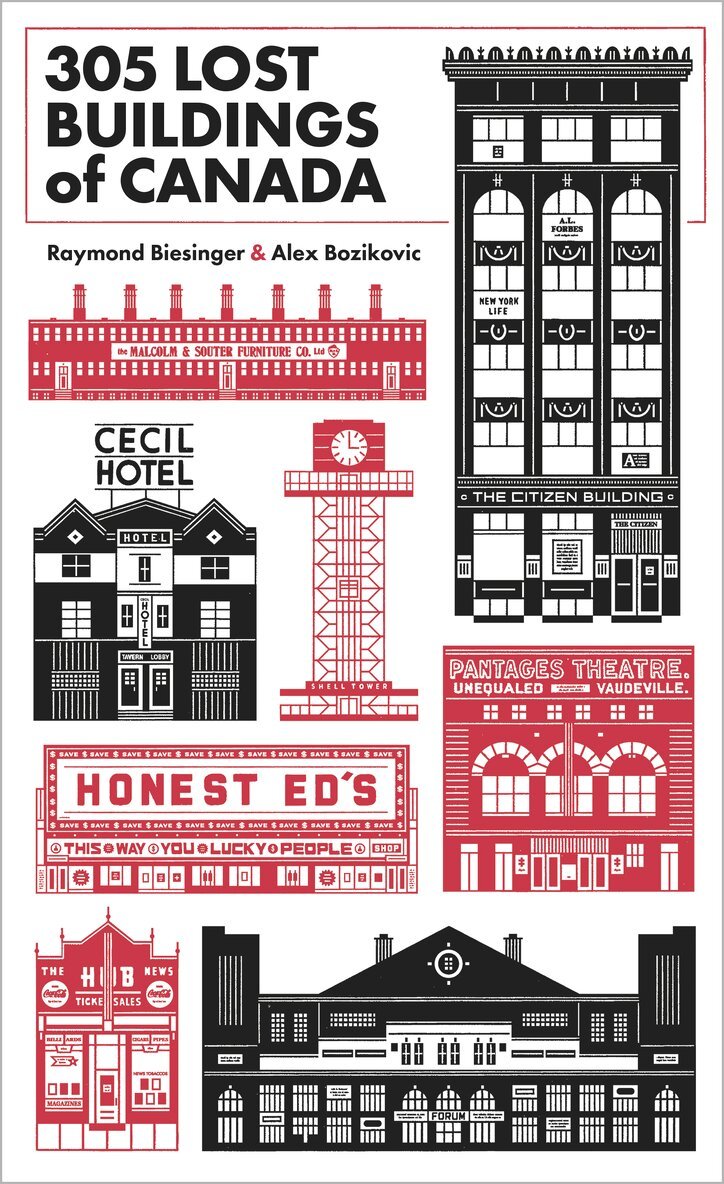
Winner, AIGA 50 Books | 50 Covers Second Prize Winner, Alcuin Society Book Design Awards (Prose Illustrated) A National Bestseller The legacies of theaters, hotels, fire stations, flour mills, and more — torn down, burned down, and otherwise lost — are uncovered in this bittersweet collection. Using archival photographs, blueprints, and written reports, Raymond Biesinger has rendered a selection of Canada’s most iconic lost buildings in his signature minimalist style. Accompanying Biesinger’s illustrations are Alex Bozikovic’s descriptions which capture each building’s historical, cultural, and architectural significance. Bozikovic draws on local histories, archived building permits and his own extensive knowledge of the Canadian urban architectural landscape and its history — from the letters passed through Kelowna’s unlikely art deco post office to the destruction of a home in Halifax’s Africville — to offer fascinating, sometimes forgotten stories about each building and its significance. An impossible architectural walking tour, 305 Lost Buildings of Canada spans the country, its cities and countryside, and its history. Cities change, buildings come and go, but in this fact-filed compendium, you’ll find the lost wonders of Canada’s architecture.