Raymond Marks – författare
Visar alla böcker från författaren Raymond Marks. Handla med fri frakt och snabb leverans.
6 produkter
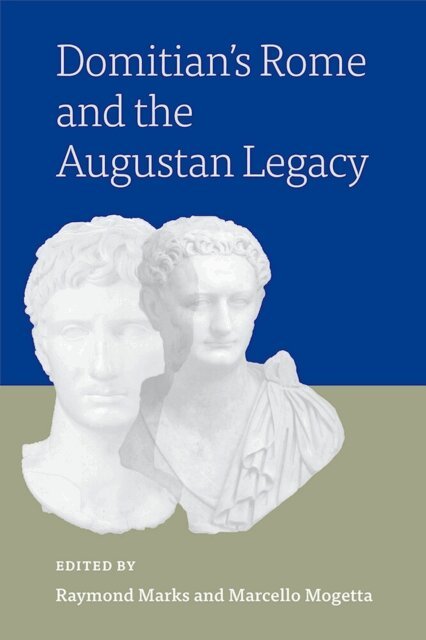
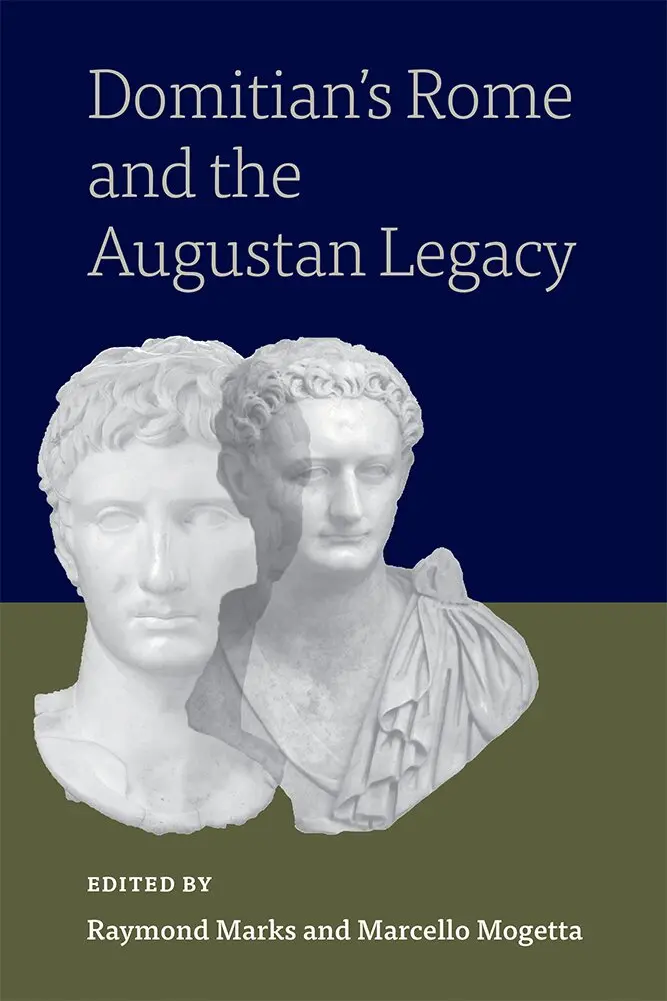
Domitian's Rome and the Augustan Legacy
Av Marcello Mogetta, Raymond Marks
E-bok, 2021
1227 kr
Lägg i varukorg
The legacy of the Roman emperor Augustus and the culture of his age was profound and immediately evident after his death in 14 CE. His first four successors based their claims to rule on kinship with him, thus establishing the Julio-Claudian dynasty (14–68 CE), and plied an evolving form of the …
Off the Beaten Path
Ovidian Journeys in Valerius Flaccus’ ›Argonautica‹
Inbunden, 2024
2161 kr
Lägg i varukorg
In the Argonautica, Valerius Flaccus not only recounts a voyage, that of the Argonauts in their quest for the golden fleece, but takes a journey himself, a poetic one, during which he explores new, unconventional paths in the epic genre. The present volume examines this aspect of Valerius’ poetic …
Off the Beaten Path
Ovidian Journeys in Valerius Flaccus’ ›Argonautica‹
E-bok, 2024
1671 kr
Lägg i varukorg
In the Argonautica , Valerius Flaccus not only recounts a voyage, that of the Argonauts in their quest for the golden fleece, but takes a journey himself, a poetic one, during which he explores new, unconventional paths in the epic genre. The present volume examines this aspect of Valerius’ poetic …
Off the Beaten Path
Ovidian Journeys in Valerius Flaccus’ ›Argonautica‹
E-bok, 2024
1635 kr
Lägg i varukorg
In the Argonautica , Valerius Flaccus not only recounts a voyage, that of the Argonauts in their quest for the golden fleece, but takes a journey himself, a poetic one, during which he explores new, unconventional paths in the epic genre. The present volume examines this aspect of Valerius’ poetic …
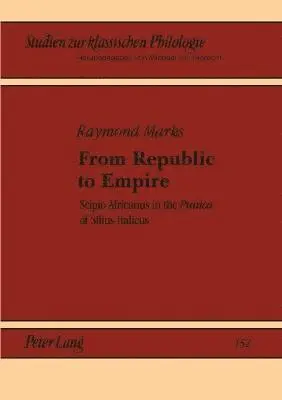
From Republic to Empire
Scipio Africanus in the "Punica" of Silius Italicus
Häftad, 2005
1125 kr
Lägg i varukorg
From Republic to Empire challenges the long-held view that Silius Italicus’ Punica is a nostalgic epic and argues that it is, instead, centrally concerned with and fundamentally shaped by the contemporary Flavian world in which it was composed. The epic documents how Rome’s Republic took its first …
Domitian’s Rome and the Augustan Legacy
Av Raymond Marks, Marcello Mogetta
Inbunden, 2021
1157 kr
Tillfälligt slut
The legacy of the Roman emperor Augustus and the culture of his age was profound and immediately evident after his death in 14 CE. His first four successors based their claims to rule on kinship with him, thus establishing the Julio-Claudian dynasty (14–68 CE), and plied an evolving form of the …