Rebekah Owens - Böcker
Visar alla böcker från författaren Rebekah Owens. Handla med fri frakt och snabb leverans.
3 produkter
3 produkter
1 713 kr
Skickas inom 7-10 vardagar
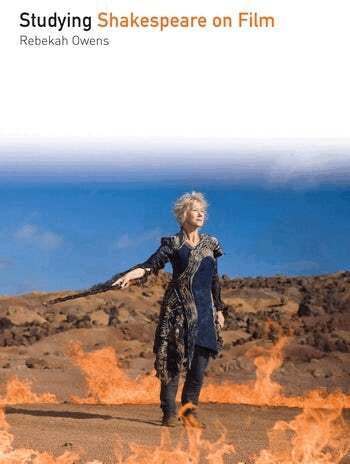
Aimed at newcomers to literature and film, this book is a guide for the analysis of Shakespeare on film. Starting with an introduction to the main challenge faced by any director—the early-modern language—there follows exemplars for examining how that challenge is met using as case studies twelve films most often used in classroom teaching, including Romeo and Juliet, Macbeth, and The Tempest.The first chapter explores how a director can tell the story in a setting that embraces the expectations of realism in cinema, but still pays homage to the theatrical origins of the work. The second chapter discusses films in which the setting provides a visual analogy with the preoccupations of the story, but not at the expense of Shakespeare's language. The third chapter extends this to show how some films use recent history as a setting, adding a further layer of meaning to the story from the cultural resonances associated with that historical past. These films also rely on an assumption that Shakespeare is so well-known as to form a distinctive, easily recognized brand in the cinema marketplace. Thus, his work can be reimagined in completely different genres such as those films that are the subject of the final chapter.
511 kr
Skickas inom 3-6 vardagar
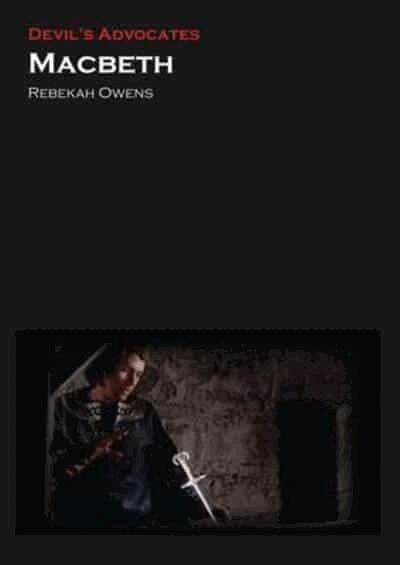
Why write about Roman Polanski's Macbeth (1971) as part of a series of books dedicated to the classics of the horror movie genre? Because, Rebekah Owens argues, just as Banquo in Polanski's film holds up a series of mirrors that reflect images of his successors that trace back to his own son Fleance, so subsequent milestones in the genre show their lineage to this work, their originator. Polanski had previously made Repulsion (1965) and Rosemary's Baby (1968), so he was fully aware of the conventions of the horror genre and this film provides clues to his own horror lexicon. This book demonstrates how Macbeth can be read as part of the British Folk tradition, strengthening the reading of the film as a horror movie in its own right through its links to The Wicker Man (1973), Blood on Satan's Claw (1971) and Witchfinder General (1968) then argues the case for its recognition as a horror movie even further, by connecting it to the later American horror classics, such as Halloween (1978). It also explores the popular associations made between the film and Polanski's own life, arguing that they endorse the view of the film as a horror.This book represents the first serious attempt to regard Polanski's Macbeth as a horror film in its own right, and not exclusively as one of a multitude of ongoing Shakespeare film adaptations.
464 kr
Skickas inom 7-10 vardagar
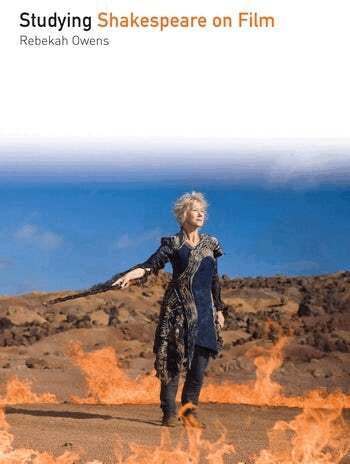
Aimed at newcomers to literature and film, this book is a guide for the analysis of Shakespeare on film. Starting with an introduction to the main challenge faced by any director-the early-modern language-there follows exemplars for examining how that challenge is met using as case studies twelve films most often used in classroom teaching, including Romeo and Juliet, Macbeth, and The Tempest. The first chapter explores how a director can tell the story in a setting that embraces the expectations of realism in cinema, but still pays homage to the theatrical origins of the work. The second chapter discusses films in which the setting provides a visual analogy with the preoccupations of the story, but not at the expense of Shakespeare's language. The third chapter extends this to show how some films use recent history as a setting, adding a further layer of meaning to the story from the cultural resonances associated with that historical past. These films also rely on an assumption that Shakespeare is so well-known as to form a distinctive, easily-recognized brand in the cinema marketplace.Thus, his work can be reimagined in completely different genres such as those films that are the subject of the final chapter.