R.H. Groves - Böcker
Visar alla böcker från författaren R.H. Groves. Handla med fri frakt och snabb leverans.
2 produkter
2 produkter
1 062 kr
Skickas inom 10-15 vardagar
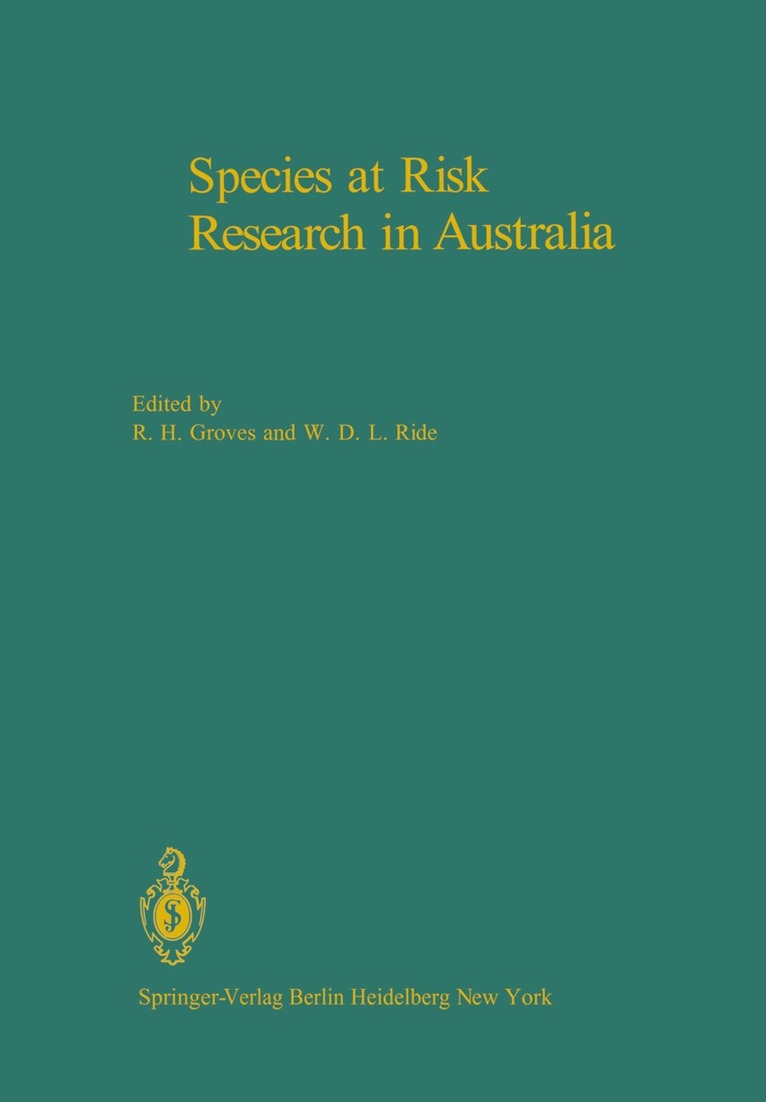
Evolutionary progress has long been associated with the extinction of species. So why should we be concerned now, even when the number of species at risk is substantial, such as one tenth of the Australian flora? The reasons for concern are many stranded. Compassion is one strand. Remember the instructions to Noah: 'And you shall bring living creatures of every kind into the ark and keep them alive with you'. Guilt may be another strand, that our hunting, clearing, collecting, pollution, introduction of competitors and other human activities may have endangered species such as the Orange-bellied Parrot. Nostalgia for what was and concern for what might be also play a part; species at risk include some which are of immediate use, such as the whales, and many of potential use, whether drug plants in the forests of the Amazon or a wild relative of the soybean in Victoria. Aesthetic considerations are also involved, particularly where colourful birds or unusual flowers are threatened. We cherish diversity, as culturally desirable, and are delighted when supposedly extinct species such as the notornis and coelacanth - and maybe yet the thylacine - are rediscovered. The Loch Ness monster has already been blessed with a Latin binomial in anticipation! Diversity is also of ecological as well as of cultural value, contributing to the stability of ecosystems, as in the case of insects and birds which fertilize the flowers and disperse the seeds of plants.
Del 31 - Tasks for Vegetation Science
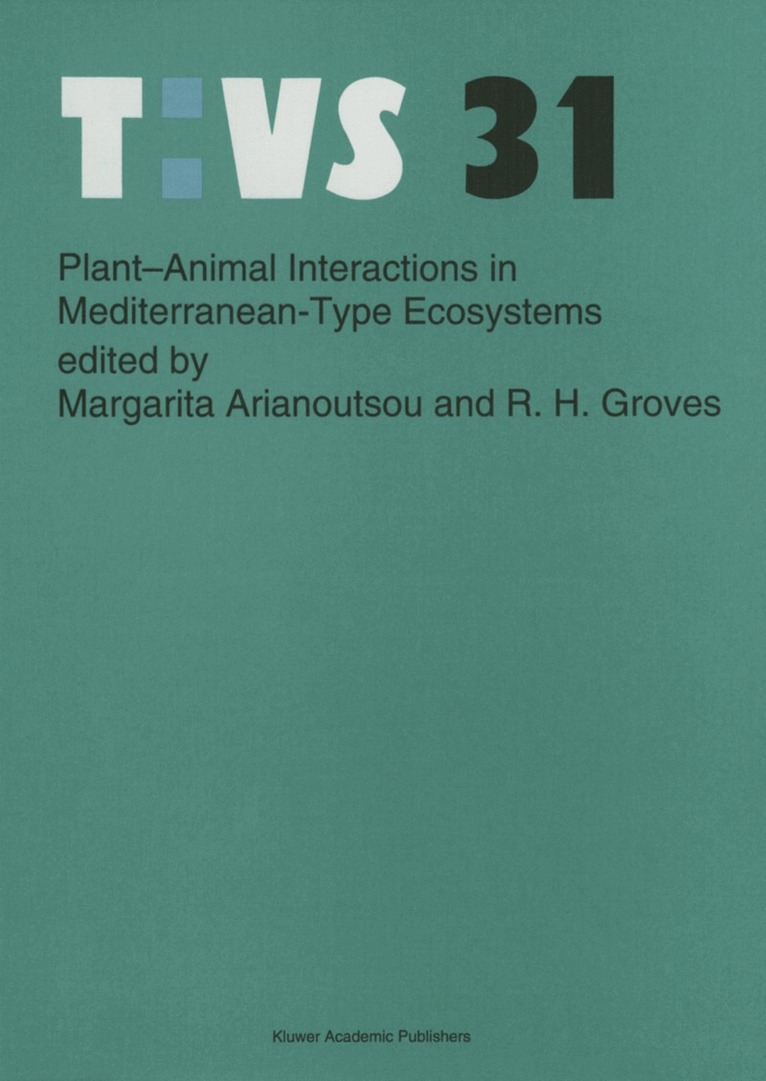
Plant-animal interactions in Mediterranean-type ecosystems
Häftad, Engelska, 2012
534 kr
Skickas inom 10-15 vardagar
The Sixth International Conference on Mediterranean Climate ecosystems was held at Maleme (Crete), Greece, from September 23 to September 27, 1991. This conference had as its theme 'Plant-Animal Interactions in Mediterranean-type Ecosystems'. Most of the papers presented to that meeting have already been published (see Thanos, C.A. ed., 1992, Proceedings of the VI International Conference on Mediterranean Climate Ecosystems, Athens, 389 pp.). These 57 papers were all necessarily short. But the theme of plant-animal interactions was considered by the Organizing Committee to be so important to a fundamental understanding of the ecology of Mediterranean-climate ecosystems and to an enhanced management ·of those systems that various international research scientists were invited to prepare longer contributions on major aspects of the overall theme. The Book that follows represents the result of those invitations. All five regions of Mediterranean climate are represented - Chile, California, southern Australia and the Cape Province of South Africa, as well as the Mediterranean Basin itself.