Ricardo A. Molins – författare
Visar alla böcker från författaren Ricardo A. Molins. Handla med fri frakt och snabb leverans.
3 produkter
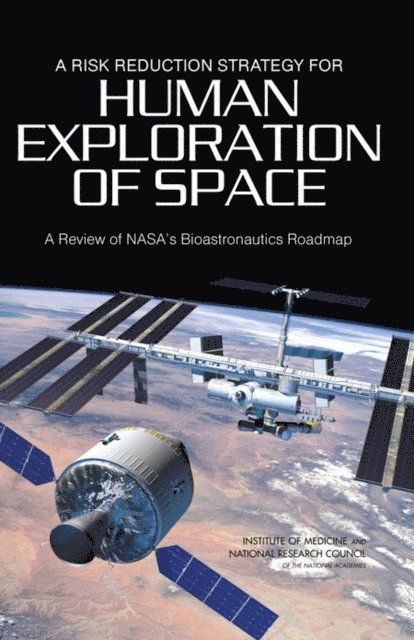
Risk Reduction Strategy for Human Exploration of Space
A Review of NASA''s Bioastronautics Roadmap
Av Committee on Review of NASA's Bioastronautics Roadmap, Board on Health Sciences Policy m. fl.
E-bok, 2006
727 kr
Lägg i varukorg
Extending the spatial and temporal boundaries of human space flight is an important goal for the nation and for the National Aeronautics and Space Administration (NASA). However, human space flight remains an endeavor with substantial risks, and these risks must be identified, managed, and …
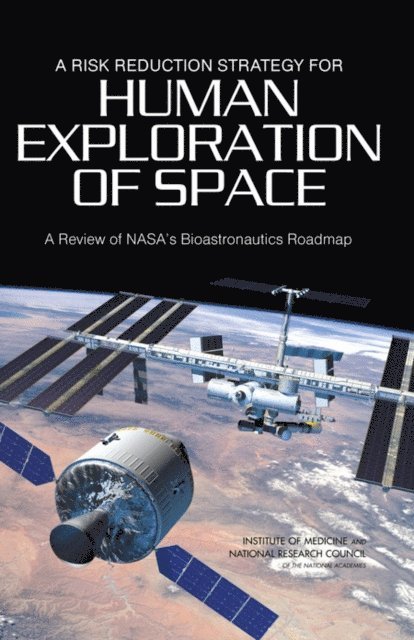
Risk Reduction Strategy for Human Exploration of Space
A Review of NASA''s Bioastronautics Roadmap
Av Committee on Review of NASA's Bioastronautics Roadmap, Board on Health Sciences Policy m. fl.
E-bok, 2006
496 kr
Lägg i varukorg
Extending the spatial and temporal boundaries of human space flight is an important goal for the nation and for the National Aeronautics and Space Administration (NASA). However, human space flight remains an endeavor with substantial risks, and these risks must be identified, managed, and …
Risk Reduction Strategy for Human Exploration of Space
A Review of NASA's Bioastronautics Roadmap
Av National Research Council, Institute of Medicine m. fl.
Häftad, 2006
728 kr
Tillfälligt slut
Extending the spatial and temporal boundaries of human space flight is an important goal for the nation and for the National Aeronautics and Space Administration (NASA). However, human space flight remains an endeavor with substantial risks, and these risks must be identified, managed, and …