Ricardo Caferra – författare
Visar alla böcker från författaren Ricardo Caferra. Handla med fri frakt och snabb leverans.
8 produkter
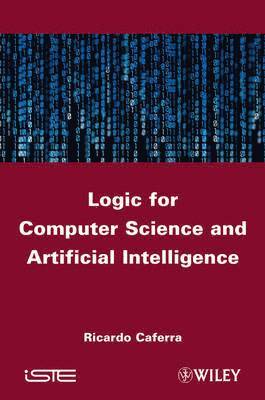
Logic for Computer Science and Artificial Intelligence
E-bok, 2013
3029 kr
Lägg i varukorg
Logic and its components (propositional, first-order, non-classical) play a key role in Computer Science and Artificial Intelligence. While a large amount of information exists scattered throughout various media (books, journal articles, webpages, etc.), the diffuse nature of these sources is …
Logic for Computer Science and Artificial Intelligence
E-bok, 2013
3029 kr
Lägg i varukorg
Logic and its components (propositional, first-order, non-classical) play a key role in Computer Science and Artificial Intelligence. While a large amount of information exists scattered throughout various media (books, journal articles, webpages, etc.), the diffuse nature of these sources is …
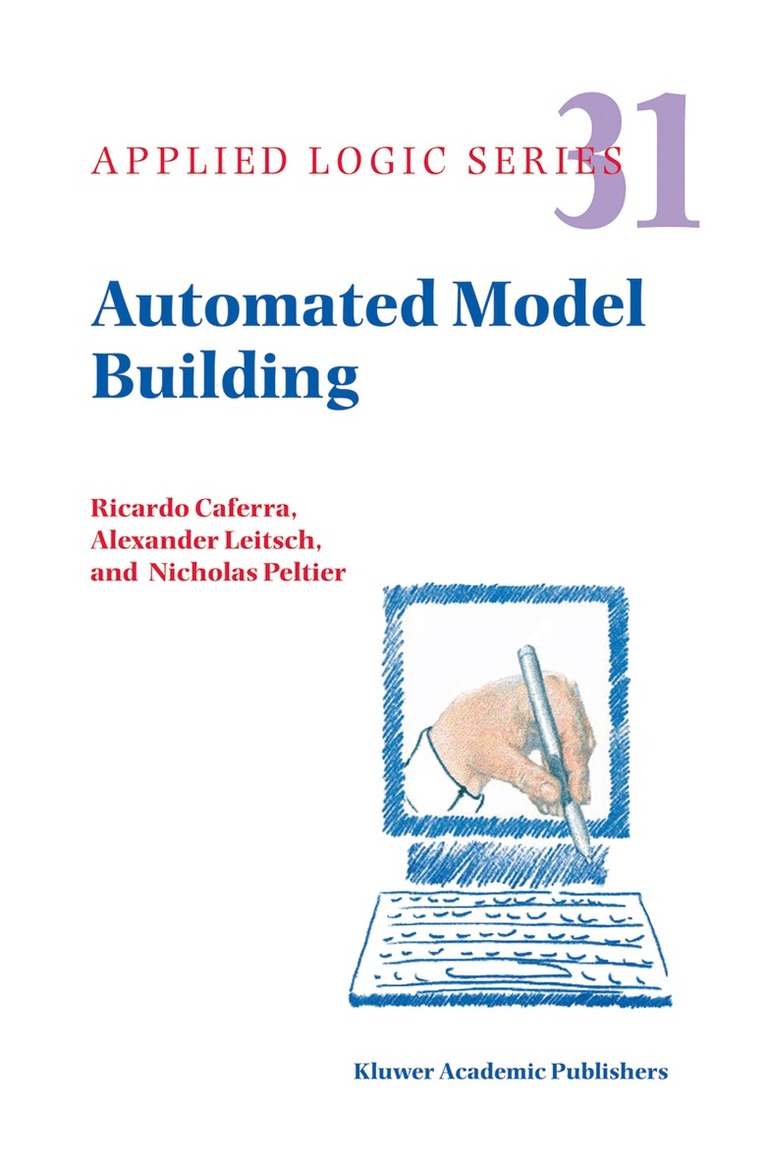
Automated Model Building
Av Ricardo Caferra, Alexander Leitsch m. fl.
Inbunden, 2004
1636 kr
Lägg i varukorg
On the history of the book: In the early 1990s several new methods and perspectives in au- mated deduction emerged. We just mention the superposition calculus, meta-term inference and schematization, deductive decision procedures, and automated model building. It was this last ?eld which brought …
Automated Model Building
Av Nicolas Peltier, Alexander Leitsch m. fl.
E-bok, 2013
2111 kr
Lägg i varukorg
On the history of the book: In the early 1990s several new methods and perspectives in au- mated deduction emerged. We just mention the superposition calculus, meta-term inference and schematization, deductive decision procedures, and automated model building. It was this last ?eld which brought …
Logic for Computer Science and Artificial Intelligence
Inbunden, 2011
2595 kr
Lägg i varukorg
Logic and its components (propositional, first-order, non-classical) play a key role in Computer Science and Artificial Intelligence. While a large amount of information exists scattered throughout various media (books, journal articles, webpages, etc.), the diffuse nature of these sources is …
Automated Deduction in Classical and Non-Classical Logics
Selected Papers
Av Gernot Salzer, Ricardo Caferra
E-bok, 2003
755 kr
Lägg i varukorg
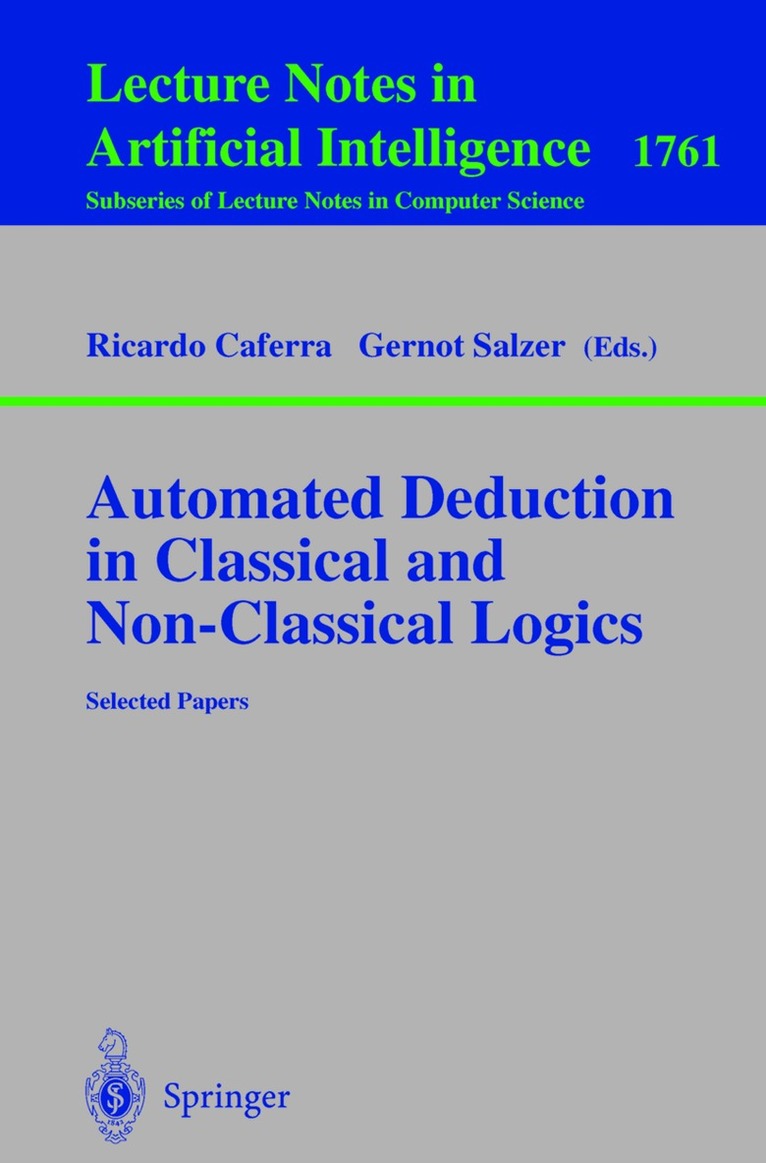
Automated Deduction in Classical and Non-Classical Logics
Selected Papers
Av Ricardo Caferra, Gernot Salzer
Häftad, 2000
566 kr
Lägg i varukorg
Thisvolumeisacollectionofpapers onautomateddeduction inclassical,modal, and many-valued logics, with an emphasis on rst-order theories. Some authors bridgethe gaptohigher-order logicbydealingwithsimpletype theory ina r- order setting, or by resolving shortcomings of r st-order logic with the help …
Automated Model Building
Av Ricardo Caferra, Alexander Leitsch m. fl.
Häftad, 2010
1636 kr
Lägg i varukorg
On the history of the book: In the early 1990s several new methods and perspectives in au- mated deduction emerged. We just mention the superposition calculus, meta-term inference and schematization, deductive decision procedures, and automated model building. It was this last ?eld which brought …