Richard C. Sha - Böcker
Visar alla böcker från författaren Richard C. Sha. Handla med fri frakt och snabb leverans.
9 produkter
9 produkter
767 kr
Skickas inom 7-10 vardagar
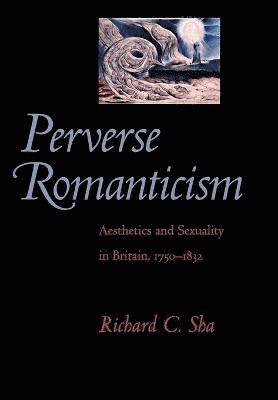
Richard C. Sha's revealing study considers how science shaped notions of sexuality, reproduction, and gender in the Romantic period. Through careful and imaginative readings of various scientific texts, the philosophy of Immanuel Kant and Longinus, and the works of such writers as William Blake, Percy Bysshe Shelley, Mary Wollstonecraft, and Lord Byron, Sha explores the influence of contemporary aesthetics and biology on literary Romanticism. Revealing that ideas of sexuality during the Romantic era were much more fluid and undecided than they are often characterized in the existing scholarship, Sha's innovative study complicates received claims concerning the shift from perversity to perversion in the nineteenth century. He observes that the questions of perversity-or purposelessness-became simultaneously critical in Kantian aesthetics, biological functionalism, and Romantic ideas of private and public sexuality. The Romantics, then, sought to reconceptualize sexual pleasure as deriving from mutuality rather than from the biological purpose of reproduction.At the nexus of Kantian aesthetics, literary analysis, and the history of medicine, Perverse Romanticism makes an important contribution to the study of sexuality in the long eighteenth century.
1 051 kr
Skickas inom 10-15 vardagar
With their broken lines and hasty brushwork, sketches acquired enormous ideological and aesthetic power during the Romantic period in England. Whether publicly displayed or serving as the basis of a written genre, these rough drawings played a central role in the cultural ferment of the age by persuading audiences that less is more.The Visual and Verbal Sketch in British Romanticism investigates the varied implications of sketching in late-eighteenth- and early-nineteenth-century culture. Calling on a wide range of literary and visual genres, Richard C. Sha examines the shifting economic and aesthetic value of the sketch in sources ranging from auction catalogs and sketching manuals to novels that employed scenes of sketching and courtship. He especially shows how sketching became a double-edged accomplishment for women when used to define "proper" femininity.Sha's work offers fresh readings of Austen, Gilpin, Wordsworth, and Byron, as well as less familiar writers, and provides sophisticated interpretations of visual sketches. As the first full-length work about sketching during the Romantic era, this volume is a rich interdisciplinary study of both representation and gender.
1 371 kr
Skickas inom 7-10 vardagar
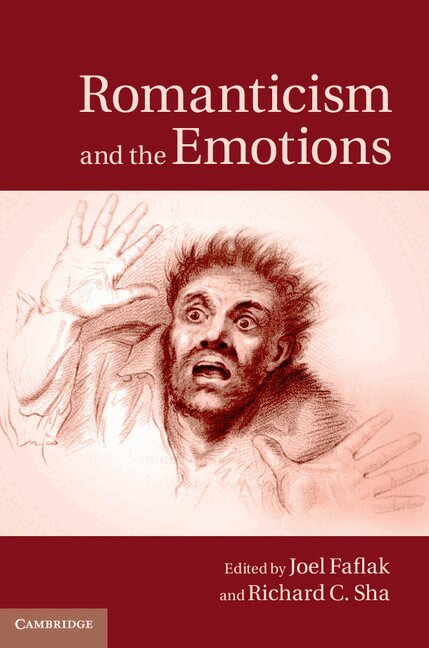
There has recently been a resurgence of interest in the importance of the emotions in Romantic literature and thought. This collection, the first to stress the centrality of the emotions to Romanticism, addresses a complex range of issues including the relation of affect to figuration and knowing, emotions and the discipline of knowledge, the motivational powers of emotion, and emotions as a shared ground of meaning. Contributors offer significant new insights on the ways in which a wide range of Romantic writers, including Jane Austen, William Wordsworth, Immanuel Kant, Lord Byron, Mary and Percy Bysshe Shelley, Thomas De Quincey and Adam Smith, worried about the emotions as a register of human experience. Though varied in scope, the essays are united by the argument that the current affective and emotional turn in the humanities benefits from a Romantic scepticism about the relations between language, emotion and agency.
493 kr
Skickas inom 7-10 vardagar
There has recently been a resurgence of interest in the importance of the emotions in Romantic literature and thought. This collection, the first to stress the centrality of the emotions to Romanticism, addresses a complex range of issues including the relation of affect to figuration and knowing, emotions and the discipline of knowledge, the motivational powers of emotion, and emotions as a shared ground of meaning. Contributors offer significant new insights on the ways in which a wide range of Romantic writers, including Jane Austen, William Wordsworth, Immanuel Kant, Lord Byron, Mary and Percy Bysshe Shelley, Thomas De Quincey and Adam Smith, worried about the emotions as a register of human experience. Though varied in scope, the essays are united by the argument that the current affective and emotional turn in the humanities benefits from a Romantic scepticism about the relations between language, emotion and agency.
767 kr
Skickas inom 7-10 vardagar
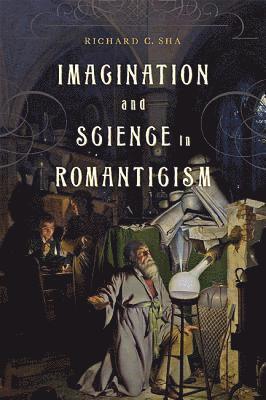
How did the idea of the imagination impact Romantic literature and science?2018 Winner, Jean-Pierre Barricelli Book Prize, The International Conference on RomanticismRichard C. Sha argues that scientific understandings of the imagination indelibly shaped literary Romanticism. Challenging the idea that the imagination found a home only on the side of the literary, as a mental vehicle for transcending the worldly materials of the sciences, Sha shows how imagination helped to operationalize both scientific and literary discovery. Essentially, the imagination forced writers to consider the difference between what was possible and impossible while thinking about how that difference could be known. Sha examines how the imagination functioned within physics and chemistry in Percy Bysshe Shelley's Prometheus Unbound, neurology in Blake's Vala, or The Four Zoas, physiology in Coleridge's Biographia Literaria, and obstetrics and embryology in Mary Shelley's Frankenstein. He also demonstrates how the imagination was called upon to do aesthetic and scientific work using primary examples taken from the work of scientists and philosophers Davy, Dalton, Faraday, Priestley, Kant, Mary Somerville, Oersted, Marcet, Smellie, Swedenborg, Blumenbach, Buffon, Erasmus Darwin, and Von Baer, among others. Sha concludes that both fields benefited from thinking about how imagination could cooperate with reason—but that this partnership was impossible unless imagination's penchant for fantasy could be contained.
466 kr
Skickas inom 7-10 vardagar
How did the idea of the imagination impact Romantic literature and science?2018 Winner, Jean-Pierre Barricelli Book Prize, The International Conference on RomanticismRichard C. Sha argues that scientific understandings of the imagination indelibly shaped literary Romanticism. Challenging the idea that the imagination found a home only on the side of the literary, as a mental vehicle for transcending the worldly materials of the sciences, Sha shows how imagination helped to operationalize both scientific and literary discovery. Essentially, the imagination forced writers to consider the difference between what was possible and impossible while thinking about how that difference could be known. Sha examines how the imagination functioned within physics and chemistry in Percy Bysshe Shelley's Prometheus Unbound, neurology in Blake's Vala, or The Four Zoas, physiology in Coleridge's Biographia Literaria, and obstetrics and embryology in Mary Shelley's Frankenstein. He also demonstrates how the imagination was called upon to do aesthetic and scientific work using primary examples taken from the work of scientists and philosophers Davy, Dalton, Faraday, Priestley, Kant, Mary Somerville, Oersted, Marcet, Smellie, Swedenborg, Blumenbach, Buffon, Erasmus Darwin, and Von Baer, among others. Sha concludes that both fields benefited from thinking about how imagination could cooperate with reason—but that this partnership was impossible unless imagination's penchant for fantasy could be contained.
1 600 kr
Skickas inom 7-10 vardagar
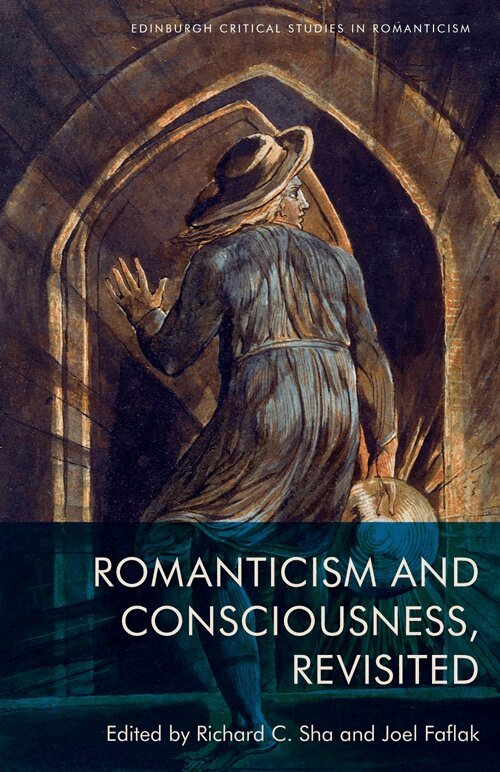
With explosive interest in Romantic science and theories of mind and a renewed sense of the period's porousness to the world, along with new developments in cognitive theory and research, Romantic studies scholars have been called to revisit and re-map the terrain laid out in the highly influential 1970 volume Romanticism and Consciousness. Romanticism and Consciousness, Revisited brings this shift in approach to Romantic consciousness no longer the possession of a sole self but transactional, social, and entangled with the outside world up to date.
747 kr
Skickas inom 3-6 vardagar
With explosive interest in Romantic science and theories of mind and a renewed sense of the period's porousness to the world, along with new developments in cognitive theory and research, Romantic studies scholars have been called to revisit and re-map the terrain laid out in the highly influential 1970 volume Romanticism and Consciousness. Romanticism and Consciousness, Revisited brings this shift in approach to Romantic consciousness no longer the possession of a sole self but transactional, social, and entangled with the outside world up to date.
1 324 kr
Skickas inom 10-15 vardagar
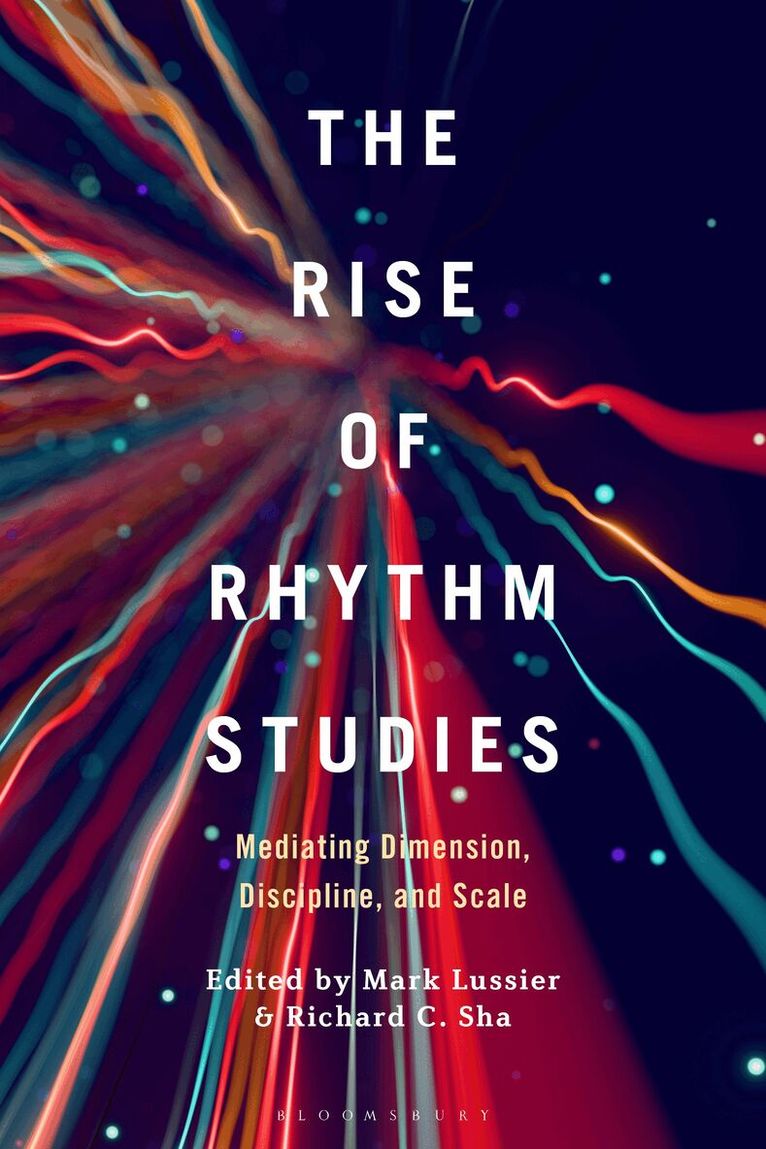
Rhythm is everywhere. Its ability to focus and unify interdisciplinary conversation begs the questions: What is rhythm and can different disciplines agree on its definition?Rhythm studies have emerged as a key background form traversing cultural, natural, and social forms like cognition, communication, and even cosmology. An added boon: this background can seem unifying. Those who explore such entangled phenomena study the throbbing presence of rhythmic, oscillatory, and vibratory potentials: Neuroscientists turn to rhythm for novel explanations of why our cognitive capacities are so limited; physicists use it to cross time and space; scholars in various fields turn to it to rethink materialism and affect theory.This lively collection considers why rhythm currently functions as a form of mediation between disciplines, across widely different scales and dimensions. The Rise of Rhythm Studies tests what rhythm can do through theoretical examinations and in case studies ranging from European literature to topology and media studies to Chinese visual art. Established scholars, such as Nina Kraus, Anna Gibbs, and Caroline Levine, alongside rising scholars in the field, marshal transdisciplinary perspectives in order to understand rhythm as a boundary condition for living in and working through and with the world.