Richard C. Sonnichsen – författare
Visar alla böcker från författaren Richard C. Sonnichsen. Handla med fri frakt och snabb leverans.
5 produkter
High Impact Internal Evaluation
A Practitioner's Guide to Evaluating and Consulting Inside Organizations
Häftad, 1999
2371 kr
Lägg i varukorg
"The book gives a solid overview of the theory and practice of internal evaluation by one of its leading practitioners. For readers new to internal evaluation, the book clearly explains the major pros and cons of internal evaluation, how evaluation fits within the organizational context, and …
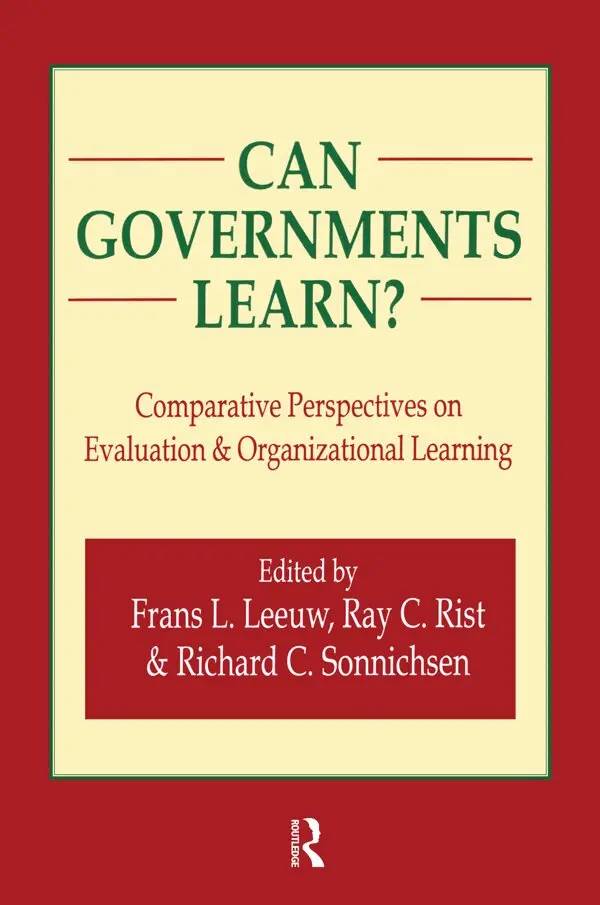
Can Governments Learn?
Comparative Perspectives on Evaluation and Organizational Learning
Av Frans L. Leeuw, Frans L. Leeuw m. fl.
Häftad, 1999
736 kr
Lägg i varukorg
There is continual concern about the ability of governments to perform the duties and responsibilities that their citizens have come to expect from them. Many citizens view government as inept, arthritic, and dedicated to the preservation of the bureaucratic status quo. As we close the twentieth …
Can Governments Learn?
Comparative Perspectives on Evaluation and Organizational Learning
Av Frans L. Leeuw, Richard C. Sonnichsen m. fl.
E-bok, 2020
847 kr
Lägg i varukorg
There is continual concern about the ability of governments to perform the duties and responsibilities that their citizens have come to expect from them. Many citizens view government as inept, arthritic, and dedicated to the preservation of the bureaucratic status quo. As we close the twentieth …
Can Governments Learn?
Comparative Perspectives on Evaluation and Organizational Learning
Av Frans L. Leeuw, Richard C. Sonnichsen m. fl.
E-bok, 2020
866 kr
Lägg i varukorg
There is continual concern about the ability of governments to perform the duties and responsibilities that their citizens have come to expect from them. Many citizens view government as inept, arthritic, and dedicated to the preservation of the bureaucratic status quo. As we close the twentieth …
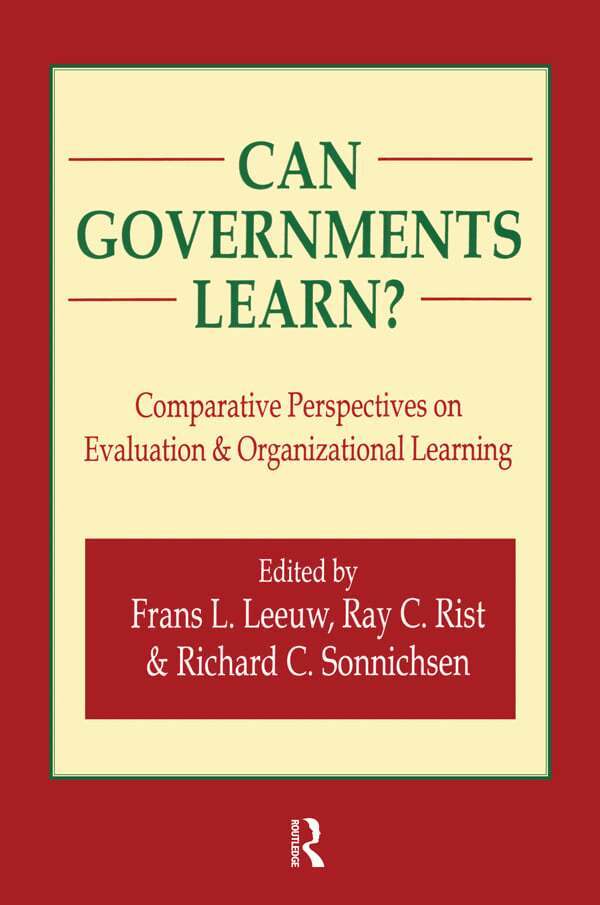
Can Governments Learn?
Comparative Perspectives on Evaluation and Organizational Learning
Av Frans L. Leeuw, Frans L. Leeuw m. fl.
Inbunden, 2020
2076 kr
Lägg i varukorg
There is continual concern about the ability of governments to perform the duties and responsibilities that their citizens have come to expect from them. Many citizens view government as inept, arthritic, and dedicated to the preservation of the bureaucratic status quo. As we close the twentieth …