Frans L. Leeuw – författare
Visar alla böcker från författaren Frans L. Leeuw. Handla med fri frakt och snabb leverans.
19 produkter
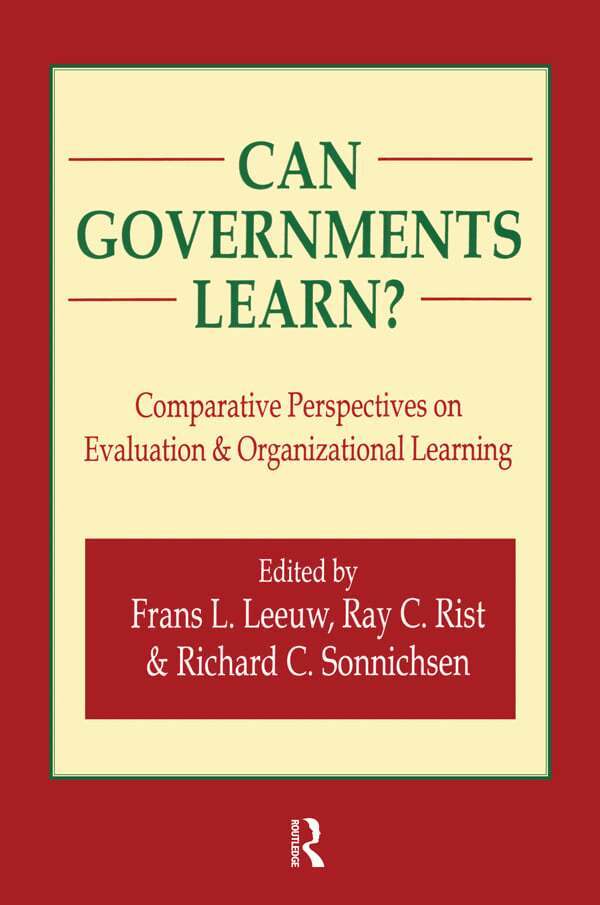
Can Governments Learn?
Comparative Perspectives on Evaluation and Organizational Learning
Av Frans L. Leeuw, Frans L. Leeuw m. fl.
Häftad, 1999
736 kr
Lägg i varukorg
There is continual concern about the ability of governments to perform the duties and responsibilities that their citizens have come to expect from them. Many citizens view government as inept, arthritic, and dedicated to the preservation of the bureaucratic status quo. As we close the twentieth …
Can Governments Learn?
Comparative Perspectives on Evaluation and Organizational Learning
Av Frans L. Leeuw, Richard C. Sonnichsen m. fl.
E-bok, 2020
847 kr
Lägg i varukorg
There is continual concern about the ability of governments to perform the duties and responsibilities that their citizens have come to expect from them. Many citizens view government as inept, arthritic, and dedicated to the preservation of the bureaucratic status quo. As we close the twentieth …
Can Governments Learn?
Comparative Perspectives on Evaluation and Organizational Learning
Av Frans L. Leeuw, Richard C. Sonnichsen m. fl.
E-bok, 2020
866 kr
Lägg i varukorg
There is continual concern about the ability of governments to perform the duties and responsibilities that their citizens have come to expect from them. Many citizens view government as inept, arthritic, and dedicated to the preservation of the bureaucratic status quo. As we close the twentieth …
From Silos to Ecologies
Towards an Ecology of Evidence to Navigate Solutions
Av Frans L. Leeuw, Sanjeev Sridharan
E-bok, 2026
802 kr
Lägg i varukorg
From Silos to Ecologies offers a new way to understand how knowledge is generated, interpreted, and used to address today's most complex social challenges. It introduces the concept with clarity and purpose, showing why single studies, narrow methods, or rigid evaluation systems are no longer …
From Silos to Ecologies
Towards an Ecology of Evidence to Navigate Solutions
Av Frans L. Leeuw, Sanjeev Sridharan
E-bok, 2026
793 kr
Lägg i varukorg
From Silos to Ecologies offers a new way to understand how knowledge is generated, interpreted, and used to address today's most complex social challenges. It introduces the concept with clarity and purpose, showing why single studies, narrow methods, or rigid evaluation systems are no longer …
From Silos to Ecologies
Towards an Ecology of Evidence to Navigate Solutions
Av Sanjeev Sridharan, Frans L. Leeuw
Inbunden, 2026
2516 kr
Lägg i varukorg
From Silos to Ecologies offers a new way to understand how knowledge is generated, interpreted, and used to address today’s most complex social challenges. It introduces the concept with clarity and purpose, showing why single studies, narrow methods, or rigid evaluation systems are no longer …
Artificial Intelligence and Big Data
Lessons from Evaluations of the Rule of Law and Development
Av Michael Bamberger, Frans L. Leeuw
E-bok, 2025
480 kr
Lägg i varukorg
This timely book explores how Artificial Intelligence (AI) and Big Data contribute to the evaluation of the rule of law (covering legal arrangements, empirical legal research, law and technology, and international law), and social and economic development programs in both industrialized and …
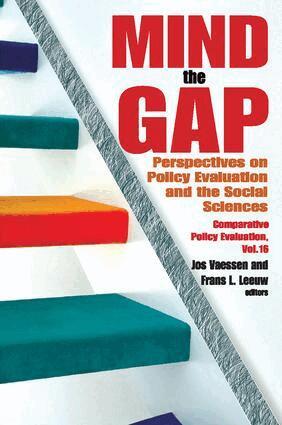
Mind the Gap
Perspectives on Policy Evaluation and the Social Sciences
Av Jos Vaessen, Jos Vaessen m. fl.
Häftad, 2017
751 kr
Lägg i varukorg
Over the past twenty to thirty years, evaluation has become increasingly important to the field of public policy. The number of people involved and specializing in evaluation has also increased markedly. Evidence of this trend can be found in the International Atlas of Evaluation, the establishment …
Can Governments Learn?
Comparative Perspectives on Evaluation and Organizational Learning
Av Frans L. Leeuw, Frans L. Leeuw m. fl.
Inbunden, 2020
2076 kr
Lägg i varukorg
There is continual concern about the ability of governments to perform the duties and responsibilities that their citizens have come to expect from them. Many citizens view government as inept, arthritic, and dedicated to the preservation of the bureaucratic status quo. As we close the twentieth …
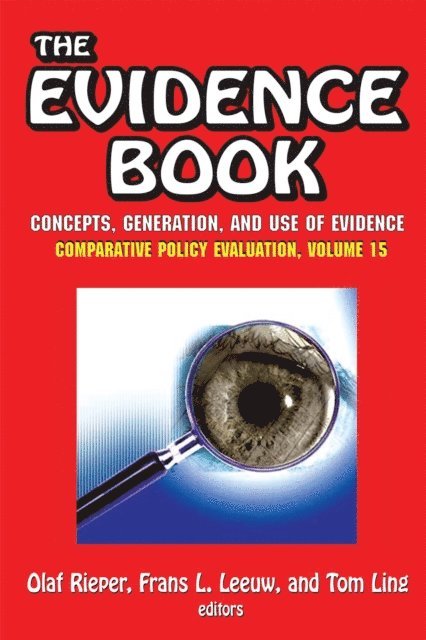
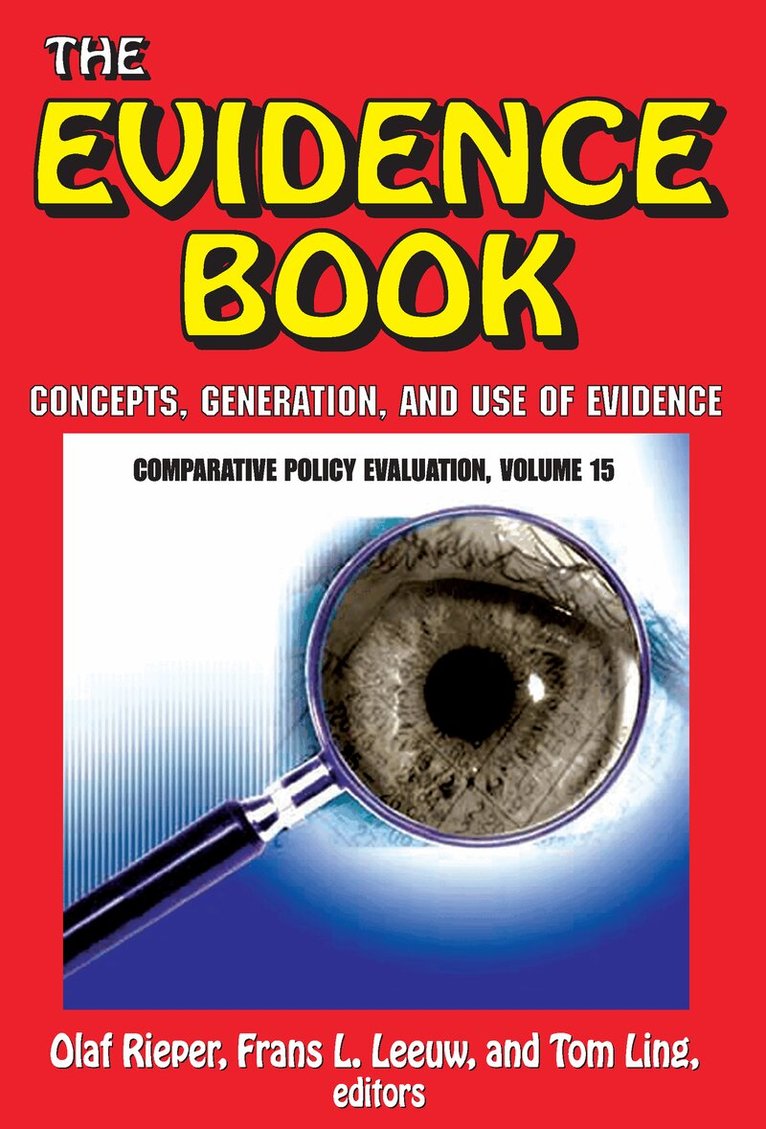
Evidence Book
Av Tom Ling, Frans L. Leeuw m. fl.
E-bok, 2017
450 kr
Lägg i varukorg
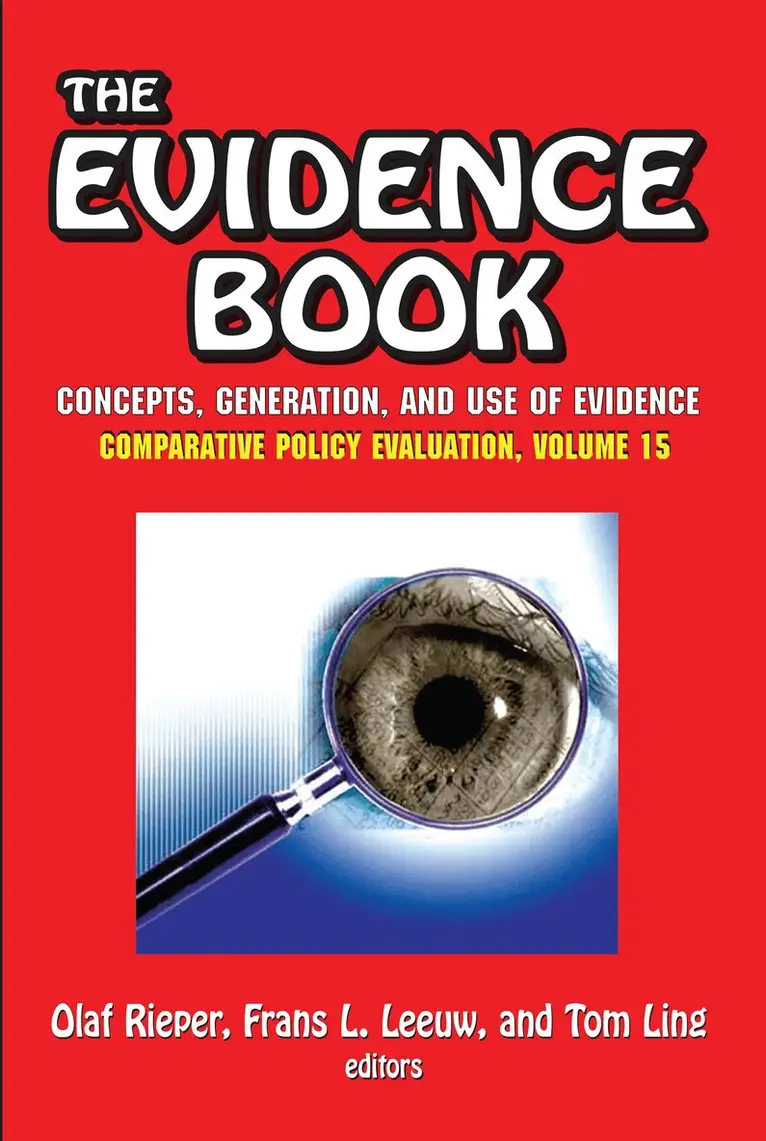
Knowledge grows as ideas are tested against each other. Agreement is not resolved simply by naming concepts but in the dialectical process of thesis, antithesis, and synthesis. There are many echoes of these debates in The Evidence Book. The contributors make claims for both practitioner wisdom and …
Evidence Book
Av Tom Ling, Frans L. Leeuw m. fl.
E-bok, 2017
441 kr
Lägg i varukorg
Knowledge grows as ideas are tested against each other. Agreement is not resolved simply by naming concepts but in the dialectical process of thesis, antithesis, and synthesis. There are many echoes of these debates in The Evidence Book. The contributors make claims for both practitioner wisdom and …
Evidence Book
Av Olaf Rieper, Frans L. Leeuw m. fl.
Inbunden, 2009
765 kr
Lägg i varukorg
Knowledge grows as ideas are tested against each other. Agreement is not resolved simply by naming concepts but in the dialectical process of thesis, antithesis, and synthesis. There are many echoes of these debates in The Evidence Book. The contributors make claims for both practitioner wisdom and …
Mind the Gap
Perspectives on Policy Evaluation and the Social Sciences
Av Jos Vaessen, Jos Vaessen m. fl.
Inbunden, 2009
2516 kr
Lägg i varukorg
Over the past twenty to thirty years, evaluation has become increasingly important to the field of public policy. The number of people involved and specializing in evaluation has also increased markedly. Evidence of this trend can be found in the International Atlas of Evaluation, the establishment …
Evidence Book
Av Olaf Rieper, Frans L. Leeuw m. fl.
Häftad, 2011
375 kr
Lägg i varukorg
Knowledge grows as ideas are tested against each other. Agreement is not resolved simply by naming concepts but in the dialectical process of thesis, antithesis, and synthesis. There are many echoes of these debates in The Evidence Book. The contributors make claims for both practitioner wisdom and …
Empirical Legal Research
A Guidance Book for Lawyers, Legislators and Regulators
Inbunden, 2016
1959 kr
Lägg i varukorg
In 1788 John Adams created a sublime ambition for all nations - 'a government of laws and not of men'. In the intervening years we have come to learn that legislation itself works through the interpretations of the many men and women who work on the inside and the outside of the law. Effective …
Empirical Legal Research
A Guidance Book for Lawyers, Legislators and Regulators
Häftad, 2017
561 kr
Lägg i varukorg
In 1788 John Adams created a sublime ambition for all nations - 'a government of laws and not of men'. In the intervening years we have come to learn that legislation itself works through the interpretations of the many men and women who work on the inside and the outside of the law. Effective …
Empirical Legal Research
A Guidance Book for Lawyers, Legislators and Regulators
E-bok, 2016
506 kr
Lägg i varukorg
In 1788 John Adams created a sublime ambition for all nations - ''a government of laws and not of men''. In the intervening years we have come to learn that legislation itself works through the interpretations of the many men and women who work on the inside and the outside of the law. Effective …
Artificial Intelligence and Big Data
Lessons from Evaluations of the Rule of Law and Development
Av Frans L. Leeuw, Michael Bamberger
Inbunden, 2025
1991 kr
Lägg i varukorg
This timely book explores how Artificial Intelligence (AI) and Big Data contribute to the evaluation of the rule of law (covering legal arrangements, empirical legal research, law and technology, and international law), and social and economic development programs in both industrialized and …
Artificial Intelligence and Big Data
Lessons from Evaluations of the Rule of Law and Development
Av Michael Bamberger, Frans L. Leeuw
E-bok, 2025
480 kr
Lägg i varukorg
This timely book explores how Artificial Intelligence (AI) and Big Data contribute to the evaluation of the rule of law (covering legal arrangements, empirical legal research, law and technology, and international law), and social and economic development programs in both industrialized and …