Jos Vaessen – författare
Visar alla böcker från författaren Jos Vaessen. Handla med fri frakt och snabb leverans.
5 produkter
5 produkter
Häftad, Engelska, 2017
728 kr
Skickas inom 10-15 vardagar
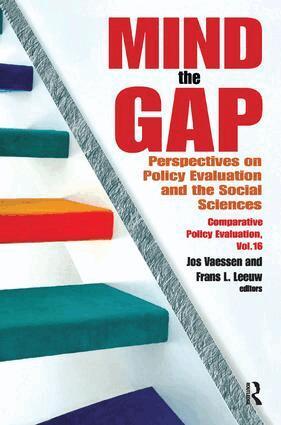
Over the past twenty to thirty years, evaluation has become increasingly important to the field of public policy. The number of people involved and specializing in evaluation has also increased markedly. Evidence of this trend can be found in the International Atlas of Evaluation, the establishment of new journals and evaluation societies, and the increase in systems of evaluation. Increasingly, the main reference point has become an assessment of the merit and value of interventions as such rather than the evaluator's disciplinary background. This growing importance of evaluation as an activity has also led to an increasing demand for the type of competencies evaluators should have.Evaluation began as a niche area within the social and behavioral sciences. It subsequently became linked to policy research and analysis, and has, more recently, become trans-disciplinary. This volume demonstrates an association between the evaluation tradition in a particular country or policy field and the nature of the relationship between social and behavioral science research and evaluative practice. This book seeks to offer comprehensive data, which lead to conclusions about patterns that transcend the gap between evaluation and the social scientific disciplines.Mind the Gap has a twofold aim. The first is to highlight and characterize the gap between evaluation practices and debates, and the substantive knowledge debates within the social and behavioral sciences. The second is to show why this gap is problematic for the practice of evaluation, while at the same time illustrating possible ways to build bridges. The book is centered on the value of producing useful evaluations grounded in social science theory and research.
E-bok
Engelska, 2017824 kr
Läs direkt efter köp
Over the past twenty to thirty years, evaluation has become increasingly important to the field of public policy. The number of people involved and specializing in evaluation has also increased markedly. Evidence of this trend can be found in the International Atlas of Evaluation, the establishment of new journals and evaluation societies, and the increase in systems of evaluation. Increasingly, the main reference point has become an assessment of the merit and value of interventions as such rather than the evaluator''s disciplinary background. This growing importance of evaluation as an activity has also led to an increasing demand for the type of competencies evaluators should have.Evaluation began as a niche area within the social and behavioral sciences. It subsequently became linked to policy research and analysis, and has, more recently, become trans-disciplinary. This volume demonstrates an association between the evaluation tradition in a particular country or policy field and the nature of the relationship between social and behavioral science research and evaluative practice. This book seeks to offer comprehensive data, which lead to conclusions about patterns that transcend the gap between evaluation and the social scientific disciplines.Mind the Gap has a twofold aim. The first is to highlight and characterize the gap between evaluation practices and debates, and the substantive knowledge debates within the social and behavioral sciences. The second is to show why this gap is problematic for the practice of evaluation, while at the same time illustrating possible ways to build bridges. The book is centered on the value of producing useful evaluations grounded in social science theory and research.
E-bok
PDF, Engelska, 2017795 kr
Läs direkt efter köp
Over the past twenty to thirty years, evaluation has become increasingly important to the field of public policy. The number of people involved and specializing in evaluation has also increased markedly. Evidence of this trend can be found in the International Atlas of Evaluation, the establishment of new journals and evaluation societies, and the increase in systems of evaluation. Increasingly, the main reference point has become an assessment of the merit and value of interventions as such rather than the evaluator''s disciplinary background. This growing importance of evaluation as an activity has also led to an increasing demand for the type of competencies evaluators should have.Evaluation began as a niche area within the social and behavioral sciences. It subsequently became linked to policy research and analysis, and has, more recently, become trans-disciplinary. This volume demonstrates an association between the evaluation tradition in a particular country or policy field and the nature of the relationship between social and behavioral science research and evaluative practice. This book seeks to offer comprehensive data, which lead to conclusions about patterns that transcend the gap between evaluation and the social scientific disciplines.Mind the Gap has a twofold aim. The first is to highlight and characterize the gap between evaluation practices and debates, and the substantive knowledge debates within the social and behavioral sciences. The second is to show why this gap is problematic for the practice of evaluation, while at the same time illustrating possible ways to build bridges. The book is centered on the value of producing useful evaluations grounded in social science theory and research.
Inbunden, Engelska, 2009
2 438 kr
Skickas inom 10-15 vardagar
Over the past twenty to thirty years, evaluation has become increasingly important to the field of public policy. The number of people involved and specializing in evaluation has also increased markedly. Evidence of this trend can be found in the International Atlas of Evaluation, the establishment of new journals and evaluation societies, and the increase in systems of evaluation. Increasingly, the main reference point has become an assessment of the merit and value of interventions as such rather than the evaluator's disciplinary background. This growing importance of evaluation as an activity has also led to an increasing demand for the type of competencies evaluators should have.Evaluation began as a niche area within the social and behavioral sciences. It subsequently became linked to policy research and analysis, and has, more recently, become trans-disciplinary. This volume demonstrates an association between the evaluation tradition in a particular country or policy field and the nature of the relationship between social and behavioral science research and evaluative practice. This book seeks to offer comprehensive data, which lead to conclusions about patterns that transcend the gap between evaluation and the social scientific disciplines.Mind the Gap has a twofold aim. The first is to highlight and characterize the gap between evaluation practices and debates, and the substantive knowledge debates within the social and behavioral sciences. The second is to show why this gap is problematic for the practice of evaluation, while at the same time illustrating possible ways to build bridges. The book is centered on the value of producing useful evaluations grounded in social science theory and research.
E-bok
Engelska, 2015918 kr
Läs direkt efter köp
Recognizing that complexity calls for innovative, conceptual, and methodological solutions, this unique book offers practical guidance to policymakers, managers, and evaluation practitioners on how to design and implement complexity-responsive evaluations that can be undertaken in the real world of time, budget, data, and political constraints. Introductory chapters present comprehensive, non-technical overviews of the most common evaluation tools and methodologies, and additional content addresses more cutting-edge material. The book also includes six case study chapters to illustrate examples of various evaluation contexts from around the world.