Richard D. Kahlenberg - Böcker
Visar alla böcker från författaren Richard D. Kahlenberg. Handla med fri frakt och snabb leverans.
7 produkter
7 produkter
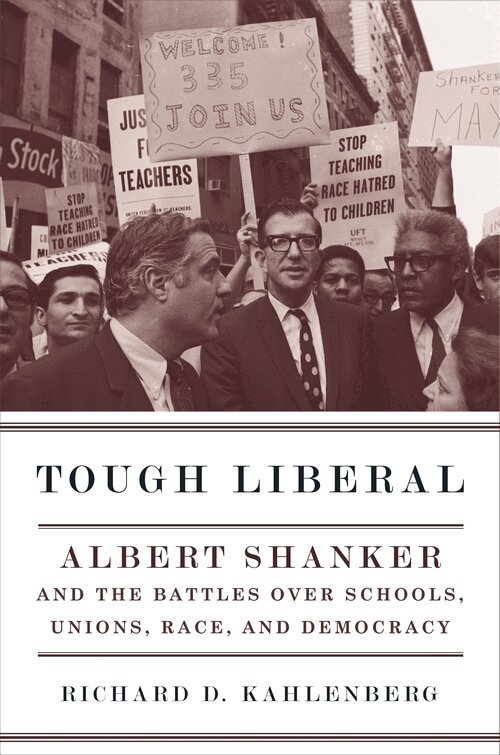
Tough Liberal
Albert Shanker and the Battles Over Schools, Unions, Race, and Democracy
Inbunden, Engelska, 2007
1 344 kr
Skickas inom 7-10 vardagar
In Woody Allen's 1973 film, Sleeper, a character wakes up in the future to learn that civilization was destroyed when "a man by the name of Albert Shanker got hold of a nuclear warhead." Shanker was condemned by many when he shut down the New York City school system in the bitter strikes of 1967 and 1968, and he was denounced for stirring up animosity between black parents and Jewish teachers. Later, however, he built alliances with blacks, and at the time of his death in 1997, such figures as Bill Clinton celebrated Shanker for being an educational reformer, a champion of equality, and a promoter of democracy abroad. Shanker lived the lives of several men bound into one. In his early years, he was the "George Washington of the teaching profession," helping to found modern teacher unionism. During the 1980s, as head of the American Federation of Teachers, he became the nation's leading education reformer. Shanker supported initiatives for high education standards and accountability, teacher-led charter schools, and a system of "peer review" to weed out inadequate teachers.Throughout his life, Shanker also fought for "tough liberalism," an ideology favoring public education and trade unions but also colorblind policies and a robust anticommunism--all of which, Shanker believed, were vital to a commitment to democracy. Although he had a coherent worldview, Shanker was a complex individual. He began his career as a pacifist but evolved into a leading defense and foreign policy hawk. He was an intellectual and a populist; a gifted speaker who failed at small talk; a liberal whose biggest enemies were often on the left; a talented writer who had to pay to have his ideas published; and a gruff unionist who enjoyed shopping and detested sports. Richard D. Kahlenberg's biography is the first to offer a complete narrative of one of the most important voices in public education and American politics in the last half century. At a time when liberals are accused of not knowing what they stand for, Tough Liberal illuminates an engaging figure who suggested an alternative liberal path.
Tough Liberal
Albert Shanker and the Battles Over Schools, Unions, Race, and Democracy
Häftad, Engelska, 2009
706 kr
Skickas inom 3-6 vardagar
In Woody Allen's 1973 film, Sleeper, a character wakes up in the future to learn that civilization was destroyed when "a man by the name of Albert Shanker got hold of a nuclear warhead." Shanker was condemned by many when he shut down the New York City school system in the bitter strikes of 1967 and 1968, and he was denounced for stirring up animosity between black parents and Jewish teachers. Later, however, he built alliances with blacks, and at the time of his death in 1997, such figures as Bill Clinton celebrated Shanker for being an educational reformer, a champion of equality, and a promoter of democracy abroad. Shanker lived the lives of several men bound into one. In his early years, he was the "George Washington of the teaching profession," helping to found modern teacher unionism. During the 1980s, as head of the American Federation of Teachers, he became the nation's leading education reformer. Shanker supported initiatives for high education standards and accountability, teacher-led charter schools, and a system of "peer review" to weed out inadequate teachers.Throughout his life, Shanker also fought for "tough liberalism," an ideology favoring public education and trade unions but also colorblind policies and a robust anticommunism--all of which, Shanker believed, were vital to a commitment to democracy. Although he had a coherent worldview, Shanker was a complex individual. He began his career as a pacifist but evolved into a leading defense and foreign policy hawk. He was an intellectual and a populist; a gifted speaker who failed at small talk; a liberal whose biggest enemies were often on the left; a talented writer who had to pay to have his ideas published; and a gruff unionist who enjoyed shopping and detested sports. Richard D. Kahlenberg's biography is the first to offer a complete narrative of one of the most important voices in public education and American politics in the last half century. At a time when liberals are accused of not knowing what they stand for, Tough Liberal illuminates an engaging figure who suggested an alternative liberal path.
360 kr
Skickas inom 11-20 vardagar
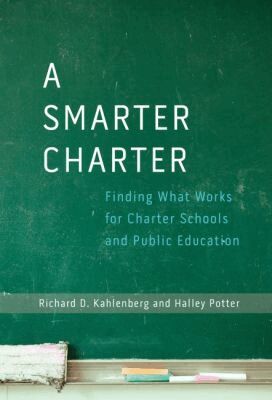
Moving beyond the debate over whether or not charter schools should exist, A Smarter Charter wrestles with the question of what kind of charter schools we should encourage. The authors begin by tracing the evolution of charter schools from Albert Shanker’s original vision of giving teachers room to innovate while educating a diverse population of students, to today’s charter schools where student segregation levels are even higher than in traditional public schools. In the second half of the book, the authors examine two key reforms currently seen in a small but growing number of charter schools - socioeconomic integration and teacher voice - that have the potential to improve performance and reshape the stereotypical image of what it means to be a charter school.
748 kr
Skickas inom 7-10 vardagar
Moving beyond the debate over whether or not charter schools should exist, A Smarter Charter wrestles with the question of what kind of charter schools we should encourage. The authors begin by tracing the evolution of charter schools from Albert Shanker’s original vision of giving teachers room to innovate while educating a diverse population of students, to today’s charter schools where student segregation levels are even higher than in traditional public schools. In the second half of the book, the authors examine two key reforms currently seen in a small but growing number of charter schools - socioeconomic integration and teacher voice - that have the potential to improve performance and reshape the stereotypical image of what it means to be a charter school.
292 kr
Skickas inom 10-15 vardagar
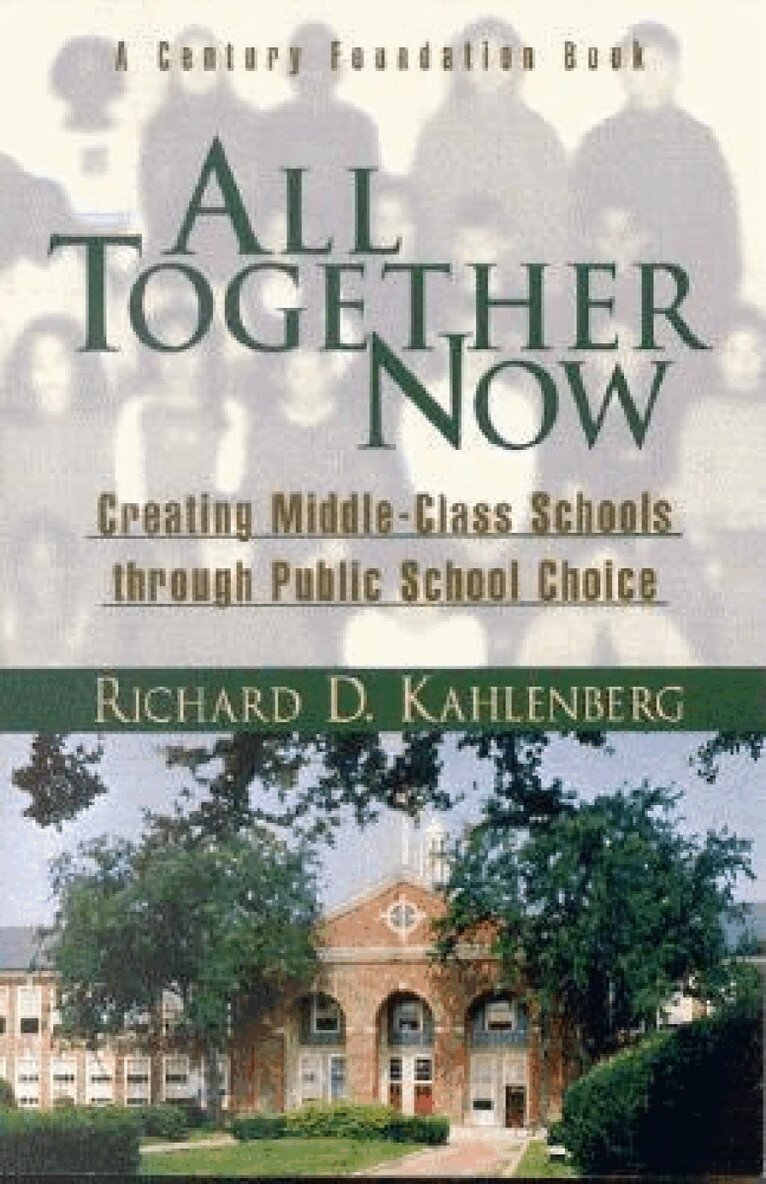
This provocative book asks a simple question: since we know that middle class schools tend to work best, why not give every child in America the opportunity to attend a public school in which the majority of students come from middle class households? Economically integrated schools, the author argues, will do far more to promote achievement and equal opportunity than vouchers, standards, class size reduction, or any of the other leading education proposals on the left and right that seek to make ""separate but equal"" schools work. Building on two recent education trendsthe decline in racial desegregation as a legal tool and the movement toward greater public school choiceAll Together Now provides a blueprint for creating schools that educate children from various backgrounds under one roof. Concurring with the concerns of voucher proponents about the unfairness of trapping poor kids in failing schools, the book provides a practical, viable, and legally sound plan for promoting economic and racial integration among public schools.
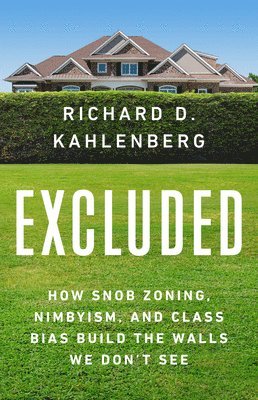
Excluded
How Snob Zoning, NIMBYism, and Class Bias Build the Walls We Don't See
Inbunden, Engelska, 2023
259 kr
Skickas inom 7-10 vardagar
The last, acceptable form of prejudice in America is based on class and executed through state-sponsored economic discrimination, which is hard to see because it is much more subtle than raw racism.While the American meritocracy officially denounces prejudice based on race and gender, it has spawned a new form of bias against those with less education and income. Millions of working-class Americans have their opportunity blocked by exclusionary snob zoning. These government policies make housing unaffordable, frustrate the goals of the civil rights movement, and lock in inequality in our urban and suburban landscapes.Through moving accounts of families excluded from economic and social opportunity as they are hemmed in through "new redlining" that limits the type of housing that can be built, Richard Kahlenberg vividly illustrates why America has a housing crisis. He also illustrates why economic segregation matters since where you live affects access to transportation, employment opportunities, decent health care, and good schools. He shows that housing choice has been socially engineered to the benefit of the affluent, and, that astonishingly the most restrictive zoning is found in politically liberal cities where racial views are more progressive.Despite this there is hope. Kahlenberg tells the inspiring stories of growing number of local and national movements working to tear down the walls that inflicts so much damage on the lives of millions of Americans.
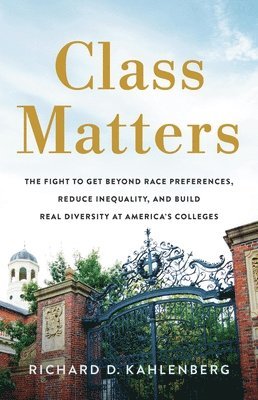
Class Matters
The Fight to Get Beyond Race Preferences, Reduce Inequality, and Build Real Diversity at America’s Colleges
Inbunden, Engelska, 2025
281 kr
Skickas inom 7-10 vardagar
A powerful argument for a class-based approach to college admissions that "shows where we have gone wrong so far, and how we will get to justice, equality, and even diversity for real" (John McWhorter)For decades America's colleges and universities have been working to increase racial diversity. But they have been using the wrong approach, as Richard Kahlenberg persuasively shows in his highly personal and deeply researched book. Kahlenberg makes the definitive case that class disadvantage, rather than race, should be the determining factor for how a broader array of people "get in." While elite universities claim to be on the side of social justice, the dirty secret of higher education is that the perennial focus on racial diversity has provided cover for an admissions system that mostly benefits the wealthy and shuts out talented working-class students. By fixing the class bias in college admissions we can begin to rectify America's skyrocketing economic inequality and class antagonism, giving more people a better place at the table as they move through life and more opportunity to "swim in the river of power."Kahlenberg has long worked with prominent civil rights leaders on housing and school integration. But his recognition of class inequality in American higher education led to his making a controversial decision to go over to the "other side" and provide research and testimony in cases that helped lead to the controversial Supreme Court decision of 2023 that ended racial preferences. That conservative ruling could, Kahlenberg shows, paradoxically have a progressive policy outcome by cutting a new path for economic and racial diversity alike - and greater fairness.