Richard D. Riley - Böcker
Visar alla böcker från författaren Richard D. Riley. Handla med fri frakt och snabb leverans.
2 produkter
2 produkter
1 140 kr
Skickas inom 5-8 vardagar
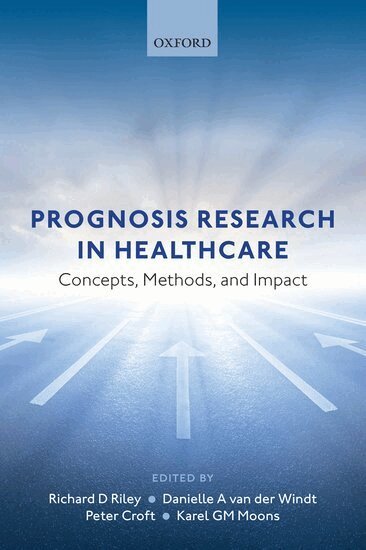
"What is going to happen to me?" Most patients ask this question during a clinical encounter with a health professional. As well as learning what problem they have (diagnosis) and what needs to be done about it (treatment), patients want to know about their future health and wellbeing (prognosis). Prognosis research can provide answers to this question and satisfy the need for individuals to understand the possible outcomes of their condition, with and without treatment. Central to modern medical practise, the topic of prognosis is the basis of decision making in healthcare and policy development. It translates basic and clinical science into practical care for patients and populations. Prognosis Research in Healthcare: Concepts, Methods and Impact provides a comprehensive overview of the field of prognosis and prognosis research and gives a global perspective on how prognosis research and prognostic information can improve the outcomes of healthcare. It details how to design, carry out, analyse and report prognosis studies, and how prognostic information can be the basis for tailored, personalised healthcare. In particular, the book discusses how information about the characteristics of people, their health, and environment can be used to predict an individual's future health. Prognosis Research in Healthcare: Concepts, Methods and Impact, addresses all types of prognosis research and provides a practical step-by-step guide to undertaking and interpreting prognosis research studies, ideal for medical students, health researchers, healthcare professionals and methodologists, as well as for guideline and policy makers in healthcare wishing to learn more about the field of prognosis.
900 kr
Skickas inom 7-10 vardagar
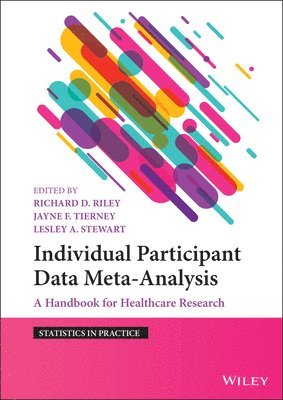
Individual Participant Data Meta-Analysis: A Handbook for Healthcare Research provides a comprehensive introduction to the fundamental principles and methods that healthcare researchers need when considering, conducting or using individual participant data (IPD) meta-analysis projects. Written and edited by researchers with substantial experience in the field, the book details key concepts and practical guidance for each stage of an IPD meta-analysis project, alongside illustrated examples and summary learning points.Split into five parts, the book chapters take the reader through the journey from initiating and planning IPD projects to obtaining, checking, and meta-analysing IPD, and appraising and reporting findings. The book initially focuses on the synthesis of IPD from randomised trials to evaluate treatment effects, including the evaluation of participant-level effect modifiers (treatment-covariate interactions). Detailed extension is then made to specialist topics such as diagnostic test accuracy, prognostic factors, risk prediction models, and advanced statistical topics such as multivariate and network meta-analysis, power calculations, and missing data.Intended for a broad audience, the book will enable the reader to: Understand the advantages of the IPD approach and decide when it is needed over a conventional systematic reviewRecognise the scope, resources and challenges of IPD meta-analysis projectsAppreciate the importance of a multi-disciplinary project team and close collaboration with the original study investigatorsUnderstand how to obtain, check, manage and harmonise IPD from multiple studiesExamine risk of bias (quality) of IPD and minimise potential biases throughout the projectUnderstand fundamental statistical methods for IPD meta-analysis, including two-stage and one-stage approaches (and their differences), and statistical software to implement themClearly report and disseminate IPD meta-analyses to inform policy, practice and future researchCritically appraise existing IPD meta-analysis projectsAddress specialist topics such as effect modification, multiple correlated outcomes, multiple treatment comparisons, non-linear relationships, test accuracy at multiple thresholds, multiple imputation, and developing and validating clinical prediction modelsDetailed examples and case studies are provided throughout.