Richard E. Lee - Böcker
Visar alla böcker från författaren Richard E. Lee. Handla med fri frakt och snabb leverans.
12 produkter
12 produkter
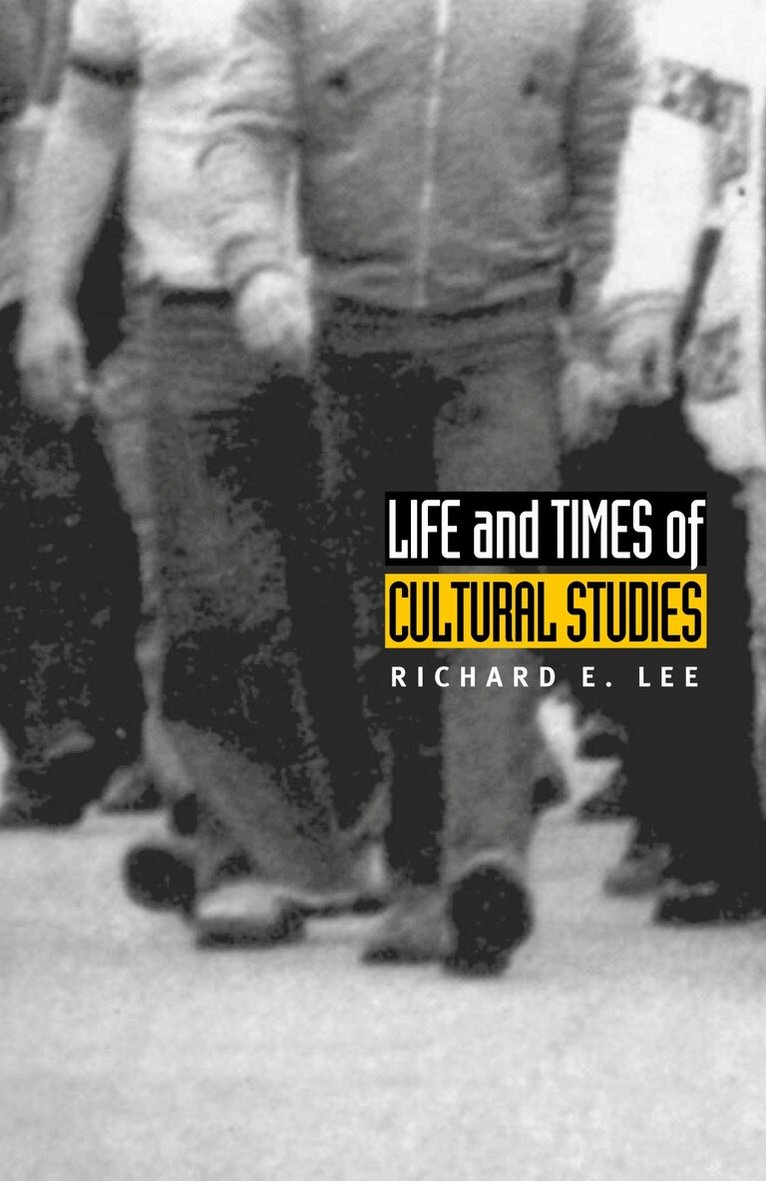
Life and Times of Cultural Studies
The Politics and Transformation of the Structures of Knowledge
Inbunden, Engelska, 2004
1 159 kr
Skickas inom 11-20 vardagar
Moving world-systems analysis into the cultural realm, Richard E. Lee locates the cultural studies movement within a broad historical and geopolitical framework. He illuminates how order and conflict have been reflected and negotiated in the sphere of knowledge production by situating the emergence of cultural studies at the intersection of post–1945 international and British politics and a two-hundred-year history of conservative critical practice. Tracing British criticism from the period of the French Revolution through the 1960s, he describes how cultural studies in its infancy recombined the elite literary critical tradition with the First New Left’s concerns for history and popular culture-just as the liberal consensus began to come apart.Lee tracks the intellectual project of cultural studies as it developed over three decades, beginning with its institutional foundation at the University of Birmingham’s Centre for Contemporary Cultural Studies (CCCS). He links work at the CCCS to the events of 1968 and explores cultural studies’ engagement with theory in the debates on structuralism. He considers the shift within the discipline away from issues of working-class culture toward questions of identity politics in the fields of race and gender. He follows the expansion of the cultural studies project from Britain to Australia, Canada, South Africa, and the United States. Contextualizing the development and spread of cultural studies within the longue durÉe structures of knowledge in the modern world-system, Lee assesses its past and future as an agent of political and social change.
Life and Times of Cultural Studies
The Politics and Transformation of the Structures of Knowledge
Häftad, Engelska, 2004
361 kr
Skickas inom 7-10 vardagar
Moving world-systems analysis into the cultural realm, Richard E. Lee locates the cultural studies movement within a broad historical and geopolitical framework. He illuminates how order and conflict have been reflected and negotiated in the sphere of knowledge production by situating the emergence of cultural studies at the intersection of post–1945 international and British politics and a two-hundred-year history of conservative critical practice. Tracing British criticism from the period of the French Revolution through the 1960s, he describes how cultural studies in its infancy recombined the elite literary critical tradition with the First New Left’s concerns for history and popular culture-just as the liberal consensus began to come apart.Lee tracks the intellectual project of cultural studies as it developed over three decades, beginning with its institutional foundation at the University of Birmingham’s Centre for Contemporary Cultural Studies (CCCS). He links work at the CCCS to the events of 1968 and explores cultural studies’ engagement with theory in the debates on structuralism. He considers the shift within the discipline away from issues of working-class culture toward questions of identity politics in the fields of race and gender. He follows the expansion of the cultural studies project from Britain to Australia, Canada, South Africa, and the United States. Contextualizing the development and spread of cultural studies within the longue durÉe structures of knowledge in the modern world-system, Lee assesses its past and future as an agent of political and social change.
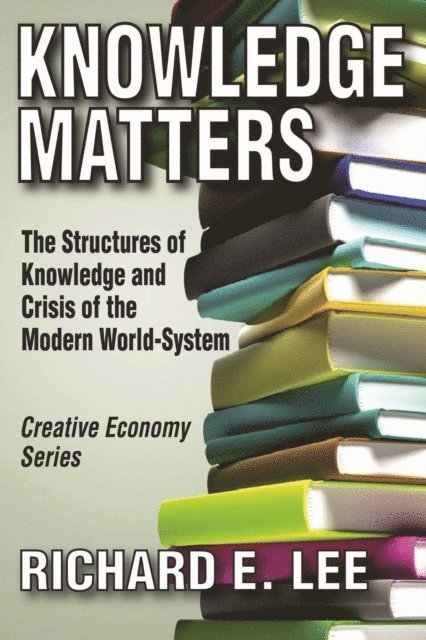
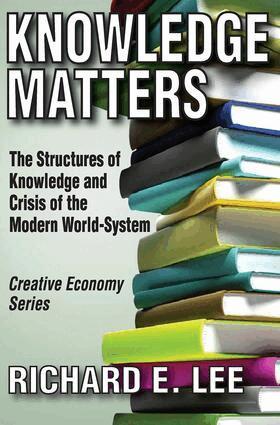
Knowledge Matters
The Structures of Knowledge and Crisis of the Modern World-System
Häftad, Engelska, 2011
670 kr
Skickas inom 10-15 vardagar
Economic changes and political changes which emerged with the modern capitalist world-economy were accompanied in the sociocultural domain by changes in the structures of knowledge. These included the hierarchical separation of the realm of facts from that of values, institutionalized as a division between the sciences and the humanities. The social sciences responded to contradictions inherent in this structure over the nineteenth century in producing knowledge on which policy decisions could be based. The problems of the contemporary period indicate we are in a long-term, structural crisis. Nowhere is this more apparent than in the theoretical frameworks and methodological approaches through which social analysts and observers alike seek to understand the world. Since the 1960s, developments in the field of knowledge, especially two movements complexity studies in the natural sciences and cultural studies in the humanities have contested the naturalized, essentialist boundaries separating the sciences, the social sciences and the humanities. The primary rationale for this work is to recognize the inseparable whole composed of the material structures of the world and the structures of knowledge that govern what actions may be deemed legitimate and effective. 'Knowledge Matters' discusses what actions will actually be undertaken by social agents, and what such an approach means for an analysis of the present situation in terms of imagining and evaluating possible futures.
353 kr
Skickas inom 11-20 vardagar
A provocative survey of interdisciplinary challenges to the concept of determinism.During the last few decades, the fundamental premises of the modern view of knowledge have been increasingly called into question. Questioning Nineteenth-Century Assumptions about Knowledge I: Determinism provides an in-depth look at the debates surrounding the status of "determinism" in the sciences, social sciences, and the humanities in detailed and wide-ranging discussions among experts from across the disciplines. A concern for the future, and how to approach it, is evident throughout. Indeed, the sense that there exists a reciprocal relationship between the structures of knowledge and human systems, including ecosystems, suggests that thinking about the possible rather than the necessary, may be a more winning strategy for our times. Weaving together in-depth articles and invigorating follow up discussions, this volume showcases debates over the status and validity of determinism. Of special interest are the impact of determinism on the perception and writing about the past; the relationship between chance and necessity in philosophy and grand opera; and the affect of determinism in mathematical modeling and economics.
1 057 kr
Tillfälligt slut
A provocative survey of interdisciplinary challenges to the concept of determinism.During the last few decades, the fundamental premises of the modern view of knowledge have been increasingly called into question. Questioning Nineteenth-Century Assumptions about Knowledge I: Determinism provides an in-depth look at the debates surrounding the status of "determinism" in the sciences, social sciences, and the humanities in detailed and wide-ranging discussions among experts from across the disciplines. A concern for the future, and how to approach it, is evident throughout. Indeed, the sense that there exists a reciprocal relationship between the structures of knowledge and human systems, including ecosystems, suggests that thinking about the possible rather than the necessary, may be a more winning strategy for our times. Weaving together in-depth articles and invigorating follow up discussions, this volume showcases debates over the status and validity of determinism. Of special interest are the impact of determinism on the perception and writing about the past; the relationship between chance and necessity in philosophy and grand opera; and the affect of determinism in mathematical modeling and economics.
1 057 kr
Tillfälligt slut
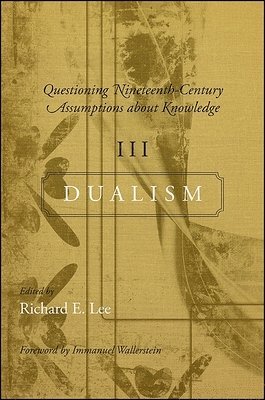
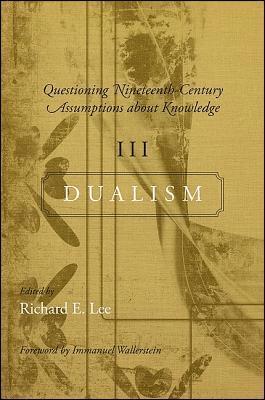
A provocative survey of interdisciplinary challenges to the concept of dualism.During the last few decades, the fundamental premises of the modern view of knowledge have been increasingly called into question. Questioning Nineteenth-Century Assumptions about Knowledge III: Dualism provides an in-depth look at the debates surrounding the status of "dualism" in the sciences, social sciences, and the humanities in detailed and wide-ranging discussions among experts from across the disciplines. The extent to which the questionable necessity of a transcendent nomos; individualistic approaches versus systems ontology; rationality-material and formal-and how scholars might overcome the two cultures divide might impinge on the possibility, but not the inevitability, of progress are among the issues explored here. Weaving together in-depth articles and invigorating follow up discussions, this volume showcases debates over the status and validity of dualism. Of special interest are developing alternatives to traditional dualistic categories through an innovative, new approach based on biological naturalism; challenges to the dualism of people and things; the imperfectness and subjectivity of perception; and the overcoming the dualism of philosophy and science.
353 kr
Skickas inom 7-10 vardagar
A provocative survey of interdisciplinary challenges to the concept of dualism.During the last few decades, the fundamental premises of the modern view of knowledge have been increasingly called into question. Questioning Nineteenth-Century Assumptions about Knowledge III: Dualism provides an in-depth look at the debates surrounding the status of "dualism" in the sciences, social sciences, and the humanities in detailed and wide-ranging discussions among experts from across the disciplines. The extent to which the questionable necessity of a transcendent nomos; individualistic approaches versus systems ontology; rationality-material and formal-and how scholars might overcome the two cultures divide might impinge on the possibility, but not the inevitability, of progress are among the issues explored here. Weaving together in-depth articles and invigorating follow up discussions, this volume showcases debates over the status and validity of dualism. Of special interest are developing alternatives to traditional dualistic categories through an innovative, new approach based on biological naturalism; challenges to the dualism of people and things; the imperfectness and subjectivity of perception; and the overcoming the dualism of philosophy and science.
353 kr
Skickas inom 7-10 vardagar
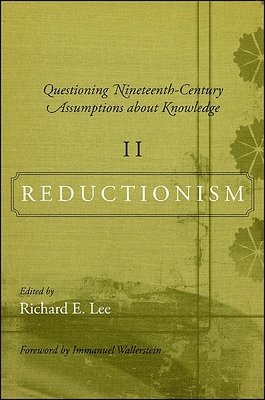
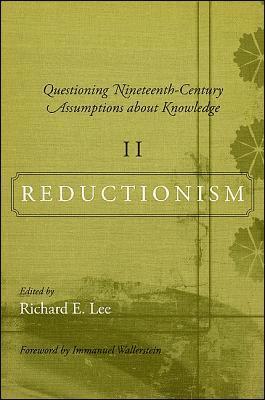
A provocative survey of interdisciplinary challenges to the concept of reductionism.During the last few decades, the fundamental premises of the modern view of knowledge have been increasingly called into question. Questioning Nineteenth-Century Assumptions about Knowledge II: Reductionism provides an in-depth look at the debates surrounding the status of "reductionism" in the sciences, social sciences, and the humanities in detailed and wide-ranging discussions among experts from across the disciplines. Whether or not there is or should be a basic epistemological stance that is different in the sciences and humanities, and whether or not such a stance as exemplified by the approach to reductionism is changing, has enormous consequences for all aspects of knowledge production. Featured are an overview and subsequent discussion of this pervasive concept in the social sciences that parses reductionism into the categories of strong social constructionism and anti-essentialism, social ontology and the apathetic actor, dualisms, and individualism. Also of interest in chapters and follow up discussions are the relations between essentialism and emergentism in complex systems theory.
1 057 kr
Tillfälligt slut
A provocative survey of interdisciplinary challenges to the concept of reductionism.During the last few decades, the fundamental premises of the modern view of knowledge have been increasingly called into question. Questioning Nineteenth-Century Assumptions about Knowledge II: Reductionism provides an in-depth look at the debates surrounding the status of "reductionism" in the sciences, social sciences, and the humanities in detailed and wide-ranging discussions among experts from across the disciplines. Whether or not there is or should be a basic epistemological stance that is different in the sciences and humanities, and whether or not such a stance as exemplified by the approach to reductionism is changing, has enormous consequences for all aspects of knowledge production. Featured are an overview and subsequent discussion of this pervasive concept in the social sciences that parses reductionism into the categories of strong social constructionism and anti-essentialism, social ontology and the apathetic actor, dualisms, and individualism. Also of interest in chapters and follow up discussions are the relations between essentialism and emergentism in complex systems theory.
1 057 kr
Tillfälligt slut
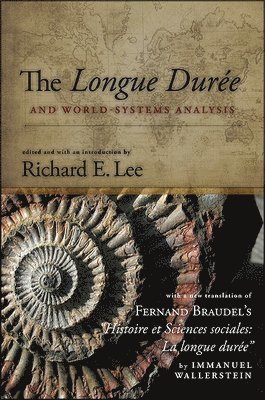
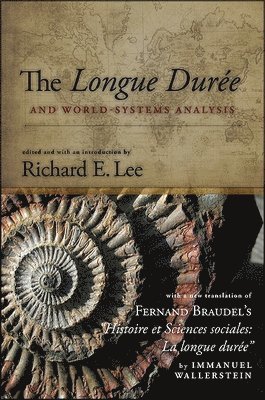
Scholars from history, sociology, and geography advocate overcoming disciplinary isolation, using Fernand Braudel's concept of the longue durée as a rallying point.In his pathbreaking article "History and the Social Sciences: The Longue Durée," Fernand Braudel raised a call for the social sciences to overcome their disciplinary isolation from one another. Commemorating the fiftieth anniversary of the article's publication, the contributors to this volume do not just acknowledge their debt to the past; they also bear witness to how the crisis Braudel recognized a half century ago is no less of a crisis today. The contributions included here, from scholars in history, sociology, and geography, reflect the spirit and practice of the intellectual agenda espoused by Braudel, coming together around the concept of the longue durée. Indeed, they are evidence of how the groundbreaking research originally championed by Braudel has been carried forward in world-systems analysis for a more socially relevant understanding of the planet and its future possibilities. The book concludes with a new translation of Braudel's original article by famed sociologist Immanuel Wallerstein.
382 kr
Tillfälligt slut
Scholars from history, sociology, and geography advocate overcoming disciplinary isolation, using Fernand Braudel's concept of the longue durée as a rallying point.In his pathbreaking article "History and the Social Sciences: The Longue Durée," Fernand Braudel raised a call for the social sciences to overcome their disciplinary isolation from one another. Commemorating the fiftieth anniversary of the article's publication, the contributors to this volume do not just acknowledge their debt to the past; they also bear witness to how the crisis Braudel recognized a half century ago is no less of a crisis today. The contributions included here, from scholars in history, sociology, and geography, reflect the spirit and practice of the intellectual agenda espoused by Braudel, coming together around the concept of the longue durée. Indeed, they are evidence of how the groundbreaking research originally championed by Braudel has been carried forward in world-systems analysis for a more socially relevant understanding of the planet and its future possibilities. The book concludes with a new translation of Braudel's original article by famed sociologist Immanuel Wallerstein.
295 kr
Tillfälligt slut