Richard G Lambert - Böcker
Visar alla böcker från författaren Richard G Lambert. Handla med fri frakt och snabb leverans.
9 produkter
9 produkter
Constitution of the State of Utah as Framed by the Constitutional Convention in Salt Lake City, Utah, From March 4th, to May 8th, 1895
Inbunden, Engelska, 2022
350 kr
Skickas inom 5-8 vardagar
Constitution of the State of Utah as Framed by the Constitutional Convention in Salt Lake City, Utah, From March 4th, to May 8th, 1895
Häftad, Engelska, 2022
182 kr
Skickas inom 5-8 vardagar
Constitution of the State Utah as Framed by the Constitutional Convention in Salt Lake City, Utah, from March 4th, to May 8th 1895.
Häftad, Engelska, 2013
265 kr
Skickas inom 3-6 vardagar
518 kr
Skickas inom 7-10 vardagar
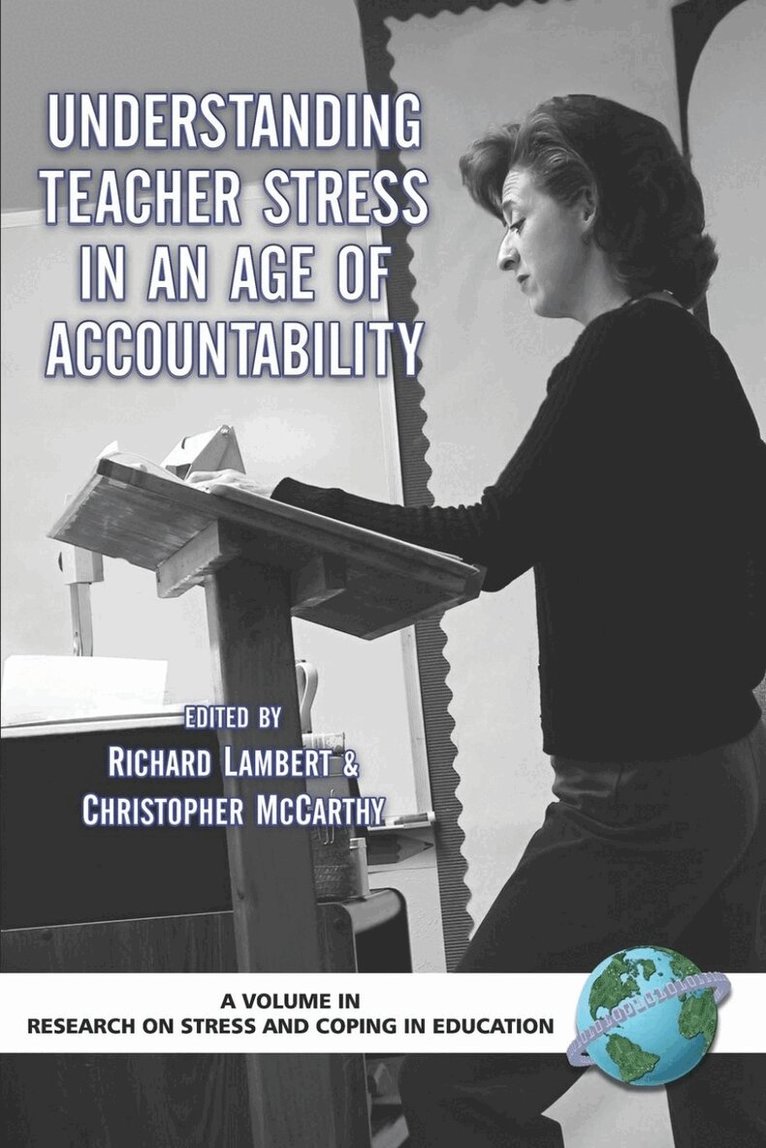
School districts today face increasing calls for accountability during a time when budgets are stretched and students’ needs have become increasingly complex. The teacher’s responsibility is to educate younger people, but now more than ever, teachers face demands on a variety of fronts. In addition to teaching academic content, schools are responsible for students’ performance on state-wide tests. They are also asked to play an increasingly larger role in children’s well-being, including their nutritional needs and social and emotional welfare. Teachers have shown themselves to be more than capable of taking up such challenges, but what price is paid for the increasing demands we are placing on our schools? Understanding Teacher Stress in an Age of Accountability is about the nature of teachers stress and the resources they can employ to cope with it.Accountability is a two-way street and the authors in this volume suggest remedies for reducing teacher stress and in all likelihood increasing student learning—greater administrative support, more and better instructional materials, specialized resources targeted at demanding children, parental support, and professional recognition. Readers will discover that lack of funding, low pay, concerns about academic performance and student misbehavior, and increased public and governmental scrutiny are not exclusive to the United States. In this volume, the third in a series on Research on Stress and Coping in Education, authors from Australia, Turkey, Malaysia, and the Netherlands sound the same alarms, post the same warnings, and draw similarly disturbing conclusions.
953 kr
Skickas inom 7-10 vardagar
School districts today face increasing calls for accountability during a time when budgets are stretched and students’ needs have become increasingly complex. The teacher’s responsibility is to educate younger people, but now more than ever, teachers face demands on a variety of fronts. In addition to teaching academic content, schools are responsible for students’ performance on state-wide tests. They are also asked to play an increasingly larger role in children’s well-being, including their nutritional needs and social and emotional welfare. Teachers have shown themselves to be more than capable of taking up such challenges, but what price is paid for the increasing demands we are placing on our schools? Understanding Teacher Stress in an Age of Accountability is about the nature of teachers stress and the resources they can employ to cope with it.Accountability is a two-way street and the authors in this volume suggest remedies for reducing teacher stress and in all likelihood increasing student learning—greater administrative support, more and better instructional materials, specialized resources targeted at demanding children, parental support, and professional recognition. Readers will discover that lack of funding, low pay, concerns about academic performance and student misbehavior, and increased public and governmental scrutiny are not exclusive to the United States. In this volume, the third in a series on Research on Stress and Coping in Education, authors from Australia, Turkey, Malaysia, and the Netherlands sound the same alarms, post the same warnings, and draw similarly disturbing conclusions.
646 kr
Skickas inom 7-10 vardagar
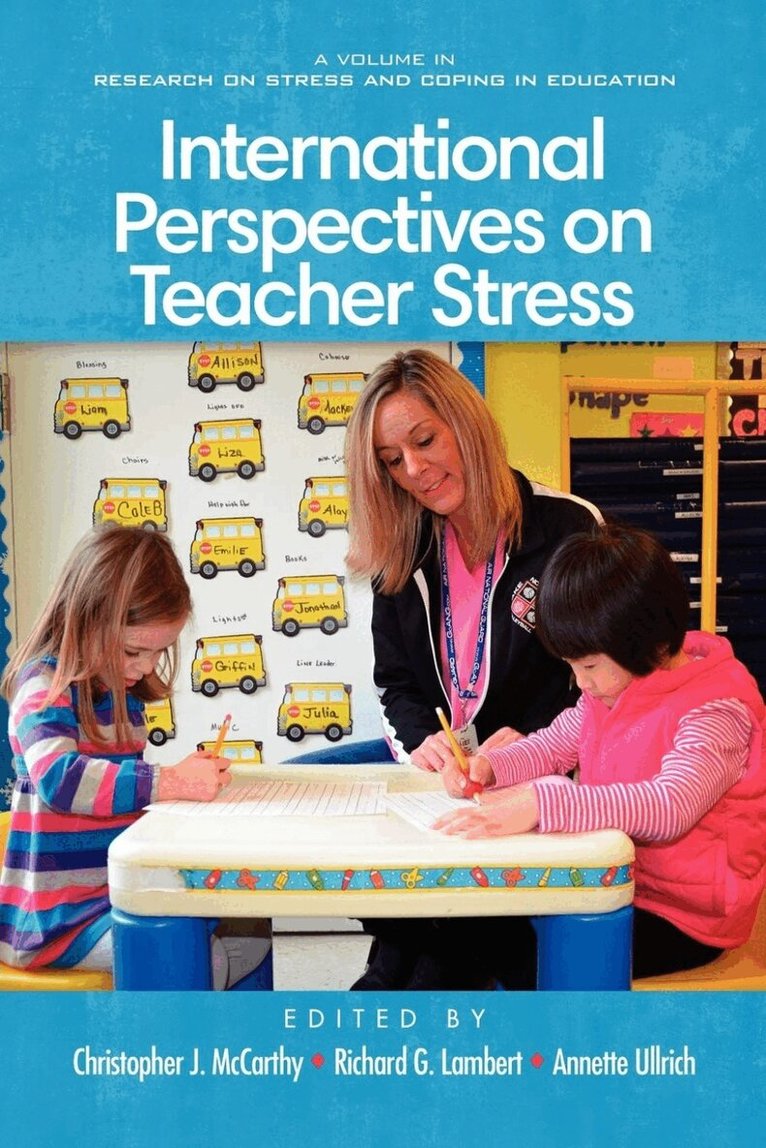
This book is the latest volume in the Research on Stress and Coping in Education series. The authors present original research and current theory regarding the realities of coping with the stresses of teaching. The chapters highlight working conditions for teachers around the globe and the processes and strategies that teachers use to survive and thrive in their daily work with students, families, and educational administrators. Both stress researchers and educational policy makers will find the chapters offer insights into sources of stress for teachers, strategies for stress prevention and coping, and the negative consequences that stress can have on teacher retention. Researchers from Norway, Turkey, Greece, the United States, the Netherlands, Germany, Russia, Italy, and China illustrate through a variety of research methods both the centrality of cultural context and the commonalities of teacher experiences around the world.
1 093 kr
Skickas inom 7-10 vardagar
This book is the latest volume in the Research on Stress and Coping in Education series. The authors present original research and current theory regarding the realities of coping with the stresses of teaching. The chapters highlight working conditions for teachers around the globe and the processes and strategies that teachers use to survive and thrive in their daily work with students, families, and educational administrators. Both stress researchers and educational policy makers will find the chapters offer insights into sources of stress for teachers, strategies for stress prevention and coping, and the negative consequences that stress can have on teacher retention. Researchers from Norway, Turkey, Greece, the United States, the Netherlands, Germany, Russia, Italy, and China illustrate through a variety of research methods both the centrality of cultural context and the commonalities of teacher experiences around the world.
582 kr
Skickas inom 7-10 vardagar
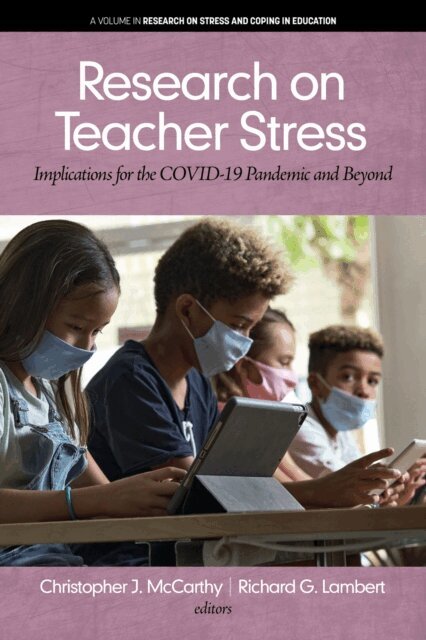
This volume informs our understanding of how educational settings can respond to the challenges of the COVID-19 pandemic and beyond. Teaching has always been a challenging profession but the pandemic has added unprecedented levels of demands. Much of what we know about stress and trauma in education predates the COVID-19 pandemic.As the pandemic recedes, it seems likely that recruiting and retaining teachers, always a challenge, will become even more difficult. This could not be worse for students, who face steep losses in their academic and socio-emotional progress after more than two years of pandemic-impacted schooling. The silver lining is that scholars who study the occupational health have spent the past several years studying the effect of the pandemic on teachers, which led us to edit this volume to collected what is known and have these experts explain how we can better support teachers in the future.This book documents the many impacts of the pandemic on the teaching profession, but also leverages research to chart a path forward. Part I examines the contours of stress, with a particular emphasis on COVID-19 impacts. These contributions range from parents’ achievement worries to compassion fatigue, and, more optimistically, how teachers cope. Part II examines pandemic impacts on pre-school teachers, in both the U.S. and in Australia. Given the social distancing in place during the pandemic, pre-school students and their teachers were under unique demands, as there is no substitute for the personal connection critical at that age. It is likely that students entering elementary school in the next few years will have work to do in their social skills. Part III focuses on mentoring and stress during the pandemic. Mentoring is an important part of teacher’s professional development, but the pandemic scrambled traditional forms of mentoring as all teachers were thrown into unfamiliar online technology. The final section of this book, Part IV, includes links between teacher stress and trauma during the pandemic. Clearly, with the ongoing nature of the pandemic, it is easy to see how trauma is likely to manifest in years to come.Readers of this book will better understand teacher demands, as well as the resources teachers will need going forward. Teachers made heroic efforts during the pandemic to help their students both academically and personally. We owe to them to learn from research during the pandemic that points to the way to a healthier occupational future.
1 029 kr
Skickas inom 7-10 vardagar
This volume informs our understanding of how educational settings can respond to the challenges of the COVID-19 pandemic and beyond. Teaching has always been a challenging profession but the pandemic has added unprecedented levels of demands. Much of what we know about stress and trauma in education predates the COVID-19 pandemic.As the pandemic recedes, it seems likely that recruiting and retaining teachers, always a challenge, will become even more difficult. This could not be worse for students, who face steep losses in their academic and socio-emotional progress after more than two years of pandemic-impacted schooling. The silver lining is that scholars who study the occupational health have spent the past several years studying the effect of the pandemic on teachers, which led us to edit this volume to collected what is known and have these experts explain how we can better support teachers in the future.This book documents the many impacts of the pandemic on the teaching profession, but also leverages research to chart a path forward. Part I examines the contours of stress, with a particular emphasis on COVID-19 impacts. These contributions range from parents’ achievement worries to compassion fatigue, and, more optimistically, how teachers cope. Part II examines pandemic impacts on pre-school teachers, in both the U.S. and in Australia. Given the social distancing in place during the pandemic, pre-school students and their teachers were under unique demands, as there is no substitute for the personal connection critical at that age. It is likely that students entering elementary school in the next few years will have work to do in their social skills. Part III focuses on mentoring and stress during the pandemic. Mentoring is an important part of teacher’s professional development, but the pandemic scrambled traditional forms of mentoring as all teachers were thrown into unfamiliar online technology. The final section of this book, Part IV, includes links between teacher stress and trauma during the pandemic. Clearly, with the ongoing nature of the pandemic, it is easy to see how trauma is likely to manifest in years to come.Readers of this book will better understand teacher demands, as well as the resources teachers will need going forward. Teachers made heroic efforts during the pandemic to help their students both academically and personally. We owe to them to learn from research during the pandemic that points to the way to a healthier occupational future.