Richard Griswold del Castillo - Böcker
Visar alla böcker från författaren Richard Griswold del Castillo. Handla med fri frakt och snabb leverans.
7 produkter
7 produkter
1 138 kr
Skickas inom 10-15 vardagar
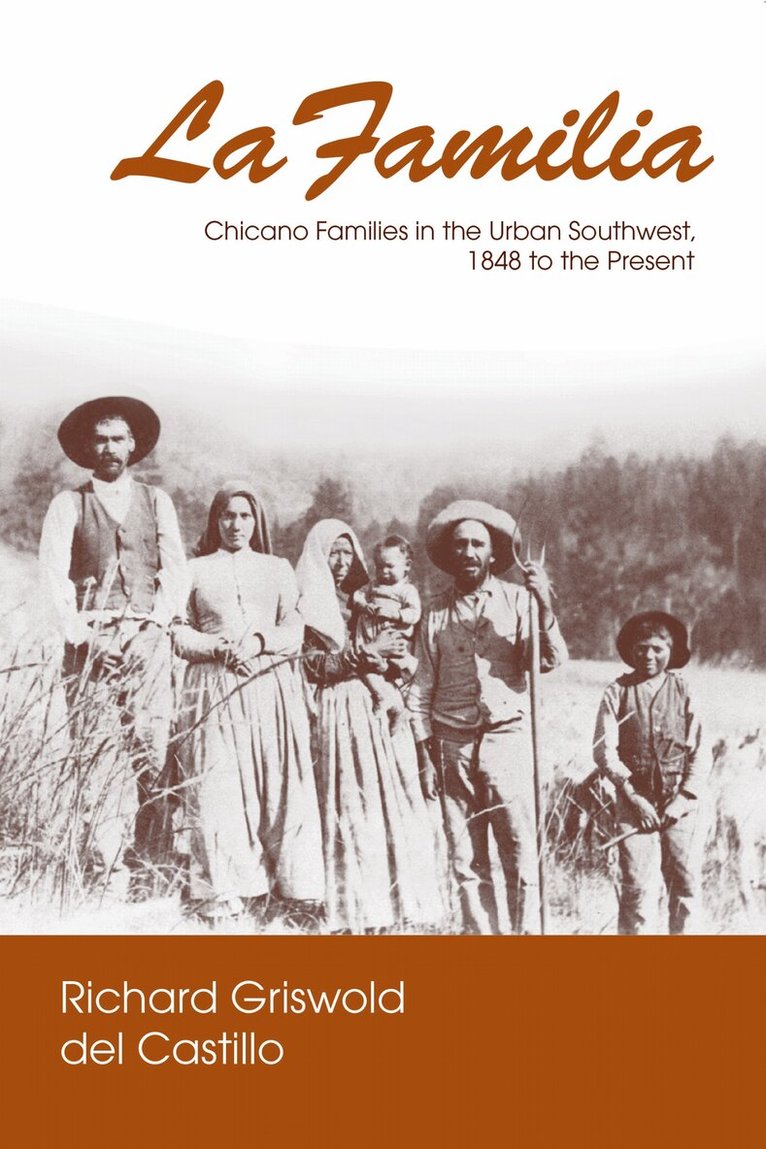
In detailed historical analyses of Mexican immigration, economic class struggle, intermarriage, urbanization and industrialization, regional differences, and discrimination and prejudice, La Familia demonstrates how such social and economic factors have contributed to the contemporary diversity of the Mexican-American family. By comparing their family experience with those of European immigrants, he discloses important dimensions of Mexican-American ethnicity.
300 kr
Skickas inom 10-15 vardagar
In detailed historical analyses of Mexican immigration, economic class struggle, intermarriage, urbanization and industrialization, regional differences, and discrimination and prejudice, La Familia demonstrates how such social and economic factors have contributed to the contemporary diversity of the Mexican-American family. By comparing their family experience with those of European immigrants, he discloses important dimensions of Mexican-American ethnicity.
268 kr
Skickas inom 10-15 vardagar
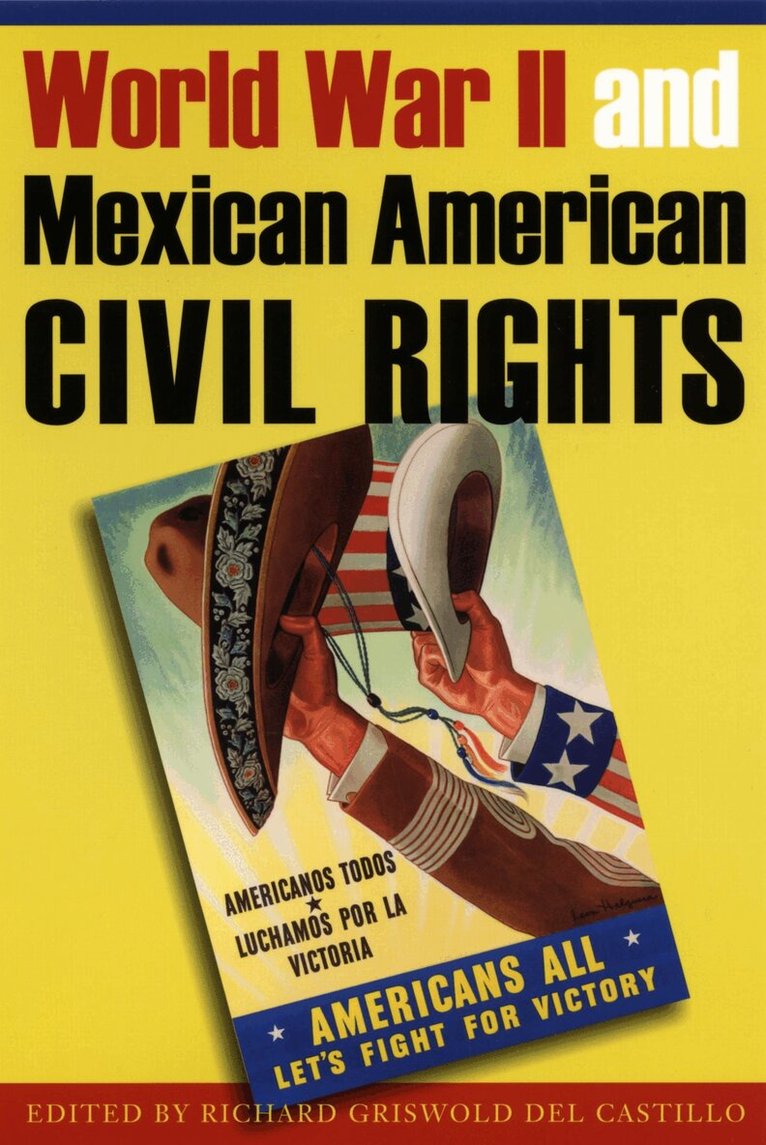
World War II marked a turning point for Mexican Americans that fundamentally changed their expectations about how they should be treated by the greater U.S. society. The experiences of fighting alongside white Americans in the military, as well as of working in factory jobs for wages equal to those of Anglo workers, made Mexican Americans less willing to tolerate the second-class citizenship that had been their lot before the war. Having proven their loyalty and "Americanness" during World War II, Mexican Americans in the postwar years wanted to have the civil rights they knew they had earned. In this book, Richard Griswold del Castillo and Richard Steele investigate how the World War II experiences of Mexican Americans galvanized their struggle for civil rights and how the U.S. government responded to the needs and aspirations of Mexican Americans. The authors demonstrate, for example, that the U.S. government "discovered" Mexican Americans during World War II and set about addressing some of their problems as a way of forestalling a sense of grievance and disaffection that might have made the Mexican American community unwilling to support the war effort. The authors also show that, as much or more than governmental programs, the personal wartime experiences of Mexican Americans formed their civil rights consciousness. The book concludes with a selection of key essays and historical documents from the World War II period that collectively gives a first-person understanding of the civil rights struggles of Mexican Americans.
564 kr
Skickas inom 3-6 vardagar
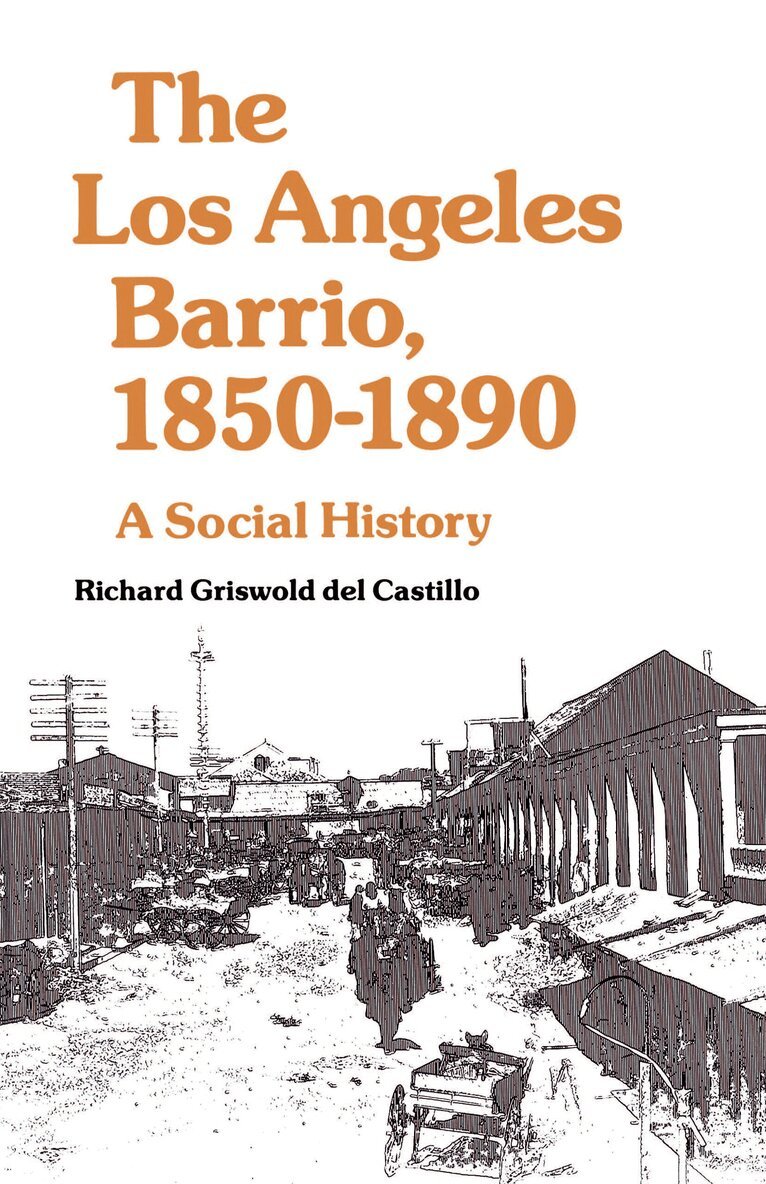
"An imponant book ...[which] provides the first detailed analysis of the changes that transformed one of the most important Mexican pueblos in the Southwest into a Chicano urban barrio. Using quantitative data together with traditional secondary and primary historical sources, the author traces the major socio-economic, political, and racial factors that evolved during the post-Mexican War decades and that created a subordinate status for Mexican Americans in a burgeoning American city." (Western Historical Quarterly). "Griswold del Castillo's history of the Mexican community during the first decades of the 'American era' ...concentrates on the mechanisms which the community adopted as it was confronted by changes in the economic structure of the region, the in-migration of Anglo-Americans as well as Mexicans, and by the effects of racial segregation on the community. [The] aim is to reveal the history of a community undergoing rapid social and economic change, not to write the history of one society's domination of another." (UCLA Historical Journal)."Los Angeles Chicanos emerge not as the homogeneous, passive victims of stereotypical fame, but as internally diverse, active participants in the simultaneous struggles to maintain their socio-cultural fabric and to capture a part of the American Dream. The author effectively demonstrates that the Chicano decline occurred not because of cultural weaknesses but as the almost inevitable resu lt of Anglo prejudice, numerical domination, and control of political and economic institutions...an admirable book and a fine piece of scholarship." (American Historical Review).
240 kr
Skickas inom 10-15 vardagar
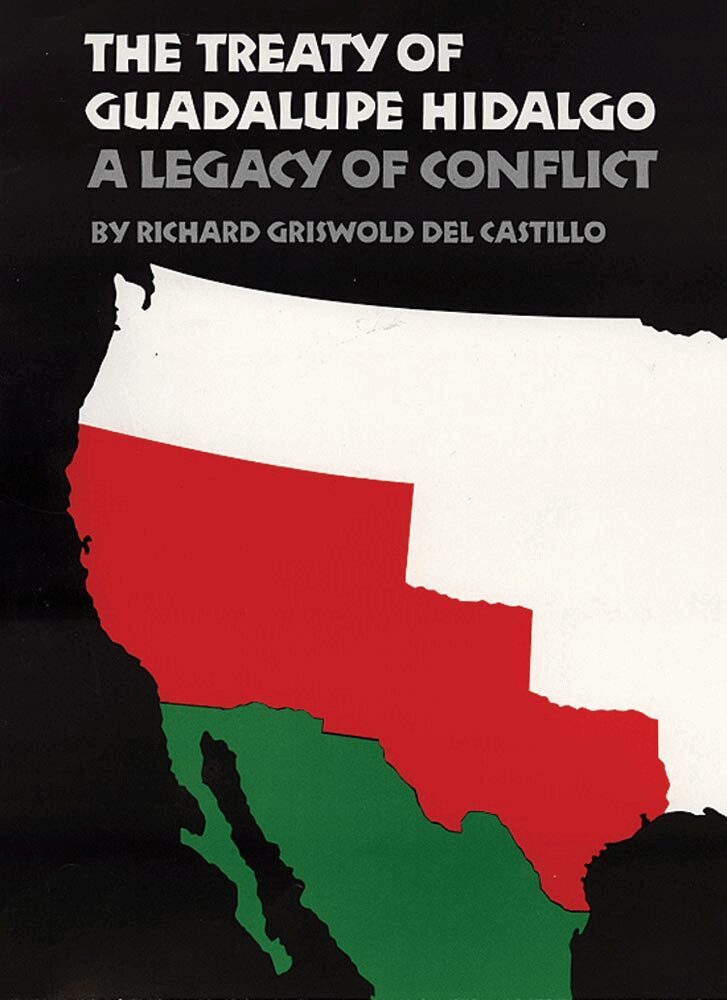
Signed in 1848, the Treaty of Guadalupe Hidalgo ended the war between the United States and Mexico and gave a large portion of Mexico's northern territories to the United States. The language of the treaty was designed to deal fairly with the people who became residents of the United States by default. However, as Richard Griswold del Castillo points out, articles calling for equality and protection of civil and property rights were either ignored or interpreted to favor those involved in the westward expansion of the United States rather than the Mexicans and Indians living in the conquered territories.
247 kr
Skickas inom 10-15 vardagar
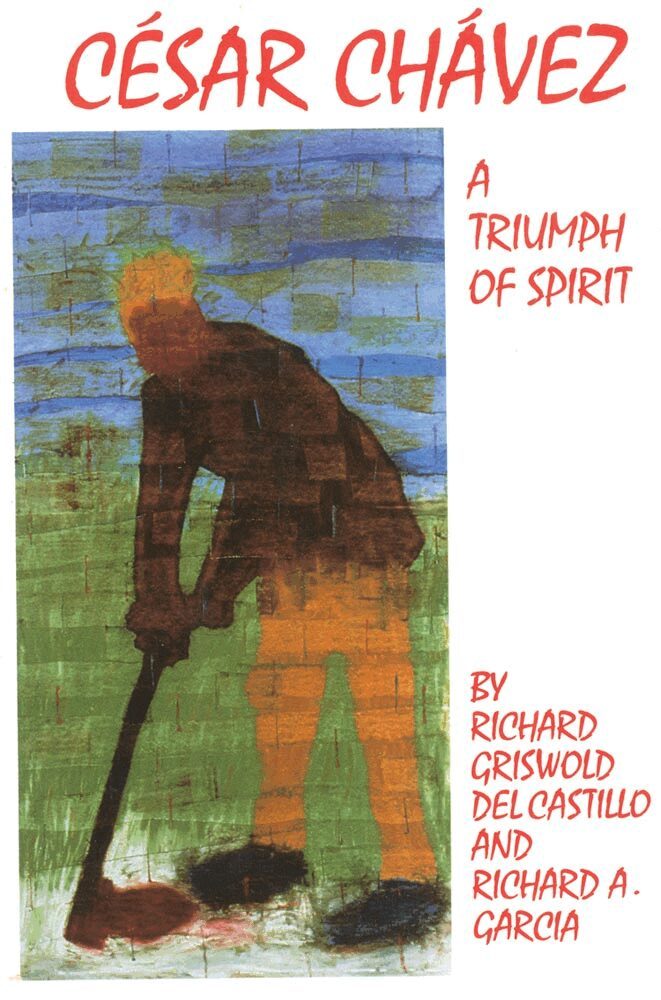
When farm worker and labor organizer César Chávez burst upon America's national scene in 1965, U.S. readers and viewers were witnessing the emergence of a new Mexican American, or Chicano, movement. This biography of Chávez by Richard Griswold del Castillo and Richard A. Garcia is the first to approach Chávez's life-his courageous acts, his turning points, his many perceived personas-in the context of Chicano and American history. It reveals a shy, quiet man who was launched by events into a maelstrom of campesino strikes, religious fervor, and nonviolent battles for justice. Among his friends and supporters he counted Martin Luther King Jr., Robert Kennedy, Jimmy Carter, and millions across America who rallied to his cause.In Griswold del Castillo and Garcia's biography, Chávez's life mirrors major events in Mexican American history: Mexican immigration during the 1920s; forced repatriation in the 1930s; segregation in public schools; Mexican American contributions during World War II; the Zoot Suit Riots in Los Angeles; formation of Mexican American organizations to advance civil and political rights; the Chicano movement of the 1960s and early 1970s; the emergence of a conservative political backlash in the 1980s; and, finally, the ""new immigration"" in the 1990s. César Chávez was touched by all these events, and his story is both private and part of a collective experience.Ultimately the authors see Chávez's significance as moral. In an age notable for its confusion about-if not lack of moral values, César Chávez stands as proof that America still has people of rare courage and conviction who devote their lives to a righteous cause, to self sacrifice and nonviolent struggle against overwhelming odds. Chávez consistently respected all ethnic and religious groups, rejected materialism, and, above all, fought for justice. Griswold del Castillo and Garcia's biography tells the inspiring story of a man who lived a simple life and preached a simple guiding dictum: Si Se Puede-Yes, it can be done.
397 kr
Skickas inom 7-10 vardagar
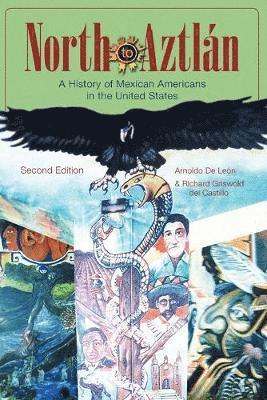
Contemporary observers often quip that the American Southwest has become “Mexicanized,” but this view ignores the history of the region as well as the social reality. Mexican people and their culture have been continuously present in the territory for the past four hundred years, and Mexican Americans were actors in United States history long before the national media began to focus on them—even long before an international border existed between the United States and Mexico.North to Aztlán, an inclusive, readable, and affordable survey history, explores the Indian roots, culture, society, lifestyles, politics, and art of Mexican Americans and the contributions of the people to and their influence on American history and the mainstream culture.Though cognizant of changing interpretations that divide scholars, Drs. De León and Griswold del Castillo provide a holistic vision of the development of Mexican American society, one that attributes great importance to immigration (before and after 1900) and the ongoing influence of new arrivals on the evolving identity of Mexican Americans. Also showcased is the role of gender in shaping the cultural and political history of La Raza, as exemplified by the stories of outstanding Mexicana and Chicana leaders as well as those of largely unsung female heros, among them ranch and business owners and managers, labor leaders, community activists, and artists and writers. In short, readers will come away from this extensively revised and completely up-to-date second edition with a new understanding of the lives of a people who currently compose the largest minority in the nation.Completely revised, re-edited, and redesigned, featuring a great many new photographs and maps, North to Aztlán is certain to take its rightful place as the best college-level survey text of Americans of Mexican descent on the market today.