Richard H. McAdams – författare
Visar alla böcker från författaren Richard H. McAdams. Handla med fri frakt och snabb leverans.
4 produkter
4 produkter
1 193 kr
Skickas inom 5-8 vardagar
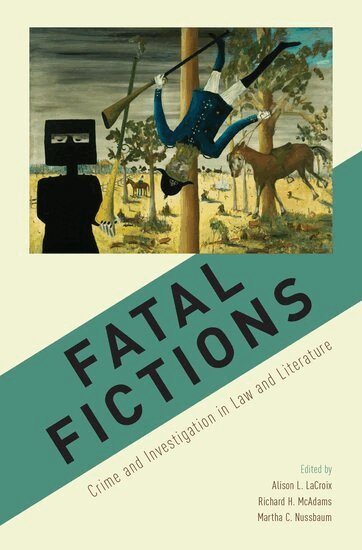
Writers of fiction have always confronted topics of crime and punishment. This age-old fascination with crime on the part of both authors and readers is not surprising, given that criminal justice touches on so many political and psychological themes essential to literature, and comes equipped with a trial process that contains its own dramatic structure. This volume explores this profound and enduring literary engagement with crime, investigation, and criminal justice. The collected essays explore three themes that connect the world of law with that of fiction. First, defining and punishing crime is one of the fundamental purposes of government, along with the protection of victims by the prevention of crime. And yet criminal punishment remains one of the most abused and terrifying forms of political power. Second, crime is intensely psychological and therefore an important subject by which a writer can develop and explore character. A third connection between criminal justice and fiction involves the inherently dramatic nature of the legal system itself, particularly the trial. Moreover, the ongoing public conversation about crime and punishment suggests that the time is ripe for collaboration between law and literature in this troubled domain.The essays in this collection span a wide array of genres, including tragic drama, science fiction, lyric poetry, autobiography, and mystery novels. The works discussed include works as old as fifth-century BCE Greek tragedy and as recent as contemporary novels, memoirs, and mystery novels. The cumulative result is arresting: there are "killer wives" and crimes against trees; a government bureaucrat who sends political adversaries to their death for treason before falling to the same fate himself; a convicted murderer who doesn't die when hanged; a psychopathogical collector whose quite sane kidnapping victim nevertheless also collects; Justice Thomas' reading and misreading of Bigger Thomas; a man who forgives his son's murderer and one who cannot forgive his wife's non-existent adultery; fictional detectives who draw on historical analysis to solve murders. These essays begin a conversation, and they illustrate the great depth and power of crime in literature.
963 kr
Kommande
Connubial Fictions explores law and marriage in the United States, seen through the lens of American literature of the twentieth and twenty-first centuries. In this edited volume, scholars of law and the humanities combine legal scholarship with literary analysis to explore how American literature has portrayed marriage's complex legal dimensions over time. They cover diverse fictional works including Frances Harper's Iola Leroy, Marilynne Robinson's Gilead novels, Tony Kushner's Angels in America, and works by Edward Albee, Philip Roth, Octavia Butler, Maggie Nelson, and Jhumpa Lahiri.Through these works, contributors examine a wide range of legal and literary themes: the true ownership of a marriage, how investments involved in a marriage compare to investments in a business, how the denial of marriage rights affected same-sex couples, how marriage rights changed queer aesthetics, the prospects for truth in marriage, the constraints and possibilities for immigrant marriages, how procreation norms affect childless marriages, the challenges of interracial intimacy and marriage, the paucity of modern literature depicting interracial marriages, the nature of separations before no-fault divorce, the divorce revolution and the best interests of children of divorce, and the problem of equality and alimony.Convention and law have often shielded the intimate aspect of marriage from public view. This volume shows how literature has pulled back the curtain and shown us the various lived experiences of marriage, of all kinds.
242 kr
Skickas inom 5-8 vardagar
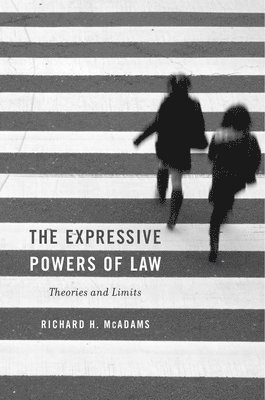
When asked why people obey the law, legal scholars usually give two answers. Law deters illicit activities by specifying sanctions, and it possesses legitimate authority in the eyes of society. Richard McAdams shifts the prism on this familiar question to offer another compelling explanation of how the law creates compliance: through its expressive power to coordinate our behavior and inform our beliefs.“McAdams’s account is useful, powerful, and—a rarity in legal theory—concrete…McAdams’s treatment reveals important insights into how rational agents reason and interact both with one another and with the law. The Expressive Powers of Law is a valuable contribution to our understanding of these interactions.”—Harvard Law Review“McAdams’s analysis widening the perspective of our understanding of why people comply with the law should be welcomed by those interested either in the nature of law, the function of law, or both…McAdams shows how law sometimes works by a power of suggestion. His varied examples are fascinating for their capacity both to demonstrate and to show the limits of law’s expressive power.”—Patrick McKinley Brennan, Review of Metaphysics
6 411 kr
Skickas inom 5-8 vardagar
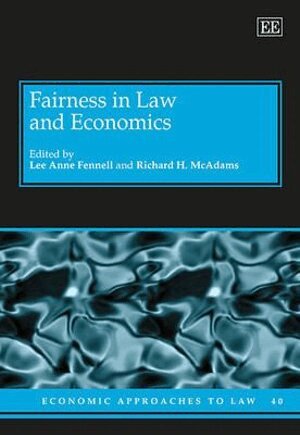
Although the relationship between fairness and the economic concept of efficiency is usually cast as an adversarial one, this collection demonstrates the robust and diverse ways in which economics engages - and cannot avoid engaging - with fairness. This title contains papers presenting positive analyses of fairness preferences and beliefs, which are fundamental means through which fairness matters for economic models and then turns to normative analysis and the broad question of how law should reconcile fairness and efficiency considerations. It presents a sampling of legal and policy applications in which both fairness and efficiency considerations prove important.