Richard Handler - Böcker
Visar alla böcker från författaren Richard Handler. Handla med fri frakt och snabb leverans.
10 produkter
10 produkter
American Stamp
Postal Iconography, Democratic Citizenship, and Consumerism in the United States
Inbunden, Engelska, 2023
419 kr
Skickas inom 7-10 vardagar
More than three thousand different images appeared on United States postage stamps from the middle of the nineteenth century to the end of the twentieth. Limited at first to the depiction of a small cast of characters and patriotic images, postal iconography gradually expanded as the Postal Service sought to depict the country’s history in all its diversity. This vast breadth has helped make stamp collecting a widespread hobby and made stamps into consumer goods in their own right.Examining the canon of nineteenth- and twentieth-century American stamps, Laura Goldblatt and Richard Handler show how postal iconography and material culture offer a window into the contested meanings and responsibilities of U.S. citizenship. They argue that postage stamps, which are both devices to pay for a government service and purchasable items themselves, embody a crucial tension: is democracy defined by political agency or the freedom to buy? The changing images and uses of stamps reveal how governmental authorities have attempted to navigate between public service and businesslike efficiency, belonging and exclusion, citizenship and consumerism. Stamps are vehicles for state messaging, and what they depict is tied up with broader questions of what it means to be American.Goldblatt and Handler combine historical, sociological, and iconographic analysis of a vast quantity of stamps with anthropological exploration of how postal customers and stamp collectors behave. At the crossroads of several disciplines, this book casts the symbolic and material meanings of stamps in a wholly new light.
206 kr
Skickas inom 7-10 vardagar
Richard Handler’s pathbreaking study of nationalistic politics in Quebec is a striking and successful example of the new experimental type of ethnography, interdisciplinary in nature and intensively concerned with rhetoric and not only of anthropologists but also of scholars in a wide range of fields, and it is likely to stir sharp controversy.Bringing together methodologies of history, sociology, political science, and philosophy, as well as anthropology, Handler centers on the period 1976–1984, during which the independantiste Parti Québéois was in control of the provincial government and nationalistic sentiment was especially strong. Handler draws on historical and archival research, and on interviews with Quebec and Canadian government officials, as he addresses the central question: Given the similarities between the epistemologies of both anthropology and nationalist ideology, how can one write an ethnography of nationalism that does not simply reproduce—and thereby endorse—nationalistic beliefs? Handler analyzes various responses to the nationalist vision of a threatened existence. He examines cultural tourism, ideology of the Quebec government, legislations concerning historical preservation, language legislation and policies towards immigrants and “cultural minorities.” He concludes with a thoughtful meditation on the futility of nationalisms.
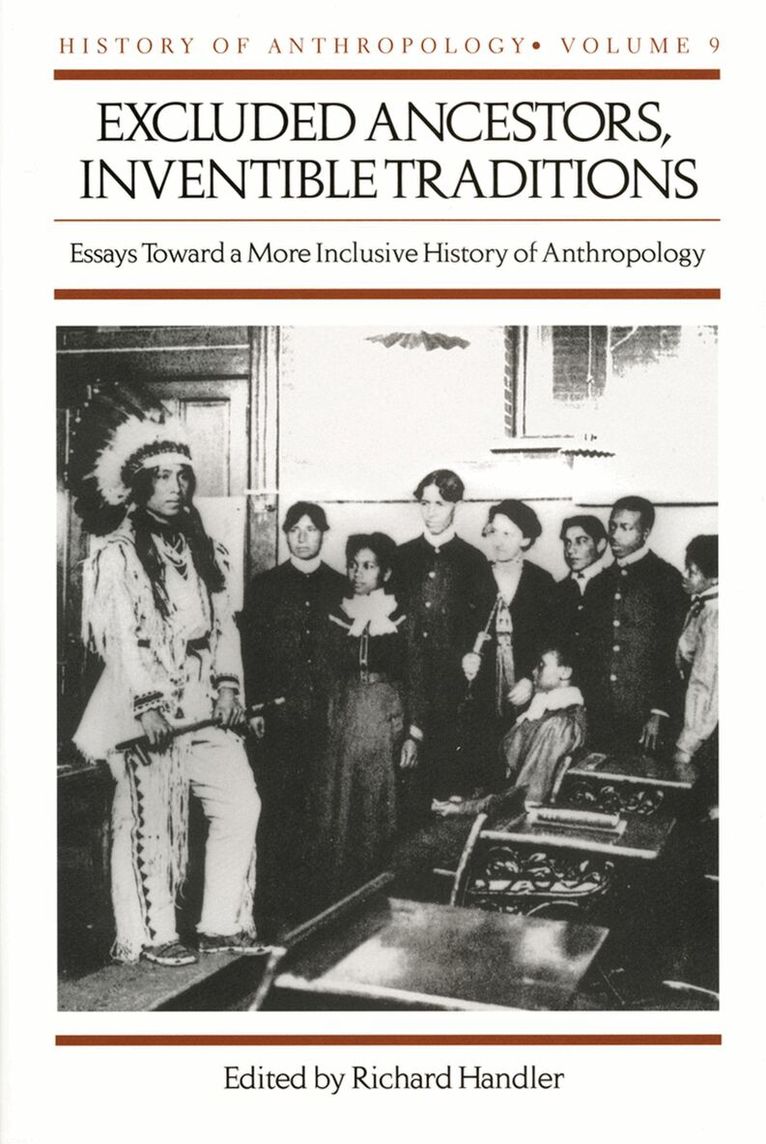
Excluded Ancestors, Inventible Traditions
Essays Toward a More Inclusive History of Anthropology
Häftad, Engelska, 2015
325 kr
Skickas inom 10-15 vardagar
Excluded Ancestors focuses on little-known scholars who contributed significantly to the anthropological work of their time, but whose work has since been marginalized due to categorical boundaries of race, class, gender, citizenship, institutional and disciplinary affiliation, and English-language proficiency.The essays in Excluded Ancestors illustrate varied processes of inclusion and exclusion in the history of anthropology, examining the careers of John William Jackson, the members of the Hampton Folk-Lore Society, Charlotte Gower Chapman, Lucie Varga, Marius Barbeau, and Sol Tax. A final essay analyzes notions of the canon and considers the place of a classic ethnographic area, highland New Guinea, in anthropological canon-formation. Contributors include Peter Pels, Lee Baker, Frances Slaney, Maria Lepowsky, George Stocking, Ronald Stade, and Douglas Dalton.
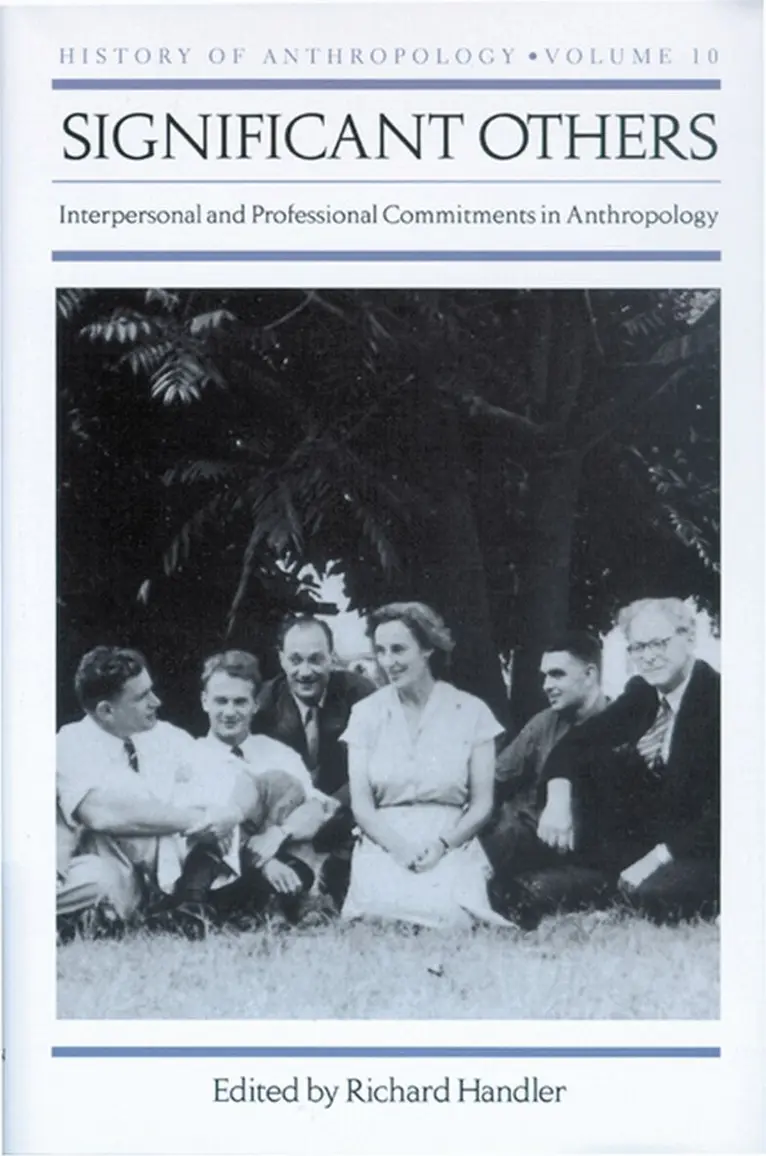
Significant Others
Interpersonal and Professional Commitments in Anthropology
Inbunden, Engelska, 2004
276 kr
Skickas inom 10-15 vardagar
Anthropology is by definition about ""others"", but in this work the phrase refers not to members of observed cultures, but to ""significant others"" - spouses, lovers, and others with whom anthropologists have deep relationships. This work looks at the roles of these spouses and partners of anthropologists, especially their work as they accompanied the anthropologists in the field. Other relationships discussed include those between anthropologists and informants, mentors and students, cohorts and partners, and parents and children. This text closes with a look at gender roles in the field of anthropology.
Central Sites, Peripheral Visions
Cultural and Institutional Crossings in the History of Anthropology
Inbunden, Engelska, 2006
276 kr
Skickas inom 10-15 vardagar
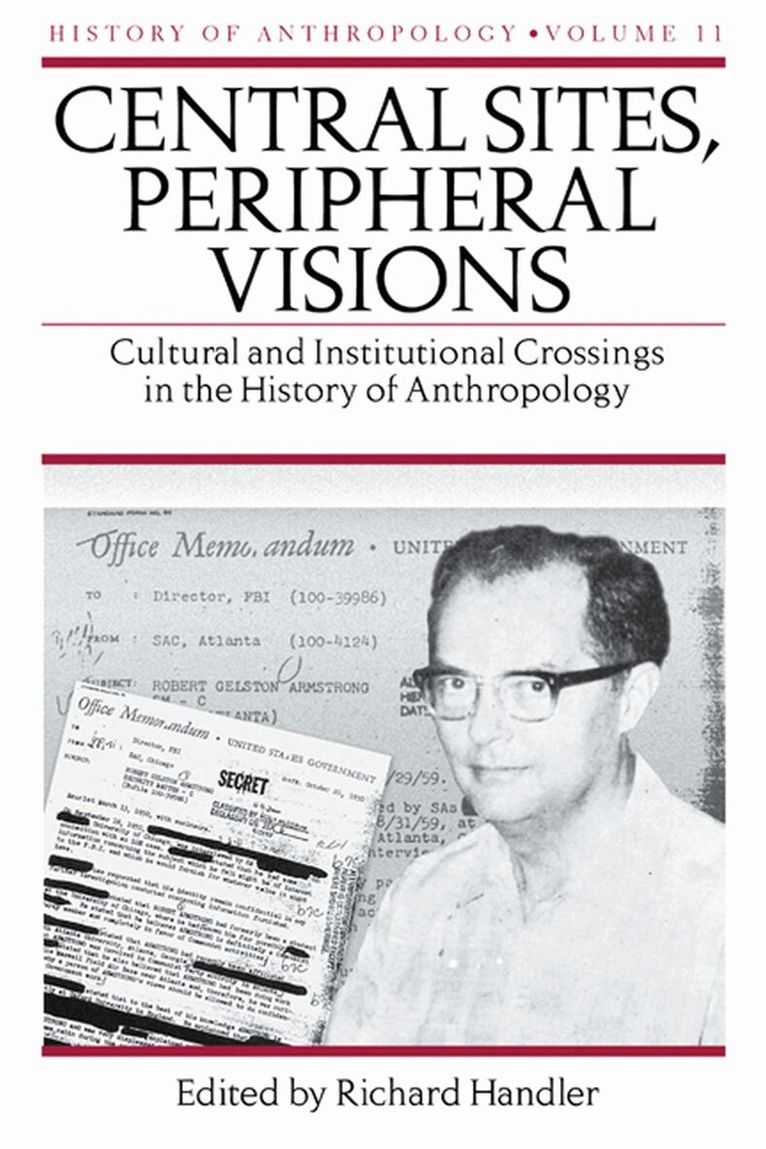
Central Sites, Peripheral Visions presents five case studies that explore the dilemmas, moral as well as political, that emerge out of anthropology's unique position as both central and peripheral. From David Koester's analysis of how ethnographic descriptions of Iceland marginalized that country's population, to Kath Weston's account of an offshore penal colony where officials mixed prison work with ethnographic pursuits, from Brad Evans' reflections on the ""bohemianism"" of both the Harlem vogue and American anthropology, to Arthur J. Ray's study of anthropologists who serve as expert witnesses in legal cases, the essays in the eleventh volume of the ""History of Anthropology"" series reflect on anthropology's always problematic status as centrally peripheral, or peripherally central. Finally, George W. Stocking, Jr., in a contribution that is almost a book in its own right, traces the professional trajectory of American anthropologist, Robert Gelston Armstrong, who was unceremoniously expelled from his position at the University of Chicago because of his communist sympathies in the 1950s. By taking up Armstrong's unfinished business decades later, Stocking engages in an extended meditation on the relationship between center and periphery and offers ""a kind of posthumous reparation,"" a page in the history of the discipline for a distant colleague who might otherwise have remained in the footnotes.
375 kr
Skickas inom 7-10 vardagar
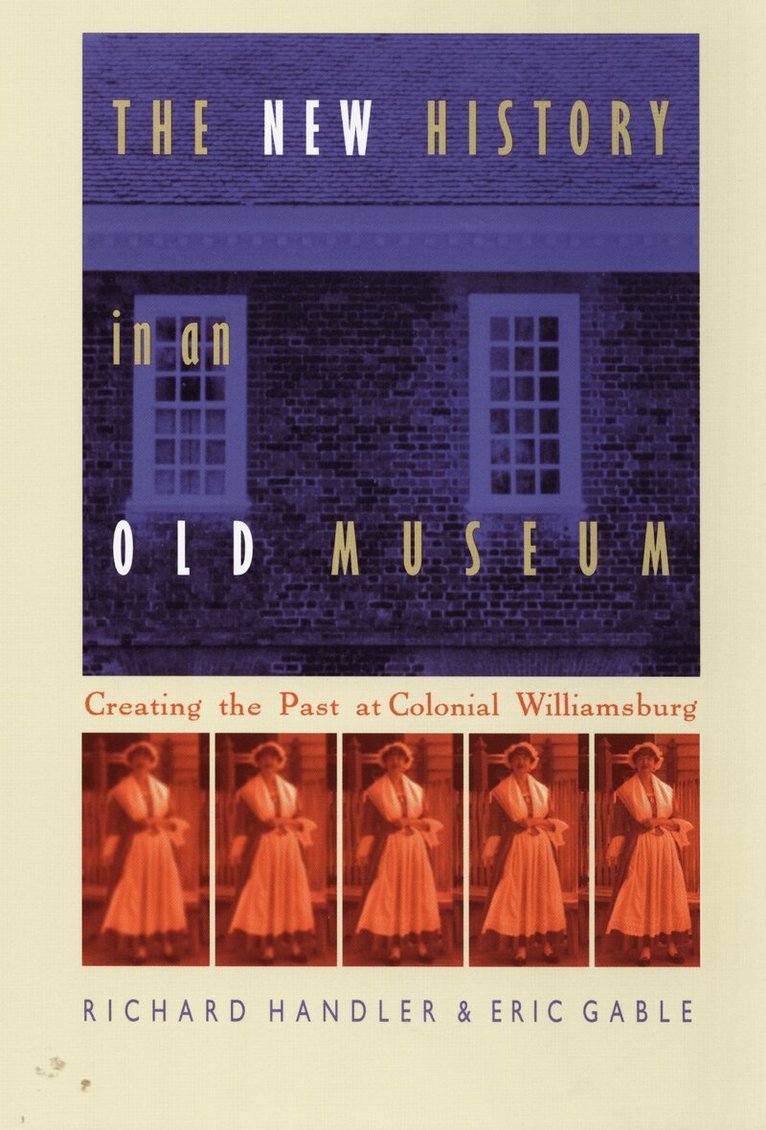
The New History in an Old Museum is an exploration of "historical truth" as presented at Colonial Williamsburg. More than a detailed history of a museum and tourist attraction, it examines the packaging of American history, and consumerism and the manufacturing of cultural beliefs. Through extensive fieldwork-including numerous site visits, interviews with employees and visitors, and archival research-Richard Handler and Eric Gable illustrate how corporate sensibility blends with pedagogical principle in Colonial Williamsburg to blur the lines between education and entertainment, patriotism and revisionism.During much of its existence, the "living museum" at Williamsburg has been considered a patriotic shrine, celebrating the upscale lifestyles of Virginia’s colonial-era elite. But in recent decades a new generation of social historians has injected a more populist and critical slant to the site’s narrative of nationhood. For example, in interactions with museum visitors, employees now relate stories about the experiences of African Americans and women, stories that several years ago did not enter into descriptions of life in Colonial Williamsburg. Handler and Gable focus on the way this public history is managed, as historians and administrators define historiographical policy and middle-level managers train and direct front-line staff to deliver this "product" to the public. They explore how visitors consume or modify what they hear and see, and reveal how interpreters and craftspeople resist or acquiesce in being managed. By deploying the voices of these various actors in a richly textured narrative, The New History in an Old Museum highlights the elements of cultural consensus that emerge from this cacophony of conflict and negotiation.
Jane Austen and the Fiction of Culture
An Essay on the Narration of Social Realities
Häftad, Engelska, 1999
556 kr
Skickas inom 7-10 vardagar
With a new introduction by the authors, this paperback edition of Jane Austen and the Fiction of Culture takes the complete body of work of a major novelist as the basis for rethinking ethnographic representation and cross-cultural analysis.Authors Handler and Segal have approached Jane Austen's writing as a source for interpreting the cultural ideology of kinship, social rank, courtship, and marriage in Austen's England. Arguing against the conventional reading of Austen as portrayer and upholder of a well-ordered society, they evaluate the rhetorical techniques that make Austen an effective ethnographer of diverse, though intertwined social realities. They show that Austen undercuts any and all claims to "truth universally acknowledged"—that is, to objective, positive knowledge of human affairs.Jane Austen and the Fiction of Culture invites the reader to confront an ethnography of another time and place whose insights have a direct bearing on contemporary concerns in the humanities and human sciences.
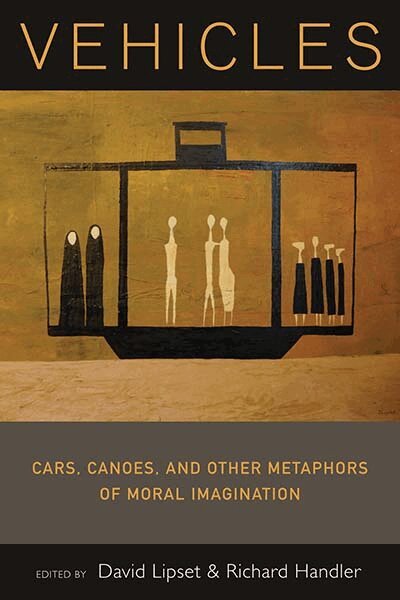
1 956 kr
Skickas inom 3-6 vardagar
Metaphor, as an act of human fancy, combines ideas in improbable ways to sharpen meanings of life and experience. Theoretically, this arises from an association between a sign—for example, a cattle car—and its referent, the Holocaust. These “sign-vehicles” serve as modes of semiotic transportation through conceptual space. Likewise, on-the-ground vehicles can be rich metaphors for the moral imagination. Following on this insight, Vehicles presents a collection of ethnographic essays on the metaphoric significance of vehicles in different cultures. Analyses include canoes in Papua New Guinea, pedestrians and airplanes in North America, lowriders among Mexican-Americans, and cars in contemporary China, Japan, and Eastern Europe, as well as among African-Americans in the South. Vehicles not only “carry people around,” but also “carry” how they are understood in relation to the dynamics of culture, politics and history.
566 kr
Skickas inom 3-6 vardagar
Metaphor, as an act of human fancy, combines ideas in improbable ways to sharpen meanings of life and experience. Theoretically, this arises from an association between a sign-for example, a cattle car-and its referent, the Holocaust. These "sign-vehicles" serve as modes of semiotic transportation through conceptual space. Likewise, on-the-ground vehicles can be rich metaphors for the moral imagination. Following on this insight, Vehicles presents a collection of ethnographic essays on the metaphoric significance of vehicles in different cultures. Analyses include canoes in Papua New Guinea, pedestrians and airplanes in North America, lowriders among Mexican-Americans, and cars in contemporary China, Japan, and Eastern Europe, as well as among African-Americans in the South. Vehicles not only "carry people around," but also "carry" how they are understood in relation to the dynamics of culture, politics and history.
5 171 kr
Skickas inom 7-10 vardagar
No detailed description available for "Culture".