Richard M Jaffe – författare
Visar alla böcker från författaren Richard M Jaffe. Handla med fri frakt och snabb leverans.
7 produkter
Seeking Sakyamuni
South Asia in the Formation of Modern Japanese Buddhism
Inbunden, 2019
1076 kr
Lägg i varukorg
Though fascinated with the land of their tradition's birth, virtually no Japanese Buddhists visited the Indian subcontinent before the nineteenth century. In the richly illustrated Seeking Sakyamuni, Richard M. Jaffe reveals the experiences of the first Japanese Buddhists who traveled to South Asia …
Seeking Sakyamuni
South Asia in the Formation of Modern Japanese Buddhism
Häftad, 2019
349 kr
Lägg i varukorg
Though fascinated with the land of their tradition's birth, virtually no Japanese Buddhists visited the Indian subcontinent before the nineteenth century. In the richly illustrated Seeking Sakyamuni, Richard M. Jaffe reveals the experiences of the first Japanese Buddhists who traveled to South Asia …
Seeking Sakyamuni
South Asia in the Formation of Modern Japanese Buddhism
E-bok, 2019
677 kr
Lägg i varukorg
Though fascinated with the land of their tradition’s birth, virtually no Japanese Buddhists visited the Indian subcontinent before the nineteenth century. In the richly illustrated Seeking Śākyamuni , Richard M. Jaffe reveals the experiences of the first Japanese Buddhists who traveled to South …
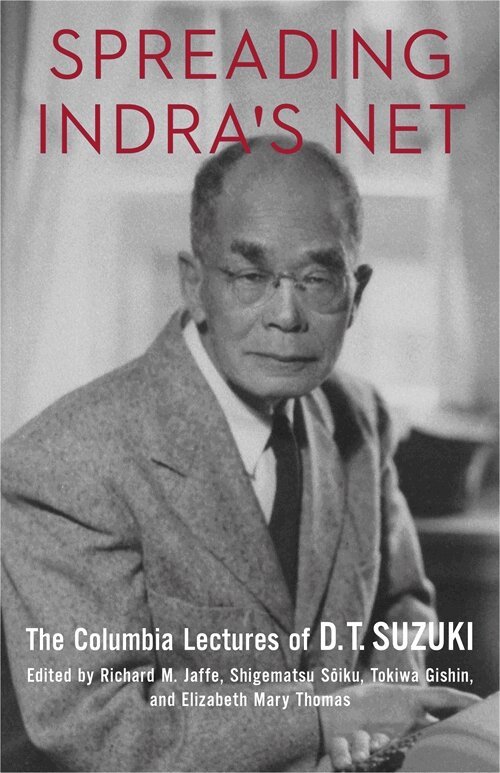
Spreading Indra's Net
The Columbia Lectures of D. T. Suzuki
Av D. T. Suzuki, Richard M. Jaffe m. fl.
Inbunden, 2025
306 kr
Lägg i varukorg
D. T. Suzuki’s 1950s lectures at Columbia University were foundational for the postwar Zen boom. Speaking softly in a bookcase-lined room, Suzuki, then in his eighties, introduced East Asian Buddhism to a rapt audience of the general public, scholars, and students. He offered a distinctive …
Selected Works of D.T. Suzuki, Volume I
Zen
Av Daisetsu Teitaro Suzuki, Richard M. Jaffe
Inbunden, 2014
728 kr
Lägg i varukorg
Daisetsu Teitaro Suzuki was a key figure in the introduction of Buddhism to the non-Asian world. Many outside of Japan encountered Buddhism for the first time through his writings and teaching, and for nearly a century his work and legacy have contributed to the ongoing religious and cultural …
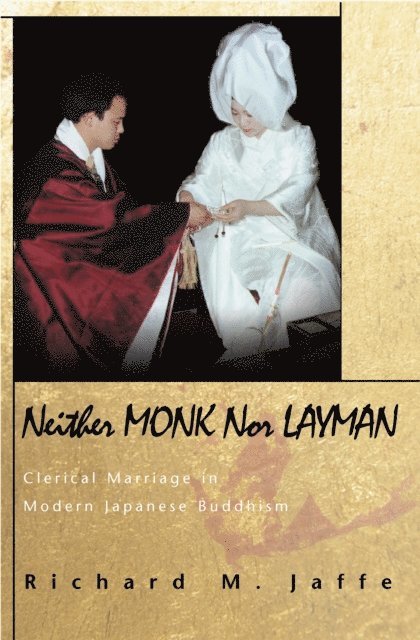
Neither Monk nor Layman
Clerical Marriage in Modern Japanese Buddhism
E-bok, 2021
1312 kr
Lägg i varukorg
Buddhism comes in many forms, but in Japan it stands apart from all the rest in one most striking way--the monks get married. In Neither Monk nor Layman , the most comprehensive study of this topic in any language, Richard Jaffe addresses the emergence of an openly married clergy as a momentous …
Neither Monk nor Layman
Clerical Marriage in Modern Japanese Buddhism
Häftad, 2010
272 kr
Tillfälligt slut