Richard Maxwell Brown – författare
Visar alla böcker från författaren Richard Maxwell Brown. Handla med fri frakt och snabb leverans.
8 produkter
8 produkter
E-bok
Engelska, 1992299 kr
Läs direkt efter köp
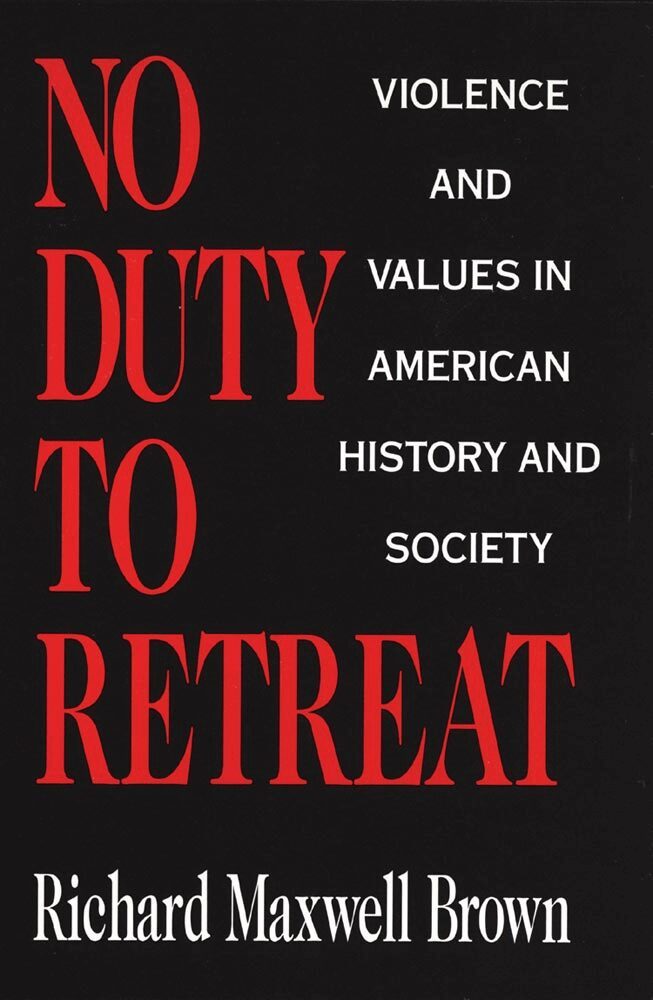
In 1865, Wild Bill Hickok killed Dave Tutt in a Missouri public square in the West''s first notable "walkdown." One hundred and twenty-nine years later, Bernhard Goetz shot four threatening young men in a New York subway car. Apart from gunfire, what could the two events possibly have in common? Goetz, writes Richard Maxwell Brown, was acquitted of wrongdoing in the spirit of a uniquely American view of self-defense, a view forged in frontier gunfights like Hickok''s. When faced with a deadly threat, we have the right to stand our ground and fight. We have no duty to retreat. No Duty to Retreat offers an engrossing account of how this idea of self-defense emerged, focusing in particular on the gunfights of the frontier and their impact on our legal traditions. The right to stand one''s ground, Brown tells us, appeared relatively recently. Under English common law, the threatened party had a legal duty to retreat "to the wall" before fighting back. But from the nineteenth century on, such authorities as Justice Oliver Wendell Holmes rejected this doctrine as unsuited to both the American mind and the age of firearms. Brown sketches the influence of frontier violence, demonstrating the tremendous impact of the famous gunmen and the prevalence of what he calls "grassroots gunfighters"--unsung men who resorted to their guns at a moment''s notice. These duels, ambushes, and firefights, he writes, were more than personal vendettas: They were part of a "Western Civil War of Incorporation," pitting gunmen--usually Republicans and Unionists, who sided with the expanding banks, railroads, and businesses--against cowboys and independent farmers, who were often Democrats sympathizing with the Confederacy. Brown examines the gunfight near the O.K. Corral in this light, showing how it was a climax of tensions between Tombstone''s Republican businessmen (represented by Wyatt Earp) and the county''s cowboys (led by the Clantons and McLaurys). He also looks at such lesser-known battles as the Mussel Slough war, in which resisting farmers, imbued with the no-retreat ethic, fought for their independent lifestyle against encroaching rail barons. This Civil War of Incorporation fed the violence of the West and reinforced the legal doctrine of "no duty to retreat." The frontier days are long past, but Brown shows how the ethic of no retreat continues to shape everything from our entertainment to our foreign policy (including President Bush''s "line drawn in the sand") to our politics to cases like that of Bernhard Goetz. Though challenged as never before by the values of peace and social activism, it remains a central theme in American thought and character.
Inbunden, Engelska, 1975
1 713 kr
Skickas inom 5-8 vardagar
Inbunden, Engelska, 1992
412 kr
Skickas inom 5-8 vardagar
No Duty to Retreat takes as its starting-point the increased popularity in American society of the old English common-law concept that a person under physical attack has the right to stand his ground, defend himself, and even kill his assailant in self-defence in certain circumstances. This doctrine came to public awareness recently when Berhard Goetz took the law into his own hands when assaulted by four youths in a New York City subway train. There is a chapter on the American as gunfighter, another on a famous vigilante case in California in the 1870s, when farmers retaliated against the Southern Pacific Railroad trying to move them off their lands , and a long chapter discussing `crime, law, and society in America since 1930', in which Brown shows that the crime surge since the 1950s has occurred with the emergence of the Post-Industrial Society, which has left many people alienated and looking for quick solutions.
E-bok
PDF, Engelska, 19751 415 kr
Läs direkt efter köp
E-bok
PDF, Engelska, 1992336 kr
Läs direkt efter köp
In 1865, Wild Bill Hickok killed Dave Tutt in a Missouri public square in the West''s first notable "walkdown." One hundred and twenty-nine years later, Bernhard Goetz shot four threatening young men in a New York subway car. Apart from gunfire, what could the two events possibly have in common? Goetz, writes Richard Maxwell Brown, was acquitted of wrongdoing in the spirit of a uniquely American view of self-defense, a view forged in frontier gunfights like Hickok''s. When faced with a deadly threat, we have the right to stand our ground and fight. We have no duty to retreat. No Duty to Retreat offers an engrossing account of how this idea of self-defense emerged, focusing in particular on the gunfights of the frontier and their impact on our legal traditions. The right to stand one''s ground, Brown tells us, appeared relatively recently. Under English common law, the threatened party had a legal duty to retreat "to the wall" before fighting back. But from the nineteenth century on, such authorities as Justice Oliver Wendell Holmes rejected this doctrine as unsuited to both the American mind and the age of firearms. Brown sketches the influence of frontier violence, demonstrating the tremendous impact of the famous gunmen and the prevalence of what he calls "grassroots gunfighters"--unsung men who resorted to their guns at a moment''s notice. These duels, ambushes, and firefights, he writes, were more than personal vendettas: They were part of a "Western Civil War of Incorporation," pitting gunmen--usually Republicans and Unionists, who sided with the expanding banks, railroads, and businesses--against cowboys and independent farmers, who were often Democrats sympathizing with the Confederacy. Brown examines the gunfight near the O.K. Corral in this light, showing how it was a climax of tensions between Tombstone''s Republican businessmen (represented by Wyatt Earp) and the county''s cowboys (led by the Clantons and McLaurys). He also looks at such lesser-known battles as the Mussel Slough war, in which resisting farmers, imbued with the no-retreat ethic, fought for their independent lifestyle against encroaching rail barons. This Civil War of Incorporation fed the violence of the West and reinforced the legal doctrine of "no duty to retreat." The frontier days are long past, but Brown shows how the ethic of no retreat continues to shape everything from our entertainment to our foreign policy (including President Bush''s "line drawn in the sand") to our politics to cases like that of Bernhard Goetz. Though challenged as never before by the values of peace and social activism, it remains a central theme in American thought and character.
Häftad, Engelska, 1992
380 kr
Skickas inom 3-6 vardagar
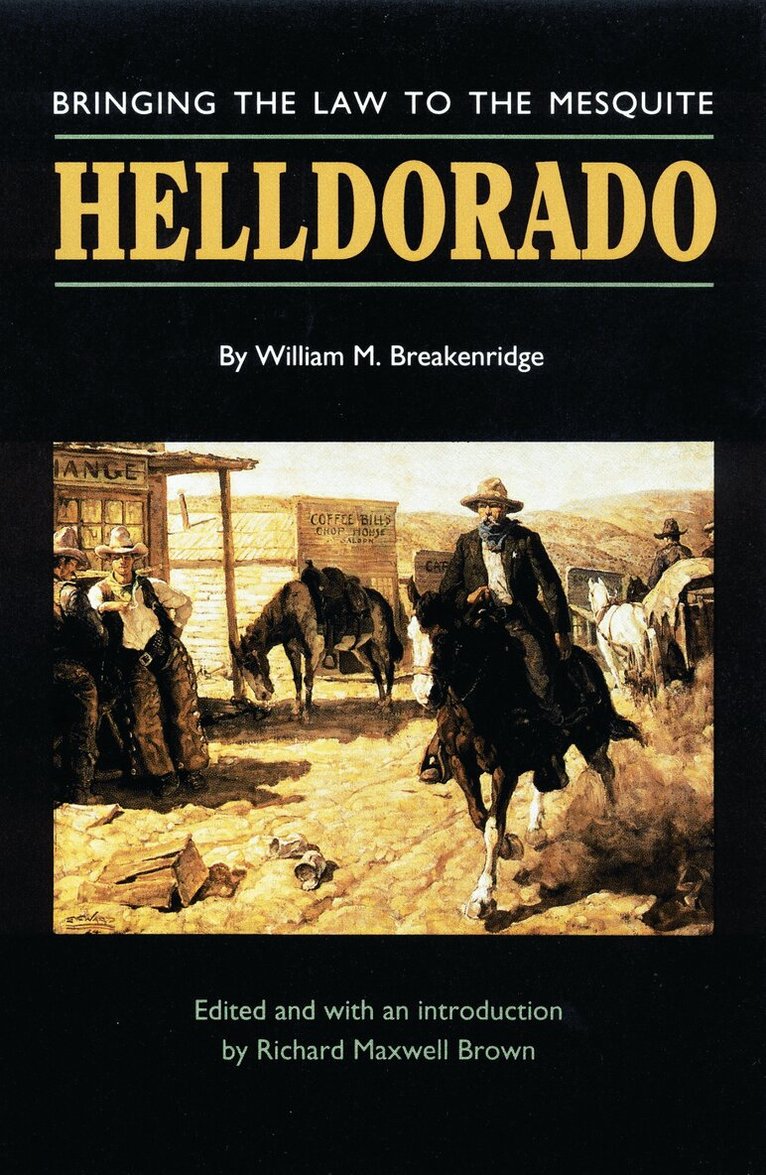
Helldorado offers cinematic images of wagon trains crossing the Great Plains, of Phoenix and Denver emerging from the dust and mud, of Tombstone blazing through a silver bonanza, and of the railroad joining East and West to change history. In his memoirs, originally published in 1928, William M. Breakenridge is shown doing about everything an enterprising and vigorous young man could do on the frontier. After leaving Wisconsin at the age of sixteen, he became a teamster, railroader; and lawman in Colorado, Arizona, and elsewhere. He took part in the Sand Creek Massacre, here described from his own point of view. Helldorado heats up in its evocation of early-day Tombstone, where, as deputy sheriff, Breakenridge encountered the Earp brothers, Doc Holliday, Bat Masterson, Luke Short, John Ringo, and Buckskin Frank Leslie.
Häftad, Engelska, 1994
241 kr
Skickas inom 10-15 vardagar
When faced with a deadly threat, Americans have the right to stand their ground and fight - that is, they have no duty to retreat. This study of violence and American values examines violence not only on the American frontier and in American society at large, but in American jurisprudence as well.
E-bok
PDF, Engelska, 2013354 kr
Läs direkt efter köp
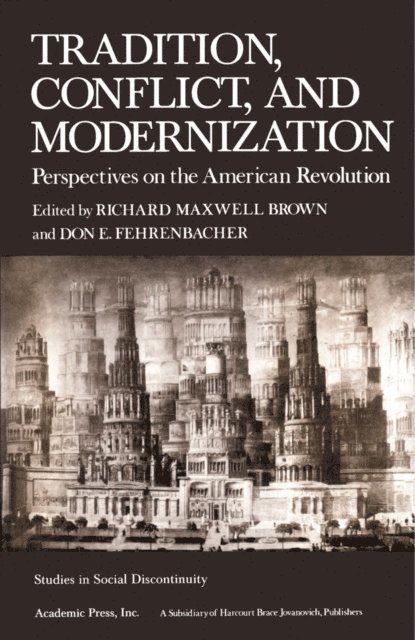
Tradition, Conflict, and Modernization: Perspectives on the American Revolution aims to expand knowledge on the intellectual character of the Revolution, its relation to the trend of modernization, and its standing as a manifestation of social conflict. The book discusses the American revolution in national tradition; the collective action in England and America in 1765-1775, and back country rebellions and the homestead ethic in America in 1740-1799. The text also describes the perspective of modernization related to the American revolution, modernization, and human. Historians will find the book invaluable.