Richard Rastall - Böcker
Visar alla böcker från författaren Richard Rastall. Handla med fri frakt och snabb leverans.
8 produkter
8 produkter
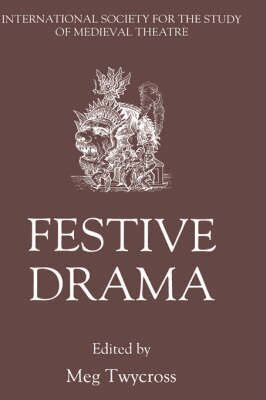
Festive Drama
Papers from the Sixth Triennial Colloquium of the International Society for the Study of Medieval Theatre, Lancaster, 13-19 July, 1989
Inbunden, Engelska, 1996
1 353 kr
Skickas inom 10-15 vardagar
Essays on festive drama - plays, pageantry and traditional ceremonies - of the European middle ages, with comparative material.Festive drama, in these studies, includes processions and folk-customs as well as full-blown plays, from Spain, the Netherlands, France, Germany, Britain, Denmark, and Bohemia (now the Czech Republic). The main focus is the middleages, but style and approach are as relevant as time-scale, reflecting a culture in which there are no firm divisions between drama and pageantry and traditional ceremonies. Common themes emerge: the world turned upside-down of Shrovetide; the emotive power of religious celebration; and the links between commerce and the demonstration of civic pride. Festive customs are viewed as hidden agendas of popular culture, and performances are reconstructed. Thisis the obverse of art and power: the means by which the people, not the princes, rule the world.Professor MEG TWYCROSS teaches at the Department of English at Lancaster University.Contributors: PETER H. GREENFIELD, OLGA HORNER, SHEILA LINDENBAUM, CLAIRE SPONSLER, RONALD E. SURTZ, RAFAEL PORTILLO, MANUEL J. GOMEZ LARA, PAMELA M. KING, ROBERT POTTER, JOHN CARTWRIGHT, DAVID MILLS, JAMES STOKES, ALAN E. KNIGHT, MARJOKE DE ROOS, FEMKE KRAMER, TOM PETTITT, LEIF SNDERGAARD, WIM HÜSKEN, JEAN-MARC PASTRÉÉ, SALLY-BETH MACLEAN, MALCOLM JONES, CHRISTINE RICHARDSON, JARMILA F. VELTRUSKY, JOHN COLDEWEY.
504 kr
Skickas inom 10-15 vardagar
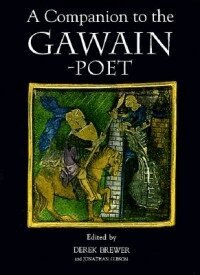
`Provides an excellent one-volume guide to the works of the anonymous Gawain-poet.' CHOICEThe essays collected here on the Gawain-Poet offer stimulating introductions to Sir Gawain and the Green Knight, Pearl, Cleanness and Patience, providing both information and original analysis. Topics includetheories of authorship; the historical and social background to the poems, with individual sections on particularly important features within them; gender roles in the poems; the manuscript itself; the metre, vocabulary and dialect of the poems; and their sources. A section devoted to Sir Gawain investigates the ideas of courtesy and chivalry found within it, and explores some of its later adaptations from the fifteenth to the twentieth centuries. Afull bibliography completes the volume.The late DEREK BREWER was Emeritus Professor of English Literature, University of Cambridge; JONATHAN GIBSON has worked as a lecturer in the Universities of Exeter and Durham.
484 kr
Skickas inom 5-8 vardagar
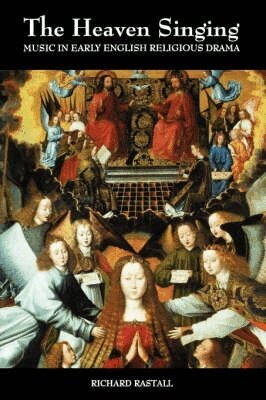
Its scope is impressive... a formidable achievement, indispensable for any serious and comprehensive study of early English drama. MEDIUM AEVUMRichard Rastall's two books on music in early English religious drama complement each other. Heaven Singing provides an overview of the evidence for music in the plays, and defines the place, nature and cultural contexts ofmusic in the drama; Minstrels Playing is a discussion of the evidence for every play in that repertory, and is therefore concerned with the place and nature of musical performance in each play individually.Where should there be music in an anonymous English religious play of the fifteenth or sixteenth century? What sort of music should it be, and by what forces should it be performed? This volume shows how music was used at the time of the plays' production, both through a close examination of individual texts, and of the place of music in the intellectual and artistic life of the middle ages. Richard Rastall begins by discussing the internal literary evidence of theplay texts, the surviving notated music in the plays, and documentary evidence of productions, before turning to the wider cultural context in which the plays were composed and performed. He considers the representational and dynamic functions of music in the plays, the relationship between music, drama and liturgy, and the performers themselves - who they were, and what they might be expected to do. Related factors necessary to the discovery of how musicwas used in late medieval drama are also considered, from medieval cosmology and the numerical construction of plays to the age and size of boy actors.Dr RICHARD RASTALL is Reader in Historical Musicology at the University of Leeds, and Dean of the Faculty of Arts.
2 221 kr
Skickas inom 10-15 vardagar
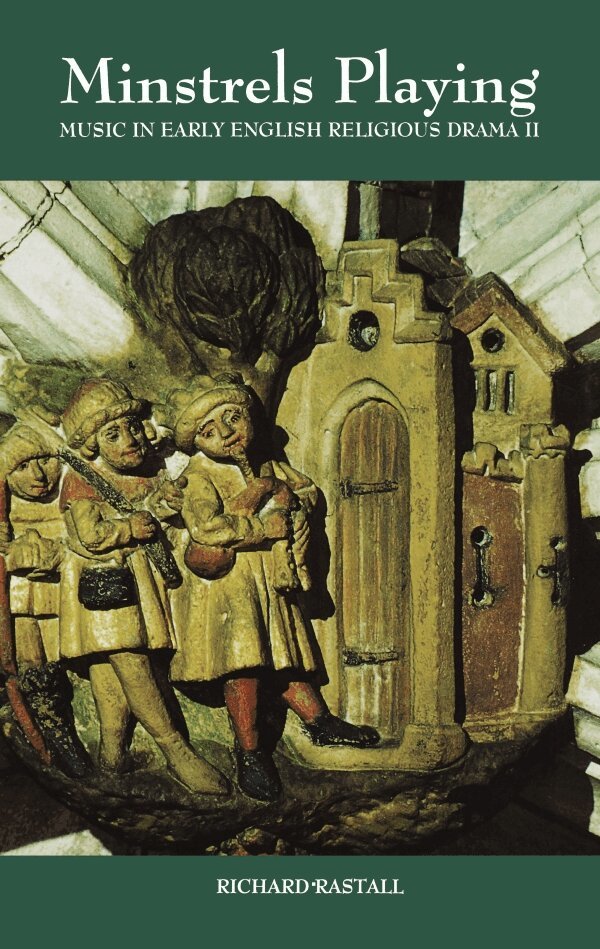
MEDIUM AEVUM says of Heaven Singing, the general discussion of the subject from which the present volume follows on with examination of the individual plays: 'A formidable achievement, indispensable for any serious and comprehensive study of early English drama.'Richard Rastall's two books on music in early English religious drama complement each other. Heaven Singing provides an overview of the evidence for music in the plays, and defines the place, nature and cultural contexts ofmusic in the drama; Minstrels Playing is a discussion of the evidence for every play in that repertory, and is therefore concerned with the place and nature of musical performance in each play individually. Followinghis general discussion of music in the anonymous religious plays of 15th- and 16th-century England in The Heaven Singing (1996), this companion volume turns to the individual biblical, saint and moral plays. Richard Rastallplaces each in its intellectual and cultural context, and notes the surviving evidence for music and other aural effects in the dramatic directions, text references, use of Latin and the liturgy, and the existing documentary records. At the end of each chapter a cue-list shows where the music should appear and presents the arguments for specific repertory and performance modes, providing an invaluable aid for directors. This leads on to a section on modern performance, in which Dr Rastall discusses a wide range of issues that impinge on the practicalities of providing music in early English drama and raise problems and queries for producers and musical directors: the type of staging and the nature of the set, the choice of cast, the choice of musical items, the training and rehearsing of singers, and much else. Dr RICHARD RASTALL is Reader in Historical Musicology and Dean of the Faculty of Music, Visualand Performing Arts at the University of Leeds.
1 617 kr
Skickas inom 7-10 vardagar
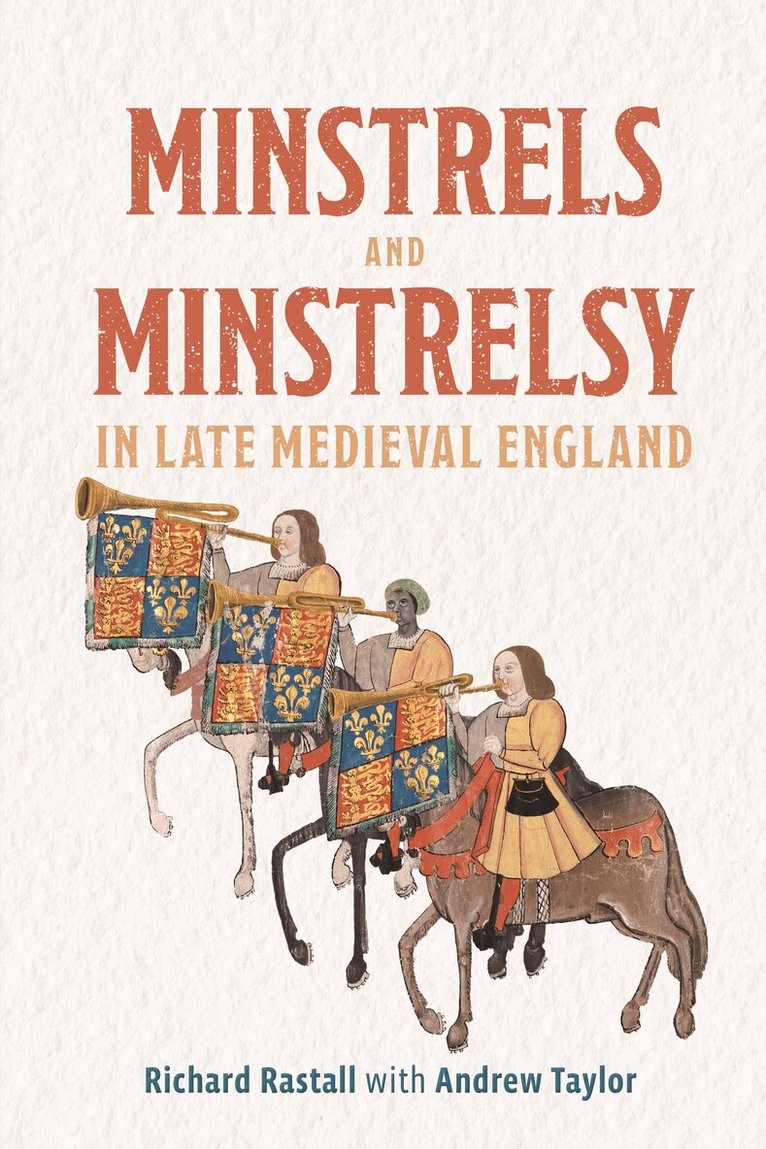
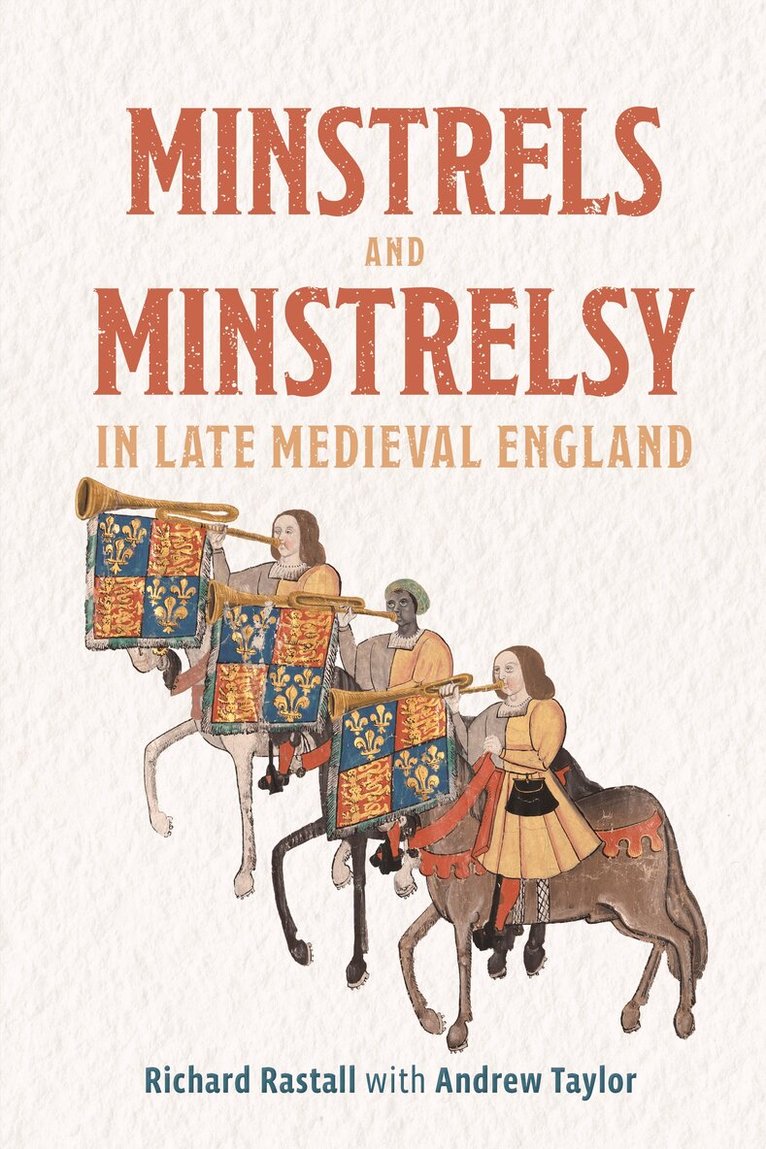
A major new study piecing together the intriguing but fragmentary evidence surrounding the lives of minstrels to highlight how these seemingly peripheral figures were keenly involved with all aspects of late medieval communities.Minstrels were a common sight and sound in the late Middle Ages. Aristocrats, knights and ladies heard them on great occasions (such as Edward I's wedding feast for his daughter Elizabeth in 1296) and in quieter moments in their chambers; town-dwellers heard and saw them in civic processions (when their sound drew attention to the spectacle); and even in the countryside people heard them at weddings, church-ales and other parish celebrations. But who were the minstrels, and what did they do? How did they live, and how easily did they make a living? How did they perform, and in what conditions? The evidence is intriguing but fragmentary, including literary and iconographic sources and, most importantly, the financial records of royal and aristocratic households and of towns. These offer many insights, although they are often hard to fit into any coherent picture of the minstrels' lives and their place in society. It is easy to see the minstrels as peripheral figures, entertainers who had no central place in the medieval world. Yet they were full members of it, interacting with the ordinary people around them, as well as with the ruling classes: carrying letters and important verbal messages, some lending huge sums of money to the king (to finance Henry V's Agincourt campaign in 1415, for instance), some regular and necessary civic servants, some committing crimes or suffering the crimes of others. In this book Rastall and Taylor bring to bear the available evidence to enlarge and enrich our view of the minstrel in late medieval society.
507 kr
Skickas inom 7-10 vardagar
A major new study piecing together the intriguing but fragmentary evidence surrounding the lives of minstrels to highlight how these seemingly peripheral figures were keenly involved with all aspects of late medieval communities.Minstrels were a common sight and sound in the late Middle Ages. Aristocrats, knights and ladies heard them on great occasions (such as Edward I's wedding feast for his daughter Elizabeth in 1296) and in quieter moments in their chambers; town-dwellers heard and saw them in civic processions (when their sound drew attention to the spectacle); and even in the countryside people heard them at weddings, church-ales and other parish celebrations. But who were the minstrels, and what did they do? How did they live, and how easily did they make a living? How did they perform, and in what conditions? The evidence is intriguing but fragmentary, including literary and iconographic sources and, most importantly, the financial records of royal and aristocratic households and of towns. These offer many insights, although they are often hard to fit into any coherent picture of the minstrels' lives and their place in society. It is easy to see the minstrels as peripheral figures, entertainers who had no central place in the medieval world. Yet they were full members of it, interacting with the ordinary people around them, as well as with the ruling classes: carrying letters and important verbal messages, some lending huge sums of money to the king (to finance Henry V's Agincourt campaign in 1415, for instance), some regular and necessary civic servants, some committing crimes or suffering the crimes of others. In this book Rastall and Taylor bring to bear the available evidence to enlarge and enrich our view of the minstrel in late medieval society.
573 kr
Skickas inom 5-8 vardagar
334 kr
Skickas inom 5-8 vardagar