Richard Sandell - Böcker
Visar alla böcker från författaren Richard Sandell. Handla med fri frakt och snabb leverans.
14 produkter
14 produkter
2 088 kr
Skickas inom 10-15 vardagar
Museums, Society, Inequality explores the wide-ranging social roles and responsibilities of the museum. It brings together international perspectives to stimulate critical debate, inform the work of practitioners and policy makers, and to advance recognition of the purpose, responsibilities and value to society of museums.Museums, Society, Inequality examines the issues and:offers different understandings of the social agency of the museumpresents ways in which museums have sought to engage with social concerns, and instigate social changeimagines how museums might become more useful to society in future.This book is essential for all museum academics, practitioners and students.
576 kr
Skickas inom 10-15 vardagar
Museums, Society, Inequality explores the wide-ranging social roles and responsibilities of the museum. It brings together international perspectives to stimulate critical debate, inform the work of practitioners and policy makers, and to advance recognition of the purpose, responsibilities and value to society of museums.Museums, Society, Inequality examines the issues and:offers different understandings of the social agency of the museumpresents ways in which museums have sought to engage with social concerns, and instigate social changeimagines how museums might become more useful to society in future.This book is essential for all museum academics, practitioners and students.
2 251 kr
Skickas inom 10-15 vardagar
How, if it all, do museums shape the ways in which society understands difference?In recent decades there has been growing international interest amongst practitioners, academics and policy makers in the role that museums might play in confronting prejudice and promoting human rights and cross-cultural understanding. Museums in many parts of the world are increasingly concerned to construct exhibitions which represent, in more equitable ways, the culturally pluralist societies within which they operate, accommodating and engaging with differences on the basis of gender, race, ethnicity, class, religion, disability, sexuality and so on. Despite the ubiquity of these trends, there is nevertheless limited understanding of the social effects, and attendant political consequences, of these purposive representational strategies.Richard Sandell combines interdisciplinary theoretical perspectives with in-depth empirical investigation to address a number of timely questions. How do audiences engage with and respond to exhibitions designed to contest, subvert and reconfigure prejudiced conceptions of social groups? To what extent can museums be understood to shape, not simply reflect, normative understandings of difference, acceptability and tolerance? What are the challenges for museums which attempt to engage audiences in debating morally charged and contested contemporary social issues and how might these be addressed? Sandell argues that museums frame, inform and enable the conversations which audiences and society more broadly have about difference and highlights the moral and political challenges, opportunities and responsibilities which accompany these constitutive qualities.
621 kr
Skickas inom 10-15 vardagar
How, if it all, do museums shape the ways in which society understands difference?In recent decades there has been growing international interest amongst practitioners, academics and policy makers in the role that museums might play in confronting prejudice and promoting human rights and cross-cultural understanding. Museums in many parts of the world are increasingly concerned to construct exhibitions which represent, in more equitable ways, the culturally pluralist societies within which they operate, accommodating and engaging with differences on the basis of gender, race, ethnicity, class, religion, disability, sexuality and so on. Despite the ubiquity of these trends, there is nevertheless limited understanding of the social effects, and attendant political consequences, of these purposive representational strategies.Richard Sandell combines interdisciplinary theoretical perspectives with in-depth empirical investigation to address a number of timely questions. How do audiences engage with and respond to exhibitions designed to contest, subvert and reconfigure prejudiced conceptions of social groups? To what extent can museums be understood to shape, not simply reflect, normative understandings of difference, acceptability and tolerance? What are the challenges for museums which attempt to engage audiences in debating morally charged and contested contemporary social issues and how might these be addressed? Sandell argues that museums frame, inform and enable the conversations which audiences and society more broadly have about difference and highlights the moral and political challenges, opportunities and responsibilities which accompany these constitutive qualities.
2 081 kr
Skickas inom 10-15 vardagar
Drawing together a selection of high quality, intellectually robust and stimulating articles on both theoretical and practice-based developments in the field, this Reader investigates the closely linked areas of management and marketing in the museum.The articles, from established and world-renowned contributors, practitioners and writers at the leading edge of their fields, deal with the museum context of management and how marketing and management practices must take account of the specifics of the museum and the not-for-profit ethos.Key writings from broader literature are included, and the collection of key writings on the investigation and study of management and marketing in the museum are of great benefit not only to those studying the subject, but also to professionals working and developing within the field.
733 kr
Skickas inom 10-15 vardagar
Drawing together a selection of high quality, intellectually robust and stimulating articles on both theoretical and practice-based developments in the field, this Reader investigates the closely linked areas of management and marketing in the museum.The articles, from established and world-renowned contributors, practitioners and writers at the leading edge of their fields, deal with the museum context of management and how marketing and management practices must take account of the specifics of the museum and the not-for-profit ethos.Key writings from broader literature are included, and the collection of key writings on the investigation and study of management and marketing in the museum are of great benefit not only to those studying the subject, but also to professionals working and developing within the field.
2 088 kr
Skickas inom 10-15 vardagar
Re-Presenting Disability addresses issues surrounding disability representation in museums and galleries, a topic which is receiving much academic attention and is becoming an increasingly pressing issue for practitioners working in wide-ranging museums and related cultural organisations.This volume of provocative and timely contributions, brings together twenty researchers, practitioners and academics from different disciplinary, institutional and cultural contexts to explore issues surrounding the cultural representation of disabled people and, more particularly, the inclusion (as well as the marked absence) of disability-related narratives in museum and gallery displays. The diverse perspectives featured in the book offer fresh ways of interrogating and understanding contemporary representational practices as well as illuminating existing, related debates concerning identity politics, social agency and organisational purposes and responsibilities, which have considerable currency within museums and museum studies.Re-Presenting Disability explores such issues as: In what ways have disabled people and disability-related topics historically been represented in the collections and displays of museums and galleries? How can newly emerging representational forms and practices be viewed in relation to these historical approaches? How do emerging trends in museum practice – designed to counter prejudiced, stereotypical representations of disabled people – relate to broader developments in disability rights, debates in disability studies, as well as shifting interpretive practices in public history and mass media? What approaches can be deployed to mine and interrogate existing collections in order to investigate histories of disability and disabled people and to identify material evidence that might be marshalled to play a part in countering prejudice? What are the implications of these developments for contemporary collecting? How might such purposive displays be created and what dilemmas and challenges are curators, educators, designers and other actors in the exhibition-making process, likely to encounter along the way? How do audiences – disabled and non-disabled – respond to and engage with interpretive interventions designed to confront, undercut or reshape dominant regimes of representation that underpin and inform contemporary attitudes to disability?
576 kr
Skickas inom 10-15 vardagar
Re-Presenting Disability addresses issues surrounding disability representation in museums and galleries, a topic which is receiving much academic attention and is becoming an increasingly pressing issue for practitioners working in wide-ranging museums and related cultural organisations.This volume of provocative and timely contributions, brings together twenty researchers, practitioners and academics from different disciplinary, institutional and cultural contexts to explore issues surrounding the cultural representation of disabled people and, more particularly, the inclusion (as well as the marked absence) of disability-related narratives in museum and gallery displays. The diverse perspectives featured in the book offer fresh ways of interrogating and understanding contemporary representational practices as well as illuminating existing, related debates concerning identity politics, social agency and organisational purposes and responsibilities, which have considerable currency within museums and museum studies.Re-Presenting Disability explores such issues as: In what ways have disabled people and disability-related topics historically been represented in the collections and displays of museums and galleries? How can newly emerging representational forms and practices be viewed in relation to these historical approaches? How do emerging trends in museum practice – designed to counter prejudiced, stereotypical representations of disabled people – relate to broader developments in disability rights, debates in disability studies, as well as shifting interpretive practices in public history and mass media? What approaches can be deployed to mine and interrogate existing collections in order to investigate histories of disability and disabled people and to identify material evidence that might be marshalled to play a part in countering prejudice? What are the implications of these developments for contemporary collecting? How might such purposive displays be created and what dilemmas and challenges are curators, educators, designers and other actors in the exhibition-making process, likely to encounter along the way? How do audiences – disabled and non-disabled – respond to and engage with interpretive interventions designed to confront, undercut or reshape dominant regimes of representation that underpin and inform contemporary attitudes to disability?
2 088 kr
Skickas inom 10-15 vardagar
The last two decades have seen concerns for equality, diversity, social justice and human rights move from the margins of museum thinking and practice, to the core. The arguments – both moral and pragmatic – for engaging diverse audiences, creating the conditions for more equitable access to museum resources, and opening up opportunities for participation, now enjoy considerable consensus in many parts of the world. A growing number of institutions are concerned to construct new narratives that represent a plurality of lived experiences, histories and identities which aim to nurture support for more progressive, ethically-informed ways of seeing and to actively inform contemporary public debates on often contested rights-related issues. At the same time it would be misleading to suggest an even and uncontested transition from the museum as an organisation that has been widely understood to marginalise, exclude and oppress to one which is wholly inclusive. Moreover, there are signs that momentum towards making museums more inclusive and equitable is slowing down or, in some contexts, reversing. Museums, Equality and Social Justice aims to reflect on and, crucially, to inform debates in museum research, policy and practice at this critical time. It brings together new research from academics and practitioners and insights from artists, activists, and commentators to explore the ways in which museums, galleries and heritage organisations are engaging with the fast-changing equalities terrain and the shifting politics of identity at global, national and local levels and to investigate their potential to contribute to more equitable, fair and just societies.
685 kr
Skickas inom 10-15 vardagar
The last two decades have seen concerns for equality, diversity, social justice and human rights move from the margins of museum thinking and practice, to the core. The arguments – both moral and pragmatic – for engaging diverse audiences, creating the conditions for more equitable access to museum resources, and opening up opportunities for participation, now enjoy considerable consensus in many parts of the world. A growing number of institutions are concerned to construct new narratives that represent a plurality of lived experiences, histories and identities which aim to nurture support for more progressive, ethically-informed ways of seeing and to actively inform contemporary public debates on often contested rights-related issues. At the same time it would be misleading to suggest an even and uncontested transition from the museum as an organisation that has been widely understood to marginalise, exclude and oppress to one which is wholly inclusive. Moreover, there are signs that momentum towards making museums more inclusive and equitable is slowing down or, in some contexts, reversing. Museums, Equality and Social Justice aims to reflect on and, crucially, to inform debates in museum research, policy and practice at this critical time. It brings together new research from academics and practitioners and insights from artists, activists, and commentators to explore the ways in which museums, galleries and heritage organisations are engaging with the fast-changing equalities terrain and the shifting politics of identity at global, national and local levels and to investigate their potential to contribute to more equitable, fair and just societies.
2 692 kr
Skickas inom 10-15 vardagar
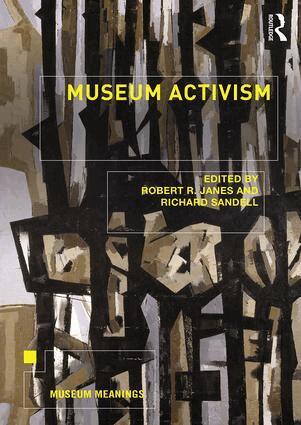
Only a decade ago, the notion that museums, galleries and heritage organisations might engage in activist practice, with explicit intent to act upon inequalities, injustices and environmental crises, was met with scepticism and often derision. Seeking to purposefully bring about social change was viewed by many within and beyond the museum community as inappropriately political and antithetical to fundamental professional values. Today, although the idea remains controversial, the way we think about the roles and responsibilities of museums as knowledge based, social institutions is changing. Museum Activism examines the increasing significance of this activist trend in thinking and practice.At this crucial time in the evolution of museum thinking and practice, this ground-breaking volume brings together more than fifty contributors working across six continents to explore, analyse and critically reflect upon the museum’s relationship to activism. Including contributions from practitioners, artists, activists and researchers, this wide-ranging examination of new and divergent expressions of the inherent power of museums as forces for good, and as activists in civil society, aims to encourage further experimentation and enrich the debate in this nascent and uncertain field of museum practice.Museum Activism elucidates the largely untapped potential for museums as key intellectual and civic resources to address inequalities, injustice and environmental challenges. This makes the book essential reading for scholars and students of museum and heritage studies, gallery studies, arts and heritage management, and politics. It will be a source of inspiration to museum practitioners and museum leaders around the globe.
685 kr
Skickas inom 10-15 vardagar
Only a decade ago, the notion that museums, galleries and heritage organisations might engage in activist practice, with explicit intent to act upon inequalities, injustices and environmental crises, was met with scepticism and often derision. Seeking to purposefully bring about social change was viewed by many within and beyond the museum community as inappropriately political and antithetical to fundamental professional values. Today, although the idea remains controversial, the way we think about the roles and responsibilities of museums as knowledge based, social institutions is changing. Museum Activism examines the increasing significance of this activist trend in thinking and practice.At this crucial time in the evolution of museum thinking and practice, this ground-breaking volume brings together more than fifty contributors working across six continents to explore, analyse and critically reflect upon the museum’s relationship to activism. Including contributions from practitioners, artists, activists and researchers, this wide-ranging examination of new and divergent expressions of the inherent power of museums as forces for good, and as activists in civil society, aims to encourage further experimentation and enrich the debate in this nascent and uncertain field of museum practice.Museum Activism elucidates the largely untapped potential for museums as key intellectual and civic resources to address inequalities, injustice and environmental challenges. This makes the book essential reading for scholars and students of museum and heritage studies, gallery studies, arts and heritage management, and politics. It will be a source of inspiration to museum practitioners and museum leaders around the globe.
2 150 kr
Skickas inom 10-15 vardagar
This book explores how museums, galleries and heritage sites of all kinds, through the narratives they construct and publicly present, can shape the moral and political climate within which human rights are experienced. Through a series of richly-drawn cases, which focus on gender diversity and same-sex love and desire, Richard Sandell examines the ways in which museums are implicated in the ongoing struggle for lesbian, gay, bisexual, transgender and intersex human rights. Museums, Moralities and Human Rights brings together for the first time the perspectives not only of those who work in, govern, fund and visit museums but also those of rights activists and campaigners who, at key moments in their struggle, have turned their attention to museums to advance their cause. Offering new insights into how human rights are continually fought for, realised and refused, this volume makes the case for museums of all kinds to take up an active, mindful and purposive engagement with contemporary human rights concerns.
705 kr
Skickas inom 10-15 vardagar
This book explores how museums, galleries and heritage sites of all kinds, through the narratives they construct and publicly present, can shape the moral and political climate within which human rights are experienced. Through a series of richly-drawn cases, which focus on gender diversity and same-sex love and desire, Richard Sandell examines the ways in which museums are implicated in the ongoing struggle for lesbian, gay, bisexual, transgender and intersex human rights. Museums, Moralities and Human Rights brings together for the first time the perspectives not only of those who work in, govern, fund and visit museums but also those of rights activists and campaigners who, at key moments in their struggle, have turned their attention to museums to advance their cause. Offering new insights into how human rights are continually fought for, realised and refused, this volume makes the case for museums of all kinds to take up an active, mindful and purposive engagement with contemporary human rights concerns.