Richard Tuck – författare
Visar alla böcker från författaren Richard Tuck. Handla med fri frakt och snabb leverans.
26 produkter
Hobbes: On the Citizen
Av Thomas Hobbes, Richard Tuck m. fl.
Häftad, 1998
504 kr
Lägg i varukorg
De Cive (On the Citizen) is the first full exposition of the political thought of Thomas Hobbes, the greatest English political philosopher of all time. Professors Tuck and Silverthorne have undertaken the first complete translation since 1651, a rendition long thought (in error) to be at least …
Hobbes: Leviathan
Revised student edition
Av Thomas Hobbes, Richard Tuck
Häftad, 1996
341 kr
Lägg i varukorg
Thomas Hobbes' Leviathan is arguably the greatest piece of political philosophy written in the English language. Written in a time of great political turmoil (Hobbes' life spanned the reign of Charles I, the Civil Wars, the Commonwealth and the Protectorate, and the Restoration), Leviathan is an …
Hobbes: On the Citizen
Av Thomas Hobbes, Michael Silverthorne m. fl.
E-bok, 1998
479 kr
Lägg i varukorg
De Cive (On the Citizen) is the first full exposition of the political thought of Thomas Hobbes, the greatest English political philosopher of all time. Professors Tuck and Silverthorne have undertaken the first complete translation since 1651, a rendition long thought (in error) to be at least …
The Rights of War and Peace
Political Thought and the International Order from Grotius to Kant
Av Richard Tuck
Häftad, 2001
1005 kr
Lägg i varukorg
The Rights of War and Peace is the first fully historical account of the formative period of modern theories of international law. It sets the scene with an extensive history of the theory of international relations from antiquity down to the seventeenth century. Professor Tuck then examines the …
Hobbes: On the Citizen
Av Thomas Hobbes, Michael Silverthorne m. fl.
E-bok, 1998
489 kr
Lägg i varukorg
De Cive (On the Citizen) is the first full exposition of the political thought of Thomas Hobbes, the greatest English political philosopher of all time. Professors Tuck and Silverthorne have undertaken the first complete translation since 1651, a rendition long thought (in error) to be at least …
Hobbes: Leviathan
Revised student edition
Av Thomas Hobbes, Richard Tuck
E-bok, 1996
319 kr
Lägg i varukorg
Thomas Hobbes'' Leviathan is arguably the greatest piece of political philosophy written in the English language. Written in a time of great political turmoil (Hobbes'' life spanned the reign of Charles I, the Civil Wars, the Commonwealth and the Protectorate, and the Restoration), Leviathan is an …
Rights of War and Peace
Political Thought and the International Order from Grotius to Kant
Av Richard Tuck
E-bok, 2001
668 kr
Lägg i varukorg
The Rights of War and Peace is the first fully historical account of the formative period of modern theories of international law. It sets the scene with an extensive history of the theory of international relations from antiquity down to the seventeenth century. Professor Tuck then examines the …
Rights of War and Peace
Political Thought and the International Order from Grotius to Kant
Av Richard Tuck
E-bok, 1999
668 kr
Lägg i varukorg
The Rights of War and Peace is the first fully historical account of the formative period of modern theories of international law. It sets the scene with an extensive history of the theory of international relations from antiquity down to the seventeenth century. Professor Tuck then examines the …
Hobbes
A Very Short Introduction
Av Richard Tuck
E-bok, 2002
98 kr
Lägg i varukorg
Thomas Hobbes, the first great English political philosopher, has long had the reputation of being a pessimistic atheist, who saw human nature as inevitably evil and proposed a totalitarian state to subdue human failings. In this illuminating study, Richard Tuck re-evaluates Hobbes''s philosophy …
Hobbes
A Very Short Introduction
Av Richard Tuck
Häftad, 2002
120 kr
Lägg i varukorg
Thomas Hobbes, the first great English political philosopher, has long had the reputation of being a pessimistic atheist, who saw human nature as inevitably evil and proposed a totalitarian state to subdue human failings. In this illuminating study, Richard Tuck re-evaluates Hobbes's philosophy and …
The Rights of War and Peace
Political Thought and the International Order from Grotius to Kant
Av Richard Tuck
Inbunden, 1999
2169 kr
Lägg i varukorg
The Rights of War and Peace is the first fully historical account of the formative period of modern theories of international law. It sets the scene with an extensive history of the theory of international relations from antiquity down to the seventeenth century. Professor Tuck then examines the …
Natural Rights Theories
Their Origin and Development
Av Richard Tuck
Häftad, 1981
373 kr
Lägg i varukorg
This book shows how political argument in terms of rights and natural rights began in medieval Europe, and how the theory of natural rights was developed in the seventeenth century after a period of neglect in the Renaissance. Dr Tuck provides a new understanding of the importance of Jean Gerson in …
Hobbes: On the Citizen
Av Thomas Hobbes, Richard Tuck m. fl.
Inbunden, 1998
1872 kr
Lägg i varukorg
De Cive (On the Citizen) is the first full exposition of the political thought of Thomas Hobbes, the greatest English political philosopher of all time. Professors Tuck and Silverthorne have undertaken the first complete translation since 1651, a rendition long thought (in error) to be at least …
Philosophy and Government 1572-1651
Av Richard Tuck
Häftad, 1993
520 kr
Lägg i varukorg
Philosophy and Government is a major new contribution to our understanding of European political theory which will challenge the perspectives in which political thought is understood. Framed as a general account of the period between 1572 and 1651 it charts the formation of a distinctively modern …
Free Riding
Av Richard Tuck
Inbunden, 2008
547 kr
Lägg i varukorg
One individual’s contribution to a large collective project—such as voting in a national election or contributing to a public television fund-raising campaign—often seems negligible. A striking proposition of contemporary economics and political science is that it would be an exercise of reason, …
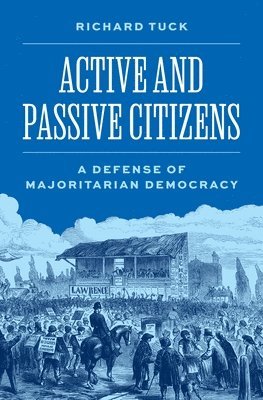
Active and Passive Citizens
A Defense of Majoritarian Democracy
Av Richard Tuck, Stephen Macedo
Inbunden, 2024
281 kr
Lägg i varukorg
A powerful case for why majority rule—not representation—is the defining feature of democratic politicsThe idea that democratic governance rests on active self-rule by citizens plays surprisingly little part in current theories of democracy, which instead stress the importance of representation by …
Active and Passive Citizens
A Defense of Majoritarian Democracy
Av Richard Tuck, Stephen Macedo
Häftad, 2026
221 kr
Lägg i varukorg
A powerful case for why majority rule—not representation—is the defining feature of democratic politicsThe idea that democratic governance rests on active self-rule by citizens plays surprisingly little part in current theories of democracy, which instead stress the importance of representation by …
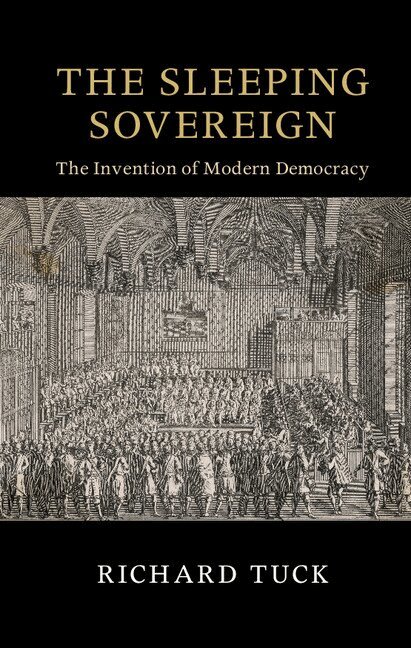
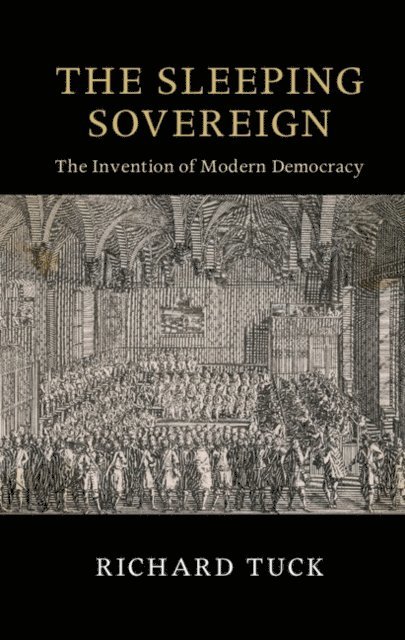
The Sleeping Sovereign
The Invention of Modern Democracy
Av Richard Tuck
Inbunden, 2016
1322 kr
Lägg i varukorg
Richard Tuck traces the history of the distinction between sovereignty and government and its relevance to the development of democratic thought. Tuck shows that this was a central issue in the political debates of the seventeenth and eighteenth centuries, and provides a new interpretation of the …
Hobbes: Leviathan
Revised student edition
Av Thomas Hobbes, Richard Tuck
E-bok, 1996
326 kr
Lägg i varukorg
Thomas Hobbes'' Leviathan is arguably the greatest piece of political philosophy written in the English language. Written in a time of great political turmoil (Hobbes'' life spanned the reign of Charles I, the Civil Wars, the Commonwealth and the Protectorate, and the Restoration), Leviathan is an …
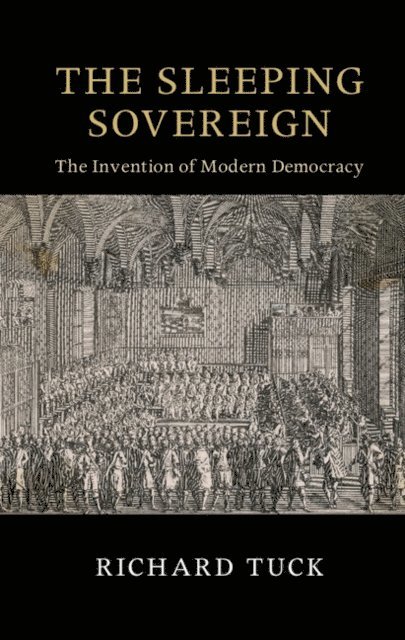
The Sleeping Sovereign
The Invention of Modern Democracy
Av Richard Tuck
Häftad, 2016
382 kr
Lägg i varukorg
Richard Tuck traces the history of the distinction between sovereignty and government and its relevance to the development of democratic thought. Tuck shows that this was a central issue in the political debates of the seventeenth and eighteenth centuries, and provides a new interpretation of the …
Sleeping Sovereign
The Invention of Modern Democracy
Av Richard Tuck
E-bok, 2016
375 kr
Lägg i varukorg
Richard Tuck traces the history of the distinction between sovereignty and government and its relevance to the development of democratic thought. Tuck shows that this was a central issue in the political debates of the seventeenth and eighteenth centuries, and provides a new interpretation of the …
Sleeping Sovereign
The Invention of Modern Democracy
Av Richard Tuck
E-bok, 2016
375 kr
Lägg i varukorg
Richard Tuck traces the history of the distinction between sovereignty and government and its relevance to the development of democratic thought. Tuck shows that this was a central issue in the political debates of the seventeenth and eighteenth centuries, and provides a new interpretation of the …
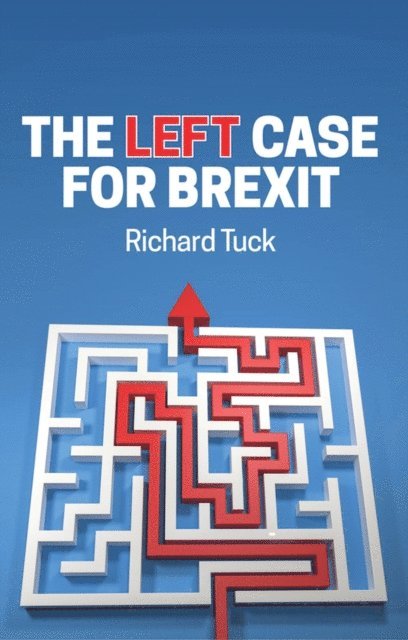
Left Case for Brexit
Reflections on the Current Crisis
Av Richard Tuck
Inbunden, 2020
637 kr
Lägg i varukorg
Liberal left orthodoxy holds that Brexit is a disastrous coup, orchestrated by the hard right and fuelled by xenophobia, which will break up the Union and turn what’s left of Britain into a neoliberal dystopia.Richard Tuck’s ongoing commentary on the Brexit crisis demolishes this narrative. He …
Left Case for Brexit
Reflections on the Current Crisis
Av Richard Tuck
Häftad, 2020
217 kr
Lägg i varukorg
Liberal left orthodoxy holds that Brexit is a disastrous coup, orchestrated by the hard right and fuelled by xenophobia, which will break up the Union and turn what’s left of Britain into a neoliberal dystopia.Richard Tuck’s ongoing commentary on the Brexit crisis demolishes this narrative. He …
Left Case for Brexit
Reflections on the Current Crisis
Av Richard Tuck
E-bok, 2020
245 kr
Lägg i varukorg
Liberal left orthodoxy holds that Brexit is a disastrous coup, orchestrated by the hard right and fuelled by xenophobia, which will break up the Union and turn what’s left of Britain into a neoliberal dystopia. Richard Tuck’s ongoing commentary on the Brexit crisis demolishes this narrative. He …
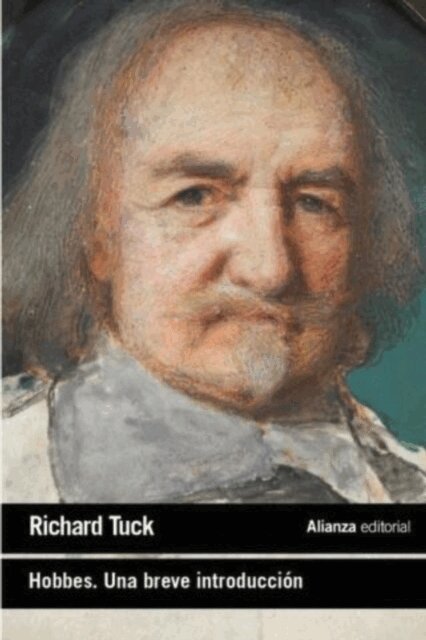
Hobbes: Una breve introduccion
Av Richard Tuck
E-bok, 2022
83 kr
Lägg i varukorg
Thomas Hobbes (1588-1679), celebre autor del Leviatan -obra publicada, como De Cive y Elementos de Derecho Natural y Politico, en esta coleccion-, es uno de los pensadores mas importantes, a la par que polemicos y controvertidos, de la cultura politica occidental. Considerado el primer gran …