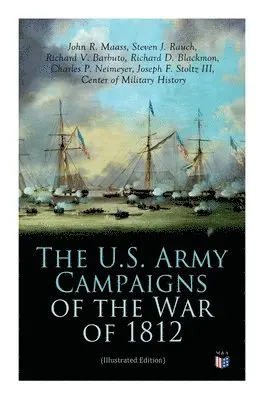
Richard V. Barbuto – författare
Visar alla böcker från författaren Richard V. Barbuto. Handla med fri frakt och snabb leverans.
4 produkter
4 produkter
668 kr
Skickas inom 10-15 vardagar
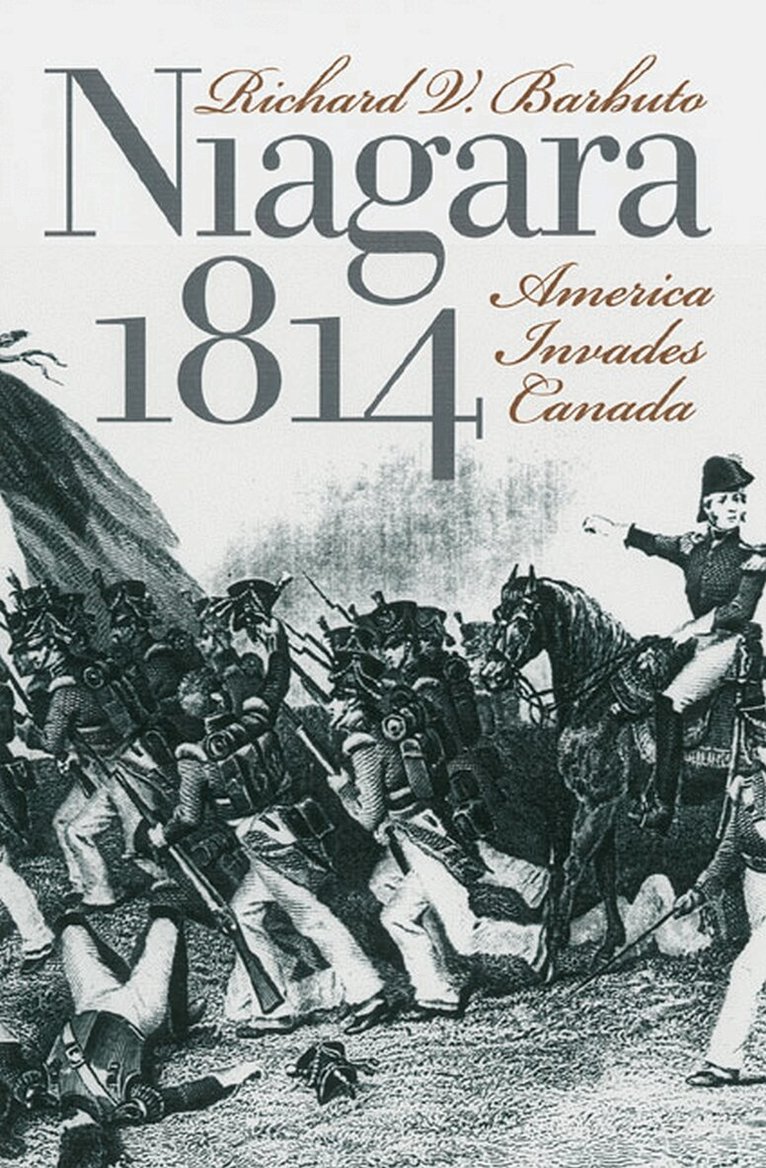
Most books on the War of 1812 focus on the burning of Washington, DC, the Battles of Baltimore and New Orleans, and the war in the Old Northwest. Scant attention, however, has been paid to the Niagara Campaign of 1814 - the American army's ambitious but failed attempt to wrest Canada from British control. While a few writers have dealt with individual aspects of this effort, this study offers a comprehensive analysis of the entire campaign. Barbuto covers many aspects of a campaign that saw the American army come of age, even as its military leaders blundered away potential victory and the acquisition of a coveted expanse of North American territory. Vividly recreating the major battles on the Niagara peninsula - at Chippawa, Lundy's Lane, Fort Erie and Cook's Mill - Barbuto also clarifies the role of these engagements within the overall framework of American strategy. Despite early success at Chippawa, four long months of fighting finally ended in something like a draw, with the British still in control of Canada. Barbuto argues that the American government was never really able to harness, co-ordinate and focus its tremendous resources in ways that would have allowed the campaign to succeed. Much of the blame, he shows, can be attributed to the poor leadership and confused strategic thinking of President James Madison and his secretary of war, John Armstrong. The American effort was further undermined by manpower shortages, a few ineffective field commanders, and the American army and navy's inability to co-ordinate their objectives and operations. Even so, the author contends that the American soldier, led by the likes of Jacob Brown and the legendary Winfield Scott, performed surprisingly well against one of the great armies of the 19th century. Barbuto's analysis, unmarred by national bias, presents a balanced picture of these events from the perspective of ""all"" participants - American, British, Canadian and Native American. He also fills an important gap by providing capsule histories of all regimental-sized units involved in the campaign. Breathing new life into these events, his far-ranging study should be a useful source of information on this long-neglected campaign.
448 kr
Skickas inom 10-15 vardagar
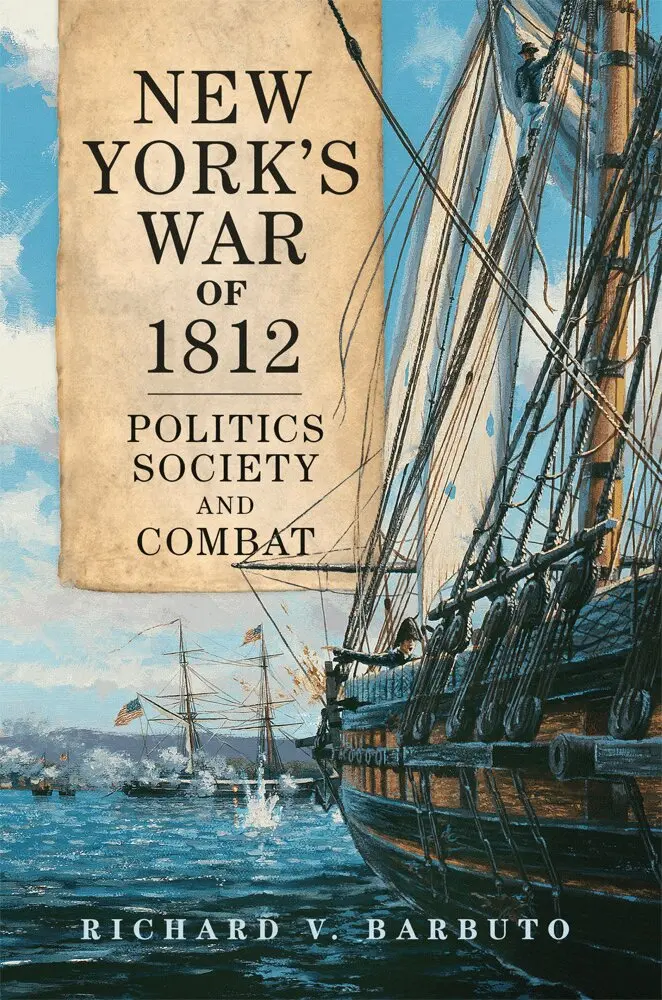
Popular memory of the War of 1812 caroms from the beleaguered Fort McHenry to the burning White House to an embattled New Orleans. But the critical action was elsewhere, as Richard V. Barbuto tells us in this clarifying work that puts the state of New York squarely at the center of America's first foreign war.British demands to move the northern border as far south as the Ohio River put New York on the first line of defense. But it was the leadership of Governor Daniel D. Tompkins that distinguished the state's contribution to the war effort, effectively mobilizing the considerable human and material resources that proved crucial to maintaining the nation's sovereignty. New York's War of 1812 shows how, despite a widespread antiwar movement and fierce partisan politics, Tompkins managed to corral and maintain support - until 1814, when Britain agreed to peace.Retrieving New York's War of 1812 from the fog of military history, Barbuto describes the disproportionate cost paid by the state in loss of life and livelihood. The author draws on in-depth research of the state's legislative, financial, and militia records, as well as on the governor's extensive correspondence, to plot the conduct of the war regionally and chronologically and to tell the stories of numerous raids, skirmishes, and battles that touched civilians in their homes and communities.Whether offering a clearer picture of the performance of the state militia, providing a more accurate account of the conflict's impact on the state's diverse population, or newly detailing New York's decisive contribution, this deeply researched, closely observed work revises our view of the nation's perhaps least understood war.
269 kr
Skickas inom 10-15 vardagar
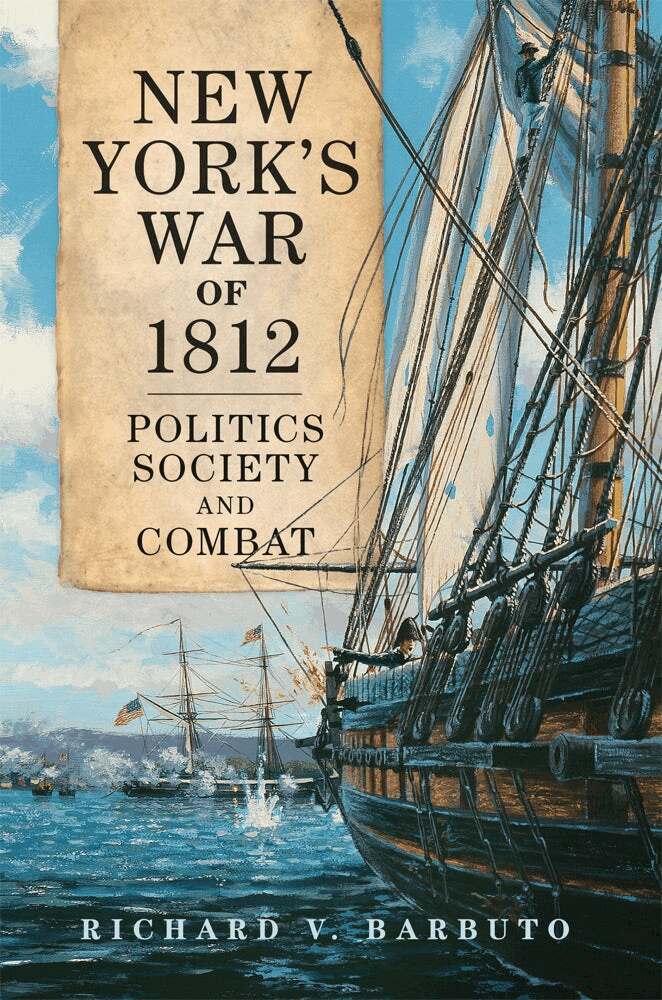
Popular memory of the War of 1812 caroms from the beleaguered Fort McHenry to the burning White House to an embattled New Orleans. But the critical action was elsewhere, as Richard V. Barbuto tells us in this clarifying work that puts the state of New York squarely at the center of America’s first foreign war.British demands to move the northern border as far south as the Ohio River put New York on the first line of defense. But it was the leadership of Governor Daniel D. Tompkins that distinguished the state’s contribution to the war effort, effectively mobilizing the considerable human and material resources that proved crucial to maintaining the nation’s sovereignty. New York’s War of 1812 shows how, despite a widespread antiwar movement and fierce partisan politics, Tompkins managed to corral and maintain support—until 1814, when Britain agreed to peace.Retrieving New York’s War of 1812 from the fog of military history, Barbuto describes the disproportionate cost paid by the state in loss of life and livelihood. The author draws on in-depth research of the state’s legislative, financial, and militia records, as well as on the governor’s extensive correspondence, to plot the conduct of the war regionally and chronologically and to tell the stories of numerous raids, skirmishes, and battles that touched civilians in their homes and communities.Whether offering a clearer picture of the performance of the state militia, providing a more accurate account of the conflict’s impact on the state’s diverse population, or newly detailing New York’s decisive contribution, this deeply researched, closely observed work revises our view of the nation’s perhaps least understood war.
213 kr
Skickas inom 5-8 vardagar