Richard Vokes - Böcker
Visar alla böcker från författaren Richard Vokes. Handla med fri frakt och snabb leverans.
9 produkter
9 produkter
643 kr
Skickas inom 10-15 vardagar
Uganda’s 2016 elections, which returned thirty-year incumbent President Yoweri Museveni and his National Resistance Movement (NRM) in yet another landslide, took place in an atmosphere of patronage, coercion and fraud. But is this diagnosis sufficient to understand the processes of voting and regime maintenance in Uganda today? Based on a series of detailed case studies from across Uganda, this book provides a more nuanced and complex picture of what the Museveni regime is, and how it keeps winning elections. Whilst not denying that various electoral malpractices are systemic to the regime’s survival, the authors find that these cannot be extricated from Uganda’s history, its wider social realities, and its local political cultures in which the NRM has become so embedded. In so doing, the authors – who include anthropologists, development specialists, historians, geographers, and political-scientists – develop new ways of thinking about the meaning of voting and elections in non-democratic Uganda, and elsewhere. This edition was originally published as a special issue of the Journal of Eastern African Studies.
2 307 kr
Skickas inom 10-15 vardagar
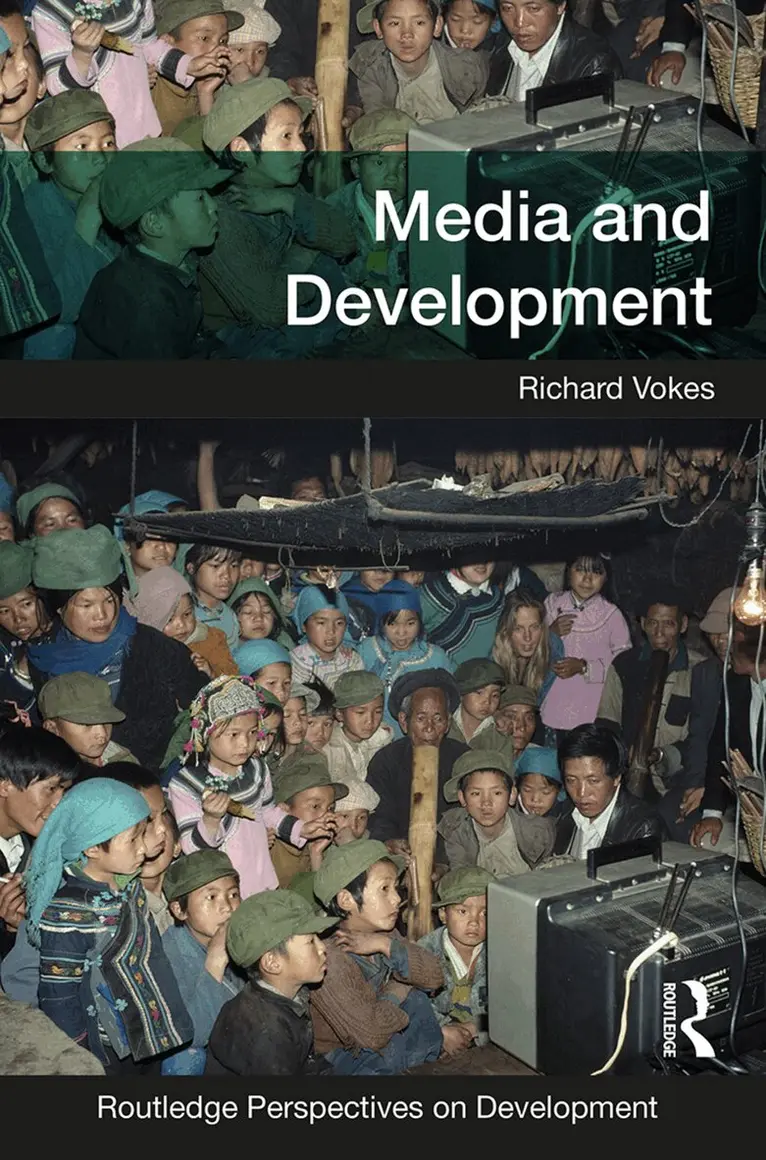
At the start of the 21st century, the relationship between media and development has never felt more important. Following a series of ‘media revolutions’ throughout the developing world – beginning with the advent of cheap transistor radio sets in the late-1960s, followed by the rapid expansion of satellite television networks in the 1990s, and the more recent explosion of mobile telephony, social media and the internet – a majority of people living in the Global South now have access to a wide variety of Information and Communications Technologies (ICTs), and live in media saturated environments. Yet how can radio, television and mobile phones be most effectively harnessed towards the goals of purposive economic, social, and political change? Should they be seen as primarily a provider of channels through which ‘useful information’ can be delivered to target populations – in the hope that such information will alter those populations’ existing behaviours? Or should they be seen as a tool for facilitating ‘two-way communication’ between development providers and their recipients (i.e. as technologies for improving ‘participatory development’)? Or should new media environments be approached simply as sites in which people living in the developing world can define ‘development’ on their own terms? This timely and original book – which is based on a critical reading of the relevant literatures, and on the author’s own extensive primary research – introduces readers to all of these questions, and helps them to reach their own informed positions on each. It also examines the history of, and current debates regarding, media representations of development. Drawing on case studies from all over the world – including: ‘hate radio’ in Rwanda; theatre for development in India; telenovelas in Latin America; mobile banking and money in Africa, and; GIS and humanitarianism in Haiti – it will be of interest to all undergraduate and postgraduate students of media and development; international development professionals, and; simply to anyone with an interest in how media does, can, or should, change the world.
548 kr
Skickas inom 10-15 vardagar
At the start of the 21st century, the relationship between media and development has never felt more important. Following a series of ‘media revolutions’ throughout the developing world – beginning with the advent of cheap transistor radio sets in the late-1960s, followed by the rapid expansion of satellite television networks in the 1990s, and the more recent explosion of mobile telephony, social media and the internet – a majority of people living in the Global South now have access to a wide variety of Information and Communications Technologies (ICTs), and live in media saturated environments. Yet how can radio, television and mobile phones be most effectively harnessed towards the goals of purposive economic, social, and political change? Should they be seen as primarily a provider of channels through which ‘useful information’ can be delivered to target populations – in the hope that such information will alter those populations’ existing behaviours? Or should they be seen as a tool for facilitating ‘two-way communication’ between development providers and their recipients (i.e. as technologies for improving ‘participatory development’)? Or should new media environments be approached simply as sites in which people living in the developing world can define ‘development’ on their own terms? This timely and original book – which is based on a critical reading of the relevant literatures, and on the author’s own extensive primary research – introduces readers to all of these questions, and helps them to reach their own informed positions on each. It also examines the history of, and current debates regarding, media representations of development. Drawing on case studies from all over the world – including: ‘hate radio’ in Rwanda; theatre for development in India; telenovelas in Latin America; mobile banking and money in Africa, and; GIS and humanitarianism in Haiti – it will be of interest to all undergraduate and postgraduate students of media and development; international development professionals, and; simply to anyone with an interest in how media does, can, or should, change the world.
2 104 kr
Skickas inom 10-15 vardagar
Uganda’s 2016 elections, which returned thirty-year incumbent President Yoweri Museveni and his National Resistance Movement (NRM) in yet another landslide, took place in an atmosphere of patronage, coercion and fraud. But is this diagnosis sufficient to understand the processes of voting and regime maintenance in Uganda today? Based on a series of detailed case studies from across Uganda, this book provides a more nuanced and complex picture of what the Museveni regime is, and how it keeps winning elections. Whilst not denying that various electoral malpractices are systemic to the regime’s survival, the authors find that these cannot be extricated from Uganda’s history, its wider social realities, and its local political cultures in which the NRM has become so embedded. In so doing, the authors – who include anthropologists, development specialists, historians, geographers, and political-scientists – develop new ways of thinking about the meaning of voting and elections in non-democratic Uganda, and elsewhere. This edition was originally published as a special issue of the Journal of Eastern African Studies.
Shifting States
New Perspectives on Security, Infrastructure, and Political Affect
Häftad, Engelska, 2023
575 kr
Skickas inom 10-15 vardagar
Shifting States draws on a rich history of anthropological theorising on all kinds of states – from the pre- to the post- industrial – and explores topics as diverse as bureaucracy, infrastructure, surveillance, securitization, and public health.As we enter the third decade of the twentieth century, there is a growing sense that ‘the state’ is in crisis everywhere. Although the nature of this perceived crisis varies from place to place, everywhere it is seen to have been caused by some combination of the inter-related forces of ‘globalisation’, of successive economic shocks, and of the rise of social media-fuelled populist movements. Yet, conversely, there is also a creeping perception that state power is becoming more pervasive in its reach, and in its effects, in ways which make it ever more imminent to the material worlds in which we live, more fundamental to the ways in which we conceive of the future, and more foundational to our very sense of self. How might we try to make sense of, and to mediate, these apparently contradictory impressions? Based on ethnographic case studies from all over the world, this timely volume forges new ways of thinking about how state power manifests, and is imagined, and about the effects it has on ordinary people’s lives. In so doing, the volume provides tools not only for understanding states’ responses to the COVID-19 pandemic, but also for judging what effects these responses are likely to have.
Shifting States
New Perspectives on Security, Infrastructure, and Political Affect
Inbunden, Engelska, 2020
2 104 kr
Skickas inom 10-15 vardagar
Shifting States draws on a rich history of anthropological theorising on all kinds of states – from the pre- to the post- industrial – and explores topics as diverse as bureaucracy, infrastructure, surveillance, securitization, and public health.As we enter the third decade of the twentieth century, there is a growing sense that ‘the state’ is in crisis everywhere. Although the nature of this perceived crisis varies from place to place, everywhere it is seen to have been caused by some combination of the inter-related forces of ‘globalisation’, of successive economic shocks, and of the rise of social media-fuelled populist movements. Yet, conversely, there is also a creeping perception that state power is becoming more pervasive in its reach, and in its effects, in ways which make it ever more imminent to the material worlds in which we live, more fundamental to the ways in which we conceive of the future, and more foundational to our very sense of self. How might we try to make sense of, and to mediate, these apparently contradictory impressions? Based on ethnographic case studies from all over the world, this timely volume forges new ways of thinking about how state power manifests, and is imagined, and about the effects it has on ordinary people’s lives. In so doing, the volume provides tools not only for understanding states’ responses to the COVID-19 pandemic, but also for judging what effects these responses are likely to have.
1 193 kr
Skickas inom 7-10 vardagar
Gives an ethnographic account of the complexities of the use of photography in Africa, both historically and in contemporary practice.This collection of studies in African photography examines, through a series of empirically rich historical and ethnographic cases, the variety of ways in which photographs are produced, circulated, and engaged across a range of social contexts. In so doing, it elucidates the distinctive characteristics of African photographic practices and cultures, vis-à-vis those of other forms of 'vernacular photography' worldwide. In addition, these studies develop areflexive turn, examining the history of academic engagement with these African photographic cultures, and reflecting on the distinctive qualities of the ethnographic method as a means for studying such phenomena.The volumecritically engages current debates in African photography and visual anthropology. First, it extends our understanding of the variety of ways in which both colonial and post-colonial states in Africa have used photography as a means for establishing, and projecting, their authority. Second, it moves discussion of African photography away from an exclusive focus on the role of the 'the studio' and looks at the circulations through which the studios' products - the photographs themselves - later pass as artefacts of material culture. Last, it makes an important contribution to our understanding of the relationship between photography and ethnographic research methods, as these have been employed in Africa.Richard Vokes is Senior Lecturer in Anthropology at the University of Canterbury, New Zealand, and author of Ghosts of Kanungu
334 kr
Skickas inom 7-10 vardagar
Gives an ethnographic account of the complexities of the use of photography in Africa, both historically and in contemporary practice.This collection of studies in African photography examines, through a series of empirically rich historical and ethnographic cases, the variety of ways in which photographs are produced, circulated, and engaged across a range of social contexts. In so doing, it elucidates the distinctive characteristics of African photographic practices and cultures, vis-à-vis those of other forms of 'vernacular photography' worldwide. In addition, these studies develop areflexive turn, examining the history of academic engagement with these African photographic cultures, and reflecting on the distinctive qualities of the ethnographic method as a means for studying such phenomena.The volumecritically engages current debates in African photography and visual anthropology. First, it extends our understanding of the variety of ways in which both colonial and post-colonial states in Africa have used photography as a means for establishing, and projecting, their authority. Second, it moves discussion of African photography away from an exclusive focus on the role of the 'the studio' and looks at the circulations through which the studios' products - the photographs themselves - later pass as artefacts of material culture. Last, it makes an important contribution to our understanding of the relationship between photography and ethnographic research methods, as these have been employed in Africa.RICHARD VOKES is Senior Lecturer in Anthropology and Development Studies at the University of Adelaide, Australia, and author of Ghosts of Kanungu
Ghosts of Kanungu
Fertility, Secrecy & Exchange in the Great Lakes of East Africa
Häftad, Engelska, 2013
319 kr
Skickas inom 7-10 vardagar
Shortlisted for the Herskovits Award, this book throws light on secrecy and violence in Uganda, Rwanda and the Great Lakes area of East Africa.On 17 March 2000 several hundred members of a charismatic Christian sect, the Movement for the Restoration of the Ten Commandments of God (MRTC), burnt to death in the group's headquarters in the Southwest Ugandan village of Kanungu. Days later the Ugandan police discovered a series of mass graves containing over 400 bodies on various other properties belonging to the sect. Was this mass suicide or mass murder?Based on eight years of historical andethnographic research, Ghosts of Kanungu provides a comprehensive and scholarly account of the MRTC and of the events leading up to the inferno. It argues that none of these events can be understood without reference to abroader social history of Southwestern Uganda during the twentieth century, in which anti-colonial movements, Catholic White Fathers missionaries, colonial relocation schemes, the breakdown of the Ugandan state, post-war reconstruction, the onset of HIV/AIDS, and the transformation of the regional Nyabingi fertility cult into a Marian church with worldwide connections, all played their part.RICHARD VOKES is Senior Lecturer in Anthropology and Development Studies at the University of Adelaide, AustraliaUganda: Fountain Publishers (PB)