Richard W. Haynes - Böcker
Visar alla böcker från författaren Richard W. Haynes. Handla med fri frakt och snabb leverans.
4 produkter
4 produkter
3 168 kr
Skickas inom 10-15 vardagar
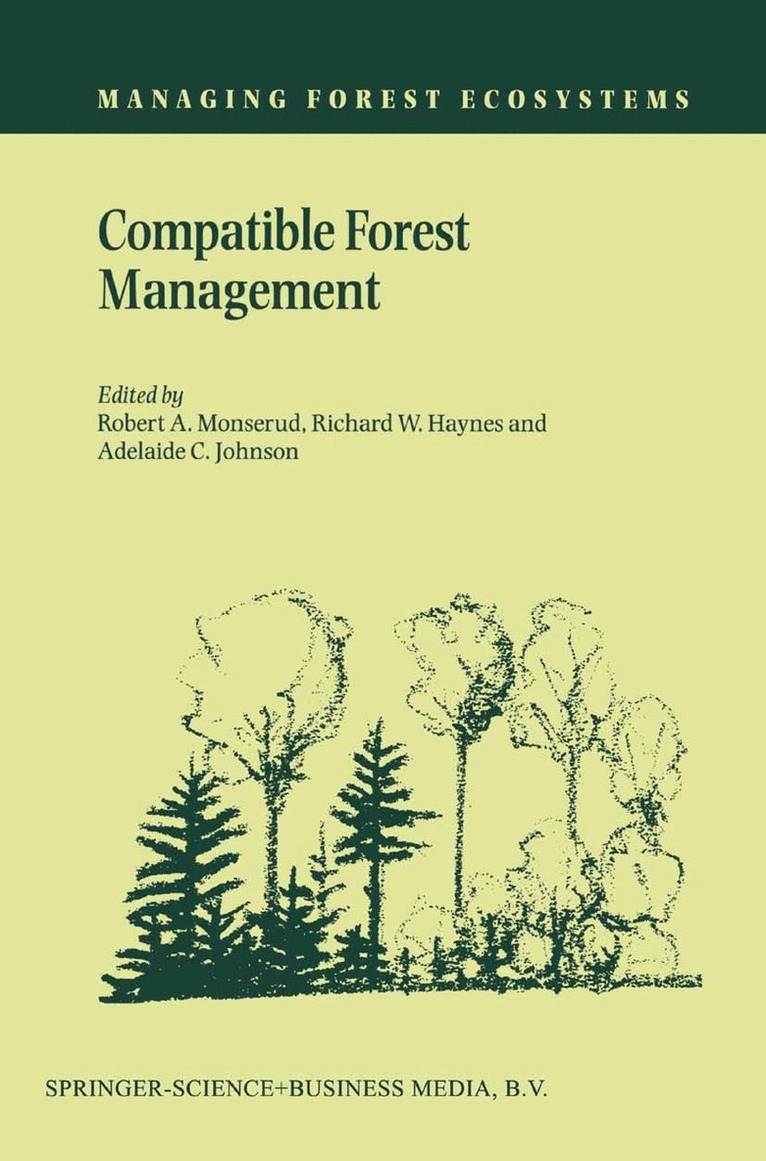
Public debate has stimulated interest in finding greater compatibility among forest management regimes. The debate has often portrayed management choices as tradeoffs between biophysical and socioeconomic components of ecosystems. This work focuses on specific management strategies and emphasizes broad goals such as biodiversity, wood production and habitat conservation while maintaining other values from forestlands desired by the public. Commodity production (timber, nontimber forest products) and the other forest values (biodiversity, fish and wildlife habitat) can be simultaneously produced from the same area in a socially acceptable manner. Based on early-21st century research in the Pacific Northwest, the text shows there are alternatives for managing forest ecosystems that avoid the divisive arena of "either-or" choices. Much of the work discussed in this book addresses two aspects of the compatibility issue. First, how are various forest management practices related to an array of associated goods and services? Second, how do different approaches to forest management affect relatively large and complex ecosystems?
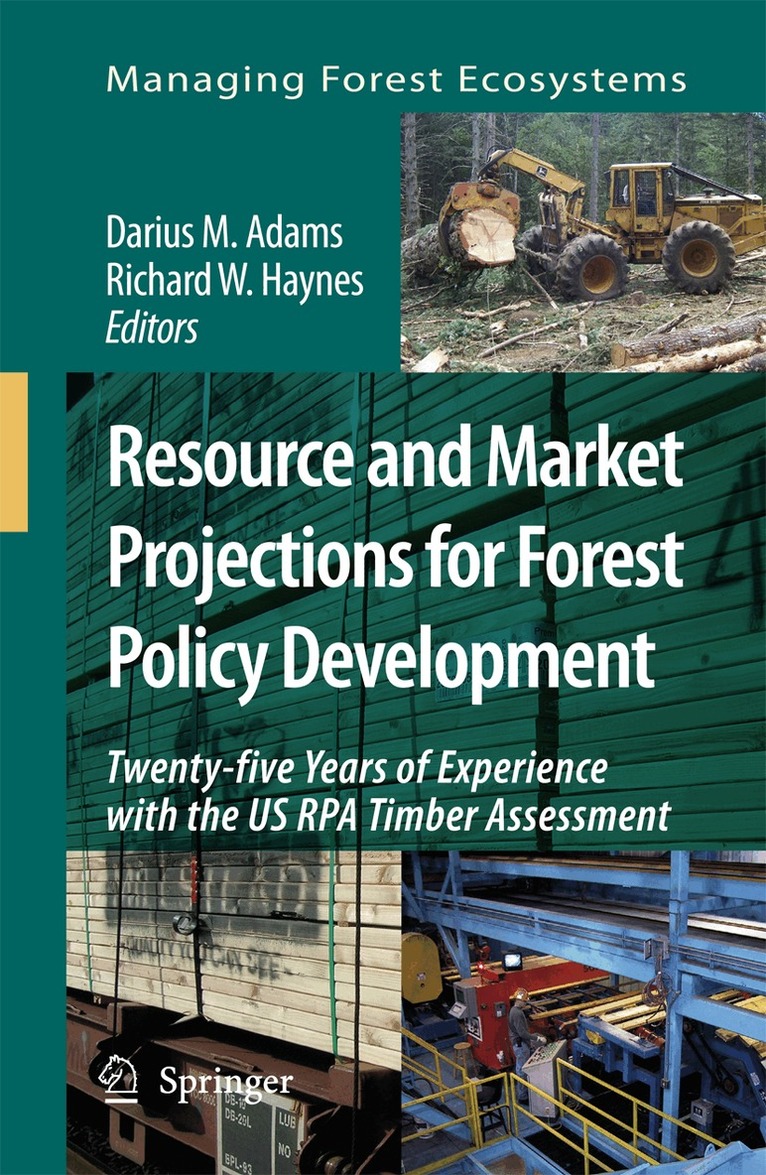
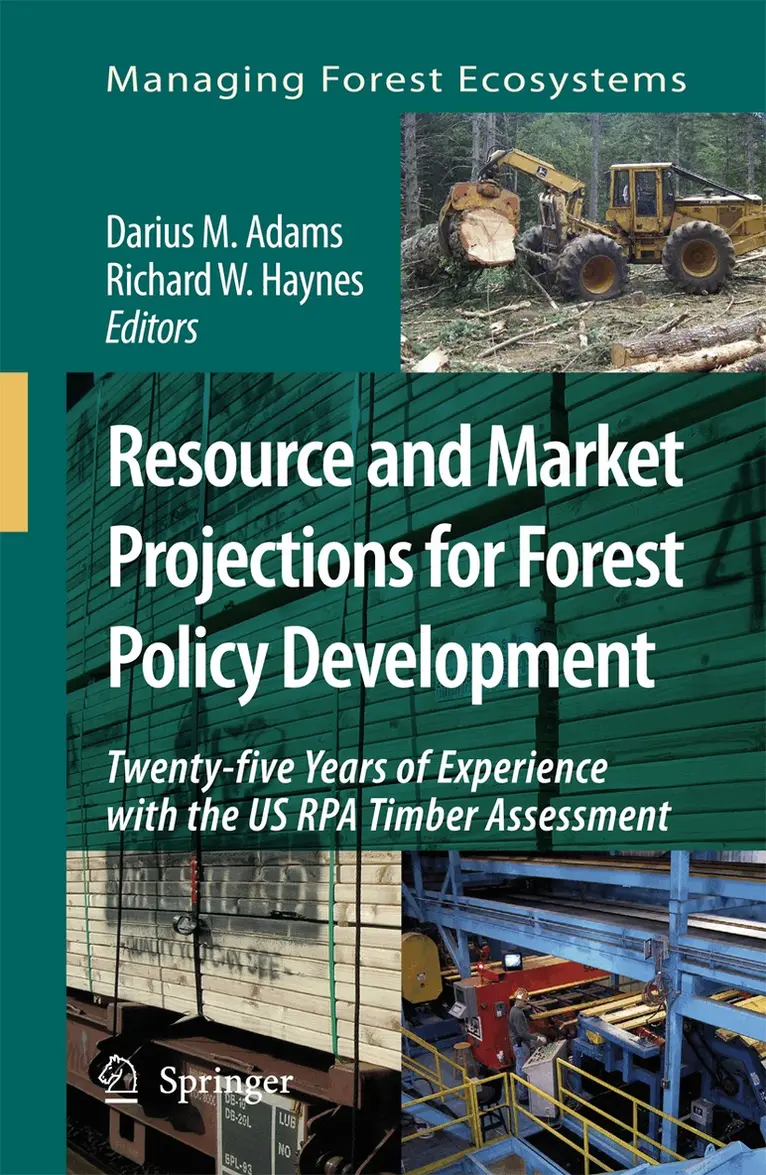
Resource and Market Projections for Forest Policy Development
Twenty-five Years of Experience with the US RPA Timber Assessment
Inbunden, Engelska, 2007
2 115 kr
Skickas inom 10-15 vardagar
Figure 1-1. Post-World War II US assessment history. 1973)weremotivatedbytheemergingcon?ictsinthepost-WorldWar II period between rapidly increasing softwood harvests and declining timber growth. These are called the Outlook Studies. The last six studies (1980, 1985, 1989, 1993, 2000, 2005) have been conducted to meet the requirements of the Forest and Rangeland Renewable Resources Planning Act (RPA) of 1974. These are called the RPA Timber Assessments. 6 The Challenge of Developing Models 1. 2 SHAPING THE ASSESSMENT SYSTEM This initial chapter describes the development and speci?c structure of the Assessment System. We consider past policy analysis needs and federal legislative requirements, antecedent modeling and projection approaches, characteristics of the US forest sector, and recent trends in public and private resource management. At the federal level, and in some states and regions, the USA has a lengthy history of using resource and market models to explore policy issues and to examine the e?ects of alternative policy actions. Many of these studies have been undertaken on an irregular basis as issues emerged and resource conditions changed. The RPA legislation mandated a regular cycle of nationwide assessments by the Forest Service, examining trends and conditionsinanarrayofresourceusesandservices(climate,minerals, range,recreation,timber,andwater). ThestructureoftheAssessment System re?ects both the requirements of the RPA legislation and the unique characteristics of the US forest sector, which it is designed to simulate. IntheyearssinceenactmentoftheRPAlegislation,mana- ment directions, and objectives on both public and private lands in the USA have continued to evolve. The structure of the Assessment System has been adapted to re?ect these trends.
3 178 kr
Skickas inom 10-15 vardagar
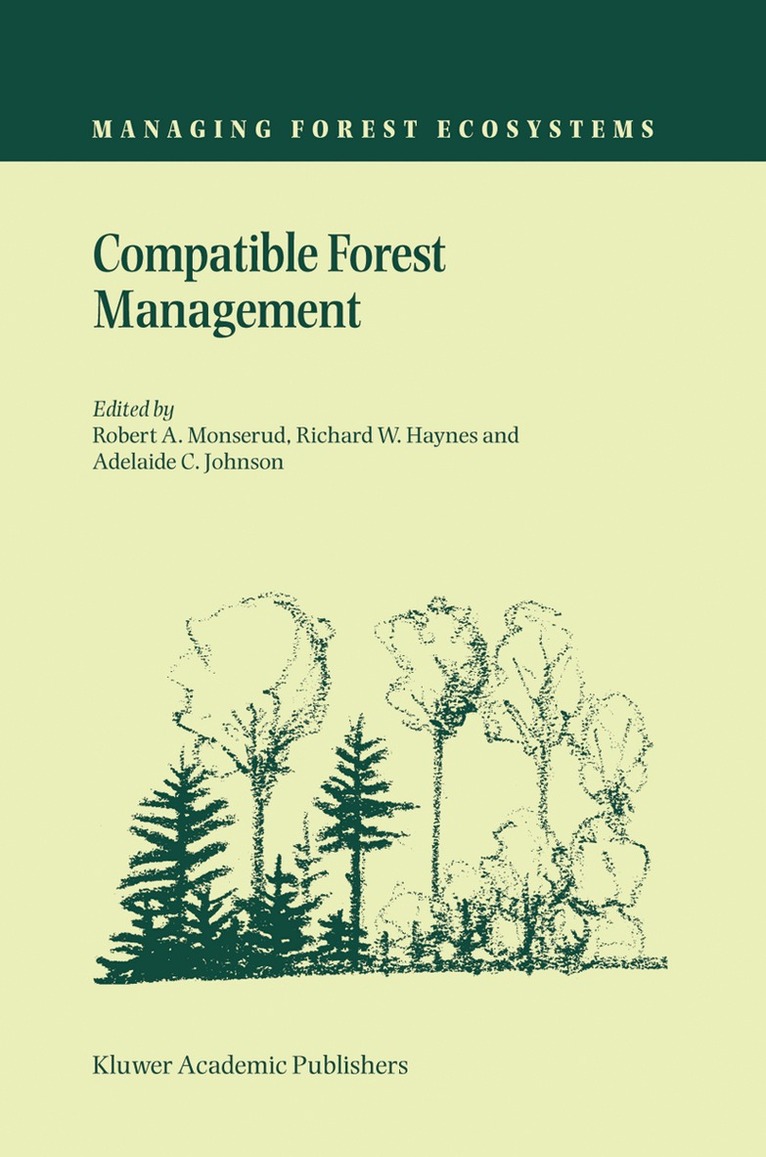
Public debate has stimulated interest in finding greater compatibility among forest management regimes. The debate has often portrayed management choices as tradeoffs between biophysical and socioeconomic components of ecosystems. Here we focus on specific management strategies and emphasize broad goals such as biodiversity, wood production and habitat conservation while maintaining other values from forestlands desired by the public. We examine the following proposition: Commodity production (timber, nontimber forest products) and the other forest values (biodiversity, fish and wildlife habitat) can be simultaneously produced from the same area in a socially acceptable manner. Based on recent research in the Pacific Northwest, we show there are alternatives for managing forest ecosystems that avoid the divisive arena of 'either-or' choices. Much of the work discussed in this book addresses two aspects of the compatibility issue. First, how are various forest management practices related to an array of associated goods and services? Second, how do different approaches to forest management affect relatively large and complex ecosystems?
Resource and Market Projections for Forest Policy Development
Twenty-five Years of Experience with the US RPA Timber Assessment
Häftad, Engelska, 2010
2 121 kr
Skickas inom 10-15 vardagar
Figure 1-1. Post-World War II US assessment history. 1973)weremotivatedbytheemergingcon?ictsinthepost-WorldWar II period between rapidly increasing softwood harvests and declining timber growth. These are called the Outlook Studies. The last six studies (1980, 1985, 1989, 1993, 2000, 2005) have been conducted to meet the requirements of the Forest and Rangeland Renewable Resources Planning Act (RPA) of 1974. These are called the RPA Timber Assessments. 6 The Challenge of Developing Models 1. 2 SHAPING THE ASSESSMENT SYSTEM This initial chapter describes the development and speci?c structure of the Assessment System. We consider past policy analysis needs and federal legislative requirements, antecedent modeling and projection approaches, characteristics of the US forest sector, and recent trends in public and private resource management. At the federal level, and in some states and regions, the USA has a lengthy history of using resource and market models to explore policy issues and to examine the e?ects of alternative policy actions. Many of these studies have been undertaken on an irregular basis as issues emerged and resource conditions changed. The RPA legislation mandated a regular cycle of nationwide assessments by the Forest Service, examining trends and conditionsinanarrayofresourceusesandservices(climate,minerals, range,recreation,timber,andwater). ThestructureoftheAssessment System re?ects both the requirements of the RPA legislation and the unique characteristics of the US forest sector, which it is designed to simulate. IntheyearssinceenactmentoftheRPAlegislation,mana- ment directions, and objectives on both public and private lands in the USA have continued to evolve. The structure of the Assessment System has been adapted to re?ect these trends.