Richard W.F. Kroll - Böcker
Visar alla böcker från författaren Richard W.F. Kroll. Handla med fri frakt och snabb leverans.
4 produkter
4 produkter
756 kr
Skickas
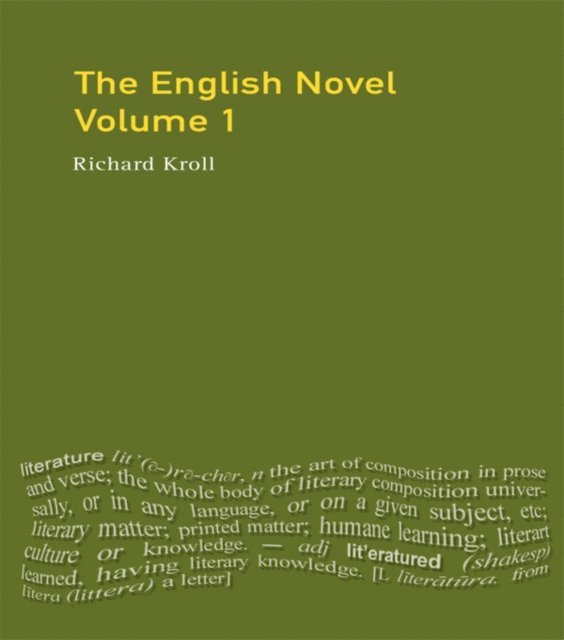
The English Novel, Volume I:1700 to Fielding collects a series of previously-published essays on the early eighteenth-century novel in a single volume, reflecting the proliferation of theoretical approaches since the 1970s. The novel has been the object of some of the most exciting and important critical speculations, and the eighteenth-century novel has been at the centre of new approaches both to the novel and to the period between 1700 and 1750. Richard Kroll's introduction seeks to frame the contributions by reference to the most significant critical discussions. These include: the question of whether and how we can talk about the 'rise' of the novel; the vexed question of what might constitute a novel; the relationship between the novel and possibly competing genres such as history or the romance; the relationship between early male writers like Defoe and popular novels by women in the early eighteenth century; the general ideological role played by novels relative to eighteenth-century culture (are they means of ideological conscription or liberation?); poststructuralist analyses of identity and gender; and the emergence of sentimental and domestic codes after Richardson.Since the modern European novel is often thought to have been formed in this period, these debates have clear implications for students of the novel in general as well as for those interested in the early enlightenment. Headnotes place each essay within the map of these wider concerns, and the volume offers a useful further reading list. Taken as a whole, this collection encapsulates the state of criticism at the present moment.
881 kr
Skickas inom 10-15 vardagar
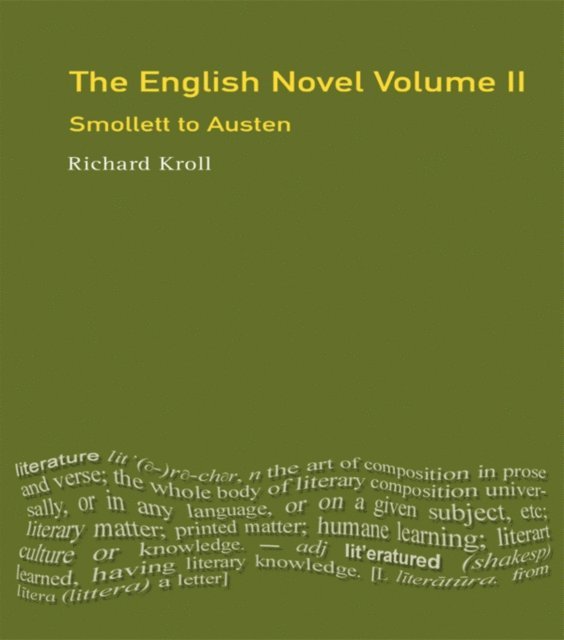
The English Novel, Volume II: Smollett to Austen collects a series of previously-published essays on the early eighteenth-century novel in a single volume, reflecting the proliferation of theoretical approaches since the 1970s. The novel has been the object of some of the most exciting and important critical speculations, and the eighteenth-century novel has been at the centre of new approaches both to the novel and to the period between 1750 and 1800. Richard Kroll's introduction seeks to frame the contributions by reference to the most significant critical discussions. These include: the general importance of 'sentimentalism' as a cultural movement after 1750; its relationship to the emergence of the Gothic novel as a specific genre or mode; the rapid rise in the number of women novelists in the later eighteenth century; the relationship between the novel as mediator of social relations and the idea of the 'public sphere'; the relationship between novelistic codes and the massive growth of a consumerist society; the class conflicts of writers like Smollett; the effect on the novel of the new 'British' nation; and the effects of the French Revolution and the subsequent political debates on writers like Wollstonecraft, Godwin, and Austen.This collection will be of interest to students of the later enlightenment, and also to all who are interested in late eighteenth-century radicalism, and the general relationship between literature, history, and politics.
3 172 kr
Skickas inom 10-15 vardagar
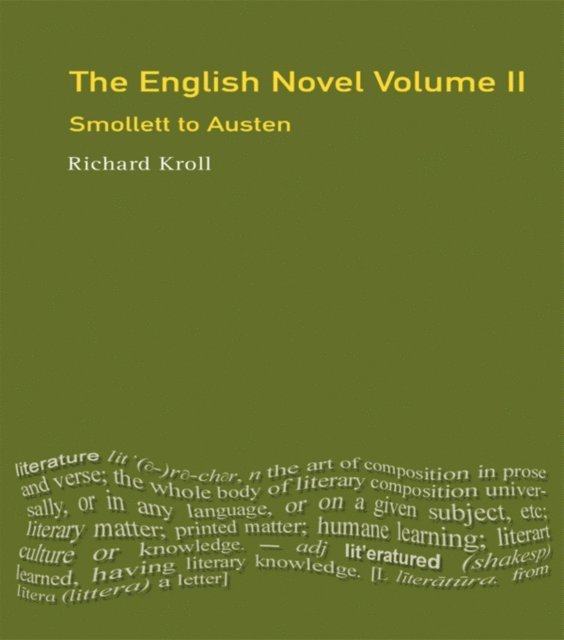
The English Novel, Volume II: Smollett to Austen collects a series of previously-published essays on the early eighteenth-century novel in a single volume, reflecting the proliferation of theoretical approaches since the 1970s. The novel has been the object of some of the most exciting and important critical speculations, and the eighteenth-century novel has been at the centre of new approaches both to the novel and to the period between 1750 and 1800. Richard Kroll's introduction seeks to frame the contributions by reference to the most significant critical discussions. These include: the general importance of 'sentimentalism' as a cultural movement after 1750; its relationship to the emergence of the Gothic novel as a specific genre or mode; the rapid rise in the number of women novelists in the later eighteenth century; the relationship between the novel as mediator of social relations and the idea of the 'public sphere'; the relationship between novelistic codes and the massive growth of a consumerist society; the class conflicts of writers like Smollett; the effect on the novel of the new 'British' nation; and the effects of the French Revolution and the subsequent political debates on writers like Wollstonecraft, Godwin, and Austen.This collection will be of interest to students of the later enlightenment, and also to all who are interested in late eighteenth-century radicalism, and the general relationship between literature, history, and politics.
3 172 kr
Skickas inom 10-15 vardagar
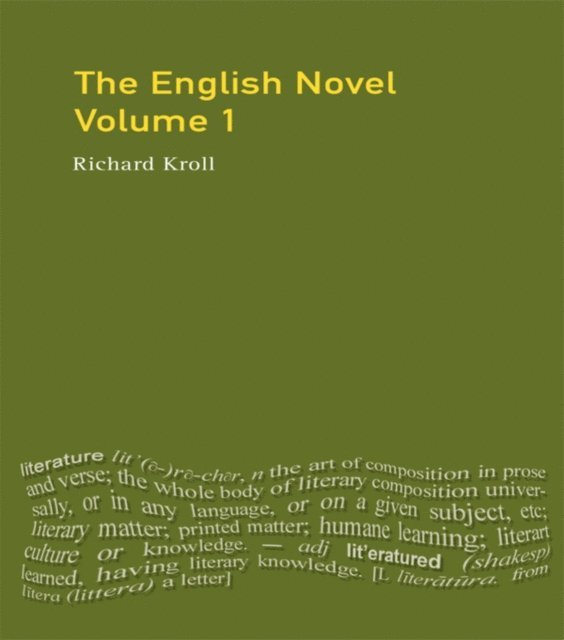
The English Novel, Volume I:1700 to Fielding collects a series of previously-published essays on the early eighteenth-century novel in a single volume, reflecting the proliferation of theoretical approaches since the 1970s. The novel has been the object of some of the most exciting and important critical speculations, and the eighteenth-century novel has been at the centre of new approaches both to the novel and to the period between 1700 and 1750. Richard Kroll's introduction seeks to frame the contributions by reference to the most significant critical discussions. These include: the question of whether and how we can talk about the 'rise' of the novel; the vexed question of what might constitute a novel; the relationship between the novel and possibly competing genres such as history or the romance; the relationship between early male writers like Defoe and popular novels by women in the early eighteenth century; the general ideological role played by novels relative to eighteenth-century culture (are they means of ideological conscription or liberation?); poststructuralist analyses of identity and gender; and the emergence of sentimental and domestic codes after Richardson.Since the modern European novel is often thought to have been formed in this period, these debates have clear implications for students of the novel in general as well as for those interested in the early enlightenment. Headnotes place each essay within the map of these wider concerns, and the volume offers a useful further reading list. Taken as a whole, this collection encapsulates the state of criticism at the present moment.